11 Charged in Plot to Arrange 1,000 Sham Marriages
The prenups they signed quietly gave away everything a real spouse would keep.
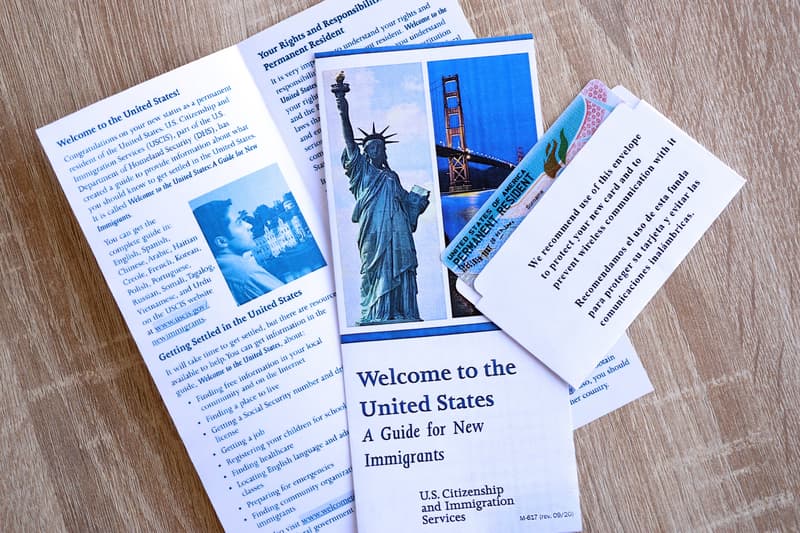
Somebody in New York City turned fake weddings into a full-time business, and it ran for about ten years before it fell apart. Federal prosecutors say a crew rented the wedding clothes, hired the photographers, filled the restaurant tables with fake guests, and coached couples who barely spoke to each other on how to sound like newlyweds. On Wednesday, August 12, 2026, the Justice Department charged 11 people with arranging more than 1,000 of these sham marriages so foreign nationals, mostly citizens of China, could get green cards.
Attorney General Todd Blanche called it one of the largest marriage fraud prosecutions in U.S. history. That is a big claim, and the numbers back it up. The government says the operation pulled in tens of millions of dollars over the decade it ran. Here is how the whole thing worked, who got named, and what these defendants are now facing.
A green card came with a six-figure price tag
Money is the heart of this case, and the amounts are not small. Prosecutors say foreign nationals paid as much as $100,000 for a sham marriage that opened the door to permanent resident status. The American citizens who agreed to play spouse got paid too, up to $30,000, usually handed over in installments tied to each step of the green card application. Miss a milestone, and you did not get the next payment.
The recruiters, the people whose whole job was finding Americans willing to sign up, earned commissions as high as $5,000 for every citizen they brought in. Do that math across more than a thousand marriages and you start to see why the operation lasted so long. The alleged fraud ran from at least 2016 through July 2026. It was less a scam and more a payroll. Blanche described it as a multimillion-dollar cottage industry, which is a polite way of saying it was a small factory that manufactured fake families.
The fake weddings looked shockingly real on paper
Pulling off a convincing marriage takes more than a signature, and the group knew it. Prosecutors say the defendants staged photographs of families gathered at restaurants, dressed the couples in wedding attire, brought in photographers, and filled the room with people posing as attendees. The 21-page indictment actually includes some of those photos, because the couples handed them straight to U.S. immigration officials as proof of a happy union.
The paperwork went deeper than pictures. The group allegedly opened joint bank accounts for the couples, put them on shared mobile phone plans, and set up other accounts that make two strangers look like they share a life. On paper, these were regular married couples with a checking account and a family cell plan. In reality, many of them had no relationship at all. It is the kind of detail that makes you realize how much of a modern marriage exists as a paper trail, and how easy that trail is to fake if you have the right people building it.
The prenups spelled out that nobody actually loved anybody
The strangest wrinkle in the whole case is the paperwork the couples signed behind closed doors. Prosecutors say participants signed prenuptial agreements that quietly gave away everything a real spouse would want to keep. These prenups waived claims to each other's estate after death, waived child support, and waived any right to marital property. In other words, the two people getting married agreed in writing that neither one owed the other a single thing.
One agreement went even further. According to Blanche, it stated that aside from being husband and wife in name, the two would live independently and would not interfere with each other. That is a marriage contract that reads like a business divorce filed on day one. Before the couples ever sat down with immigration officers, the group coached them on what to say and how to hide the fact that they were near strangers. And once a foreign national got the green card, prosecutors say the organizers arranged for the divorce. The whole marriage had a shelf life built in from the start.
This was not just a New York thing
The operation was based mostly in New York City, but the fake weddings happened all over the map. Prosecutors say sham marriages were arranged across a long list of states, including Connecticut, Massachusetts, Pennsylvania, Kentucky, Tennessee, Georgia, and Florida. That spread suggests the network had recruiters and willing participants scattered well beyond the five boroughs.
It also went international. The network reached overseas, with weddings staged in China and, oddly enough, Vanuatu, a small island nation in the South Pacific. Why a marriage fraud ring based in Queens would be arranging ceremonies on a Pacific island is a fair question, and one prosecutors will presumably answer as the case moves forward. The DOJ described the setup as a nationwide and international operation with layers of people, each handling a different piece: facilitators who ran the scheme and found the foreign customers, recruiters who lined up the Americans, and assistants who prepared the immigration paperwork and pushed the green card applications through USCIS.
The 11 people named in the indictment
The indictment names 11 defendants, nearly all of them naturalized U.S. citizens from China, plus one green card holder. Prosecutors point to Amy Cheng, 72, of Brooklyn; Xiao Mei Chan, 64, of Queens; and Gang Zheng, 61, of Queens, as some of the facilitators who ran the show. Several of the accused used nicknames, according to court papers, with Cheng also going by Amy Zhou, Chan going by Carmen, and Zheng answering to Michael or Mike.
The full list of defendants includes Christine Lu, 52; Jing Yan Ye, 43; Xiao Yan Chen, 48; Anthony Cheng, 47; Michelle Duenas, 35; Angela Duenas, 26; Sigrid Cetino, 32; and Erika Johnson, 43. They come from across the New York area, from Brooklyn and Queens to Staten Island, Peekskill, and Ossining. Some allegedly worked as facilitators and recruiters, and some served as the officiants who performed the fake ceremonies. When the charges were first announced, it was not clear whether the defendants had attorneys who could speak for them.
What the defendants are actually facing
The indictment, secured in the Southern District of New York, carries two counts. The first is conspiracy to commit marriage fraud and immigration fraud, which carries a maximum of five years in prison. The second is conspiracy to encourage the unlawful residence of foreign nationals in the United States, which carries a maximum of ten years. Stack them together and each defendant is looking at a possible 15 years behind bars if convicted on both.
These are maximum sentences, not guaranteed outcomes, and everyone charged is presumed innocent until a jury or a plea says otherwise. But the exposure is real, especially for the older defendants. A 72-year-old facing a potential 15-year term is looking at a very different math problem than a 26-year-old. Homeland Security Investigations built the case, and it was announced jointly by the Attorney General's office and the U.S. Attorney for the Southern District of New York. Prosecutors called the operation a deliberate affront to the United States and its laws.
Why this case landed when it did
The timing is not an accident. The Justice Department framed the charges as part of a broader push to crack down on networks that game the immigration system, and this case was one of several immigration-related enforcement actions announced that same week. Blanche put it bluntly: the charges show how far people will go to cheat the immigration system.
What makes this one stand out is not the idea of a fake marriage, which has been a thing for as long as green cards have existed. It is the scale and the polish. Most marriage fraud is one desperate couple and a shaky story. This was a decade-long operation with recruiters, officiants, paperwork specialists, staged photos, joint bank accounts, and prenups designed to protect everyone from actually being married. It treated a green card like a product with a fixed price and a supply chain. Prosecutors say it moved more than 1,000 people through that pipeline. Now 11 of the people who allegedly built it have their names on a federal indictment, and the rest of the story plays out in a Manhattan courtroom.
Most read
This week
Entertainment
Michael Douglas Says He Hid Kathleen Turner Affair for 40 Years
Crime
Nathalie Belizaire Charged After 4 Children Found Alone During Cruise
Crime
Two Oxford Vape Clerks Charged in Ole Miss Kratom Investigation
Crime
Sinema's Ex-Bodyguard Arrested Again Over Knife at Phoenix Gun Shop
Entertainment
Judge Grants Restraining Order Against Halle Berry Over Choking Claim