4 Americans Dead in Athens Blast
Six died below the Acropolis. Residents had warned of the gas risk in writing a year earlier.

Six people died when an explosion brought down a building in the Plaka district of Athens, and four of them were Americans, the U.S. State Department confirmed. A department spokesperson said the deaths were the result of a gas explosion and offered sincerest condolences to the family and loved ones on their loss.
The blast hit an old house on Lysikratous Street shortly after 7:30 a.m. on Friday, September 25, in the historic neighborhood at the foot of the Acropolis. Four of the dead were staying in a short-term rental apartment on the first floor. An elderly couple lived on the second floor.
Kimberly Guilfoyle, the U.S. ambassador to the Hellenic Republic, wrote on X that she was deeply saddened to learn of the death of four American citizens in the explosion in central Athens. "The U.S. Embassy is providing consular assistance and support to the victims' families," she said. She also thanked the Greek first responders who worked at the scene.
Rescuers pulled the last two bodies from the rubble at around 2 p.m. on Saturday, September 26, ending a search that had run through Friday night. Greek authorities have not officially released the identities of the six victims. Families have been asked to provide genetic material for DNA comparison through the Hellenic Police Criminal Investigations Directorate.
The Americans were hours from their flight home
The four were due at Athens airport that afternoon. A police source told Reuters they were expected on a 3 p.m. flight on Friday and never showed up. Kathimerini reported that the group had been preparing to leave for the airport hours later that day for their return to the United States when the blast occurred.
Documents and belongings recovered with the four bodies, two men and two women, identified them as U.S. citizens, Greek state broadcaster ERT and other local media reported.
Accounts of how the four were related do not match. The New York Times reported the group was a couple, their son and his girlfriend. Greek reporting has described two siblings of Albanian origin traveling with their partners, with one couple newlyweds on their honeymoon and one of the women pregnant. None of it has been confirmed by Greek authorities.
The couple who lived upstairs
The other two people killed were an elderly British man and his Greek wife, who lived on the floor above the rental, ERT reported.
Mathaios Artavanis, who owns the ground-floor apartment, told Kathimerini he was away when the building came down. He said he tried afterward to reach the British-Greek couple and got no answer.
Investigators are focused on the second floor
Early indications point to the explosion starting on the second floor, in the apartment where the elderly couple lived. That unit is described as the only one in the building still connected to a natural gas supply, used for the kitchen, a fireplace and a burner. The first floor had a gas connection until 2021, when it was removed at the owner's request.
Officials note that the shock-wave damage is concentrated at second-floor height. Natural gas tends to collect higher in a room, while LPG pools lower. Investigators have stressed that those observations still have to be confirmed by forensic examination before a leak can be established as the cause. Propane equipment in the couple's apartment is also being examined.
A 10-officer team from the Fire Service's Arson Crimes Division is working the site, collecting physical evidence and trying to explain how the building collapsed. Officers aimed to finish collecting pipes, meters and other fittings by Monday. The preliminary investigation is being run under the direction of the Athens First Instance Prosecutor's Office, working with other Hellenic Police services.
Athens Mayor Haris Doukas said the blast was believed to have been caused by a major gas leak. No official cause has been announced, and investigators say all scenarios remain open.
A warning letter from a year earlier
Residents of Plaka wrote to the head of the Fire Service on October 5, 2025, warning about the risk of a fire caused by a natural gas leak, a short circuit or another cause. A copy went to the Minister of Climate Crisis and Civil Protection. The letter was published by MEGA after the explosion.
In it, the residents' group asked for a practical exercise to test whether firefighters, police and other services could actually operate in a historic district of narrow streets and limited access. CNN Greece reported that the letter also pushed for coordination between the Fire Service, police, the municipality of Athens, the power distribution operator and the gas network operator.
Residents say they smelled gas. The fire department says no one filed a complaint.
Fire Department spokesperson Vassilis Vathrakogiannis said the fire service had received no complaint about a smell of gas before the explosion. The absence of a reported gas smell is now a key element of the investigation.
Greek Police spokesperson Constantia Dimoglidou said the first reports officers received spoke of a smell of gas. Authorities have not determined the source or type of gas involved.
The citizens' movement "Stay Active" posted on social media about a complaint from a resident of Lysikratous Street who said a gas smell had been noticed in the area. According to in.gr, one resident said inspections were pushed back to November because of the tourist season. That claim has not been verified.
Gas network operator Enaon EDA said after the explosion that emergency teams went to Lysikratous Street immediately and were carrying out checks alongside the competent authorities. The company said the causes are still being established. Its statement did not address whether there had been earlier complaints about that stretch of the network or that building.
Thirty firefighters, three dogs and a full day in the rubble
About 30 firefighters worked the collapse with six vehicles, including two specialized rescue vehicles from the 1st EMAK unit. Three search and rescue dogs were deployed. Crews used geophones to pick up any sounds under the debris, along with cameras built to reach spaces they could not get into and thermal-imaging equipment. The Municipality of Athens sent heavy machinery to help clear material.
Firefighters spent Friday and Saturday searching for the elderly couple in one apartment and the four tourists in the other, Vathrakogiannis said in a televised briefing. The final two bodies were located Saturday afternoon.
Two women were injured in an adjacent building on Lysikratous Street, the fire brigade said. Everyone pulled out of that neighboring building was a tourist, resident Andreas Martzaklis said. Doukas said neighboring buildings were damaged and evacuated.
Damage reached three blocks
The explosion destroyed the building and damaged homes, shops and vehicles nearby, throwing rubble and shattered glass as far as three blocks away, Reuters reported. Video from the scene showed debris across the street and parked cars crushed under falling material. What was left of the house was twisted metal, broken tiles and concrete, with clothing and household belongings scattered through it.
"We are talking about an incredible disaster," Doukas said. Two nearby buildings were left in a dangerous state, he added, with inspections underway "to determine if they can remain standing or if they also have to be demolished." Urban planning officials were expected to carry out the first inspection of the neighboring buildings on Monday, and drone footage showed extensive damage.
Efthymis Lekkas, president of the Earthquake Planning and Protection Organisation and a professor of disaster management at the University of Athens, praised EMAK and the firefighters for a recovery carried out with two adjacent buildings at risk of further collapse. The destroyed house, he said, was an old masonry structure of high vulnerability, built of brick without a continuous load-bearing frame. "It was a monument, not a modern building," Lekkas said. He described the neighboring buildings as sitting in a "marginal equilibrium" that needs proper engineering checks.
A church down the street was damaged badly enough that its pastor said Sunday's service would be held outdoors.
Plaka sits at the foot of the most visited site in Greece
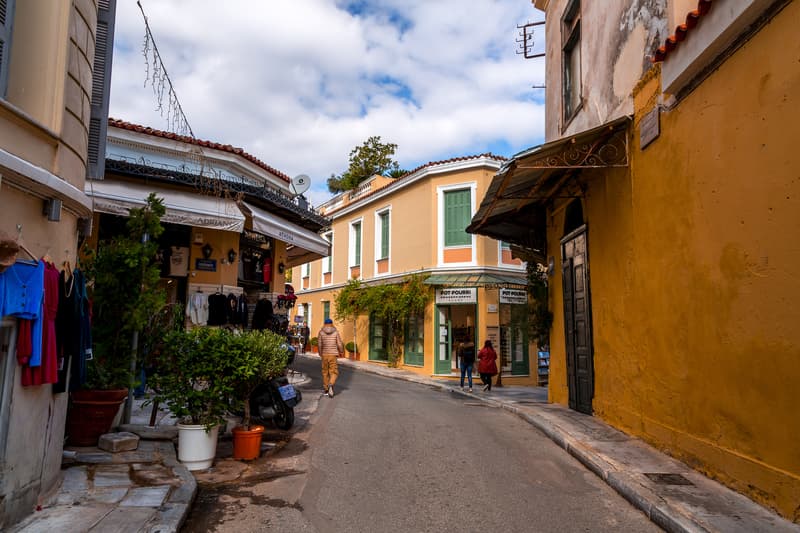
Plaka is the historic quarter directly below the Acropolis hill and one of the busiest tourist areas in Athens, packed with short-term rentals, tavernas and shops along lanes too narrow for most emergency vehicles. The Acropolis drew 4.6 million visitors in 2025.
Identification of the six victims is still in progress, and the cause of the blast has not been officially established. Until the forensic and technical examinations are finished, a gas leak remains a line of inquiry rather than a confirmed finding.
Most read
This week

Entertainment
Michael Douglas Says He Hid Kathleen Turner Affair for 40 Years
Crime
Nathalie Belizaire Charged After 4 Children Found Alone During Cruise
Crime
Two Oxford Vape Clerks Charged in Ole Miss Kratom Investigation
Crime
Sinema's Ex-Bodyguard Arrested Again Over Knife at Phoenix Gun Shop

Entertainment
Judge Grants Restraining Order Against Halle Berry Over Choking Claim