Police in Five States Warn of Gas Pump Screw Theft Scheme
What thieves are doing after you drive away could cost you big.

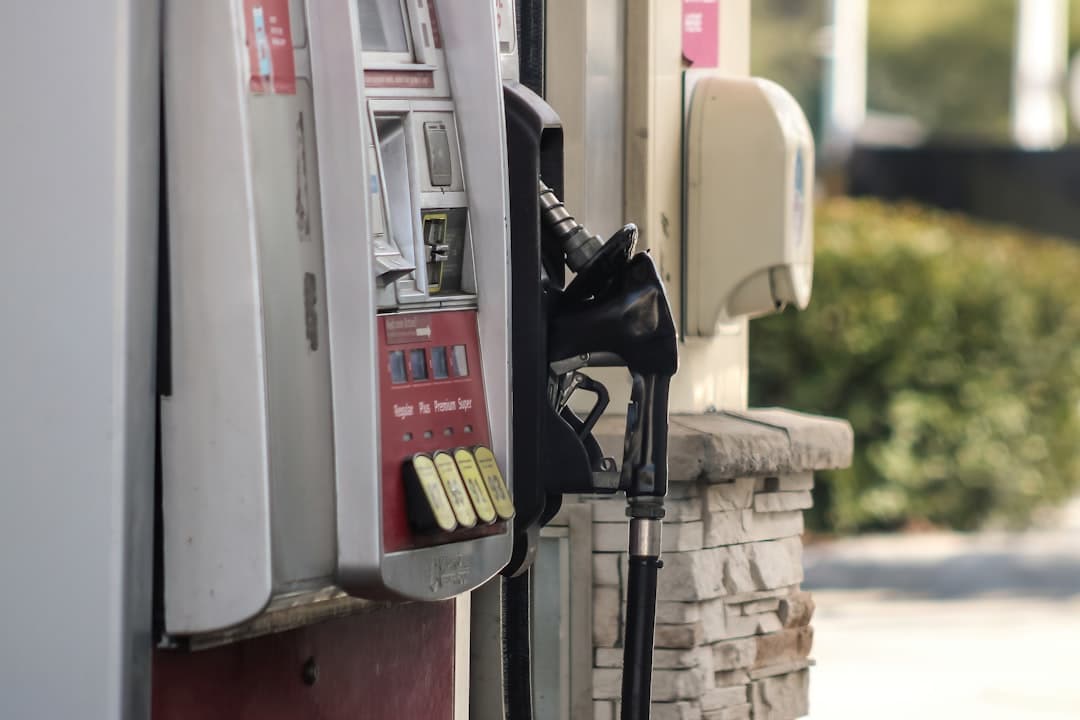
You pull into a gas station, swipe your card, fill up, hang the nozzle back on the pump, and drive away. Normal Tuesday. Except this time, someone was watching you the whole time. And the second your car left the lot, they walked up to that same pump and started filling their own tank, their buddy's tank, and a row of gas cans in the back of a pickup. All of it charged to your card.
This is not a hypothetical. Police departments in multiple states are now issuing warnings about two related schemes that are hitting gas stations hard. They are low tech, surprisingly effective, and spreading fast. Here is what you need to know so you do not become the next person staring at a $150 charge for a car that holds $30 worth of fuel.
The "Screw Method" That Went Viral
The first version of this scheme has been generating warnings from police departments all over the country. It is called the "screw method" because the entire operation depends on a single carpenter's screw. Here is how it works: a thief places a small metal screw into the nozzle cradle of a gas pump. When you finish pumping and hang the nozzle back up, that screw prevents the cradle's lever from fully closing. The pump thinks you are still fueling. Your transaction stays open.
You drive off, completely unaware. The thief strolls up, grabs the nozzle, and starts pumping gas into containers, other cars, whatever they want. Every gallon gets billed to your debit or credit card. There is no alarm. No notification on your phone. Nothing until you check your statement days later and see charges that make zero sense.
One victim named Christian Quaker described the experience to a Detroit news station, saying someone could have drained his entire debit account. "There's no limit. It's not going to stop until that person leaves, so you can overdraft an account like that," he said.
Where It Has Been Reported So Far
Law enforcement agencies in Pennsylvania, Maryland, California, Arizona, and Texas have all issued public warnings about the screw method. The Northlake Police Department in Illinois recently put out its own alert, meaning the scheme has now reached the Chicago metropolitan area. That makes this a coast to coast problem, not something limited to a single region.
Investigators say the simplicity of the crime is exactly why it is spreading so quickly. There is no hacking involved. No special equipment. No technical skill. A single screw from any hardware store is the only tool required. That low barrier to entry means basically anyone can attempt it, and apparently a lot of people are.
But Wait. Does It Actually Work?
Here is where things get interesting. Fact checkers investigated the viral claims about the screw method and found that many of the most widely shared warnings were not backed up by confirmed incidents. The Queen Anne's County Sheriff's Office in Maryland initially warned residents about the scheme, then walked the advisory back after determining reports in their area were "unfounded." A spokesperson said one report actually turned out to be a maintenance issue, not a crime.
Shell's spokesperson told investigators they were "not aware of any reported incidents" at Shell-owned sites. The company also pointed out that their fuel pumps are designed with an automatic shut-off feature that ends a transaction after a period of inactivity. Police in Phoenix and Maricopa County, Arizona said they had not received confirmed reports either. Some pump experts noted that on many modern pump designs, inserting a screw into the holder would not actually prevent the reset process from occurring.
So the screw method, at least in its most viral form, appears to be more panic than proven reality. That does not mean you should ignore it entirely. But the bigger, more documented threat is something slightly different.
Pump Switching: The Version That Is Definitely Real
While the screw method is debatable, pump switching is confirmed, documented, and actively happening. This version relies on a person, not a screw. A stranger approaches you at the pump and offers to help you gas up. Maybe they look like a station attendant. Maybe they just seem friendly. You decline, but they hang around anyway.
When you finish, they insist on hanging up the nozzle for you. Except they do not hang it up properly. They position it so the transaction stays active. You drive away. They immediately start pumping gas for the next car that pulls up, charging that driver $20 cash for the fill up while your card absorbs the actual cost. They repeat this until your card maxes out or the pump finally shuts off.
Jeff Lenard, a spokesman for NACS (the global trade group for convenience stores and fuel retailers), confirmed that pump switching is "a legitimate issue." He also noted that gas theft schemes "always increase when prices increase." With national gas prices hovering above $4 per gallon, the math is working in the thieves' favor right now.
A Philadelphia Woman's $150 Lesson
Mignon Adams stopped at a Sunoco station on Walnut and 22nd streets in Philadelphia. A stranger offered to pump her gas. She said no. The man stuck around anyway. When she finished, he insisted on putting the nozzle back for her. She tipped him and left.
Then she checked her credit card statement. $150. For a Toyota. "There isn't any way you could get $150 worth of gas in my car's gas tank," she said. Her original fill up was $28. The remaining $122 went straight to whoever pulled up to that pump next. Other victims in the Philadelphia suburbs have reported charges as high as $165.
Police in Lower Merion Township warned that some of these scammers can get aggressive. They may physically grab the nozzle from you if you try to hang it up yourself. That is a level of boldness that catches most people completely off guard at a gas station on a random weekday afternoon.
Who Gets Targeted the Most
Police reports indicate that scammers frequently target women and elderly drivers. The logic is simple. Older customers may be more willing to accept help from a stranger at the pump. Women traveling alone may feel less comfortable confronting someone who is being pushy. The scammers know this and deliberately seek out people they think will not fight back or cause a scene.
That does not mean younger men are immune. Anyone distracted, rushing, or unfamiliar with the area can become a target. The common thread among victims is that they did not realize anything was wrong until well after they left the station.
Skimmers Are Still Out There Too
As if the screw method and pump switching were not enough to worry about, credit card skimmers remain an ongoing problem at gas stations. A skimmer was recently found at a Maverik station in Rock Springs, Wyoming, right off Interstate 80. That is one of the busiest highway corridors in the state, serving a constant flow of truckers, tourists, and cross-country travelers.
Skimmers are small devices that get installed over or inside the card reader on a pump. When you swipe, the skimmer captures your card data. You do not feel anything different. The pump works normally. But your card information is now in someone else's hands. A former Wells Fargo call center employee who lives in Rock Springs said she dealt with skimming victims daily during her time at the bank. "It's a very common tactic," she said.
How to Protect Yourself Right Now
There are a few things you can do that take almost no extra time but can save you a massive headache.
First, always hang up the nozzle yourself. Do not let anyone else touch it. Period. No matter how friendly they seem.
Second, do not leave the pump until the screen resets. Northlake police specifically say you should wait until the pump screen either asks if you want a receipt or clears back to $0.00. If it still shows your transaction total, your session is still active. Do not drive away.
Third, glance at the nozzle cradle before you start pumping. If there is a screw, bolt, or anything that does not look like it belongs there, tell the station attendant and use a different pump.
Fourth, use tap to pay whenever possible. Apple Pay, Google Pay, or a contactless card ties the transaction to your device rather than leaving an open session on the pump's card reader. It is also better protection against skimmers.
Fifth, check for loose panels, broken security seals, or anything that looks off around the card reader. Wiggle the card slot before you insert. If it moves, do not use it.
And if someone aggressively offers to pump your gas and will not take no for an answer, get back in your car, lock the doors, and call the police. That is not being dramatic. That is listening to what law enforcement is telling you to do.
Why This Is Getting Worse
Gas prices are a big part of the equation. When gas was $2.50 a gallon, stealing it was not especially profitable for the amount of risk involved. At over $4 a gallon, the calculus changes completely. A thief running a pump switching operation can rack up hundreds of dollars in charges across just a few cars. The higher gas prices go, the more attractive these schemes become.
Alan Rosen, a law enforcement official in the Houston area, put it bluntly: "Anytime things become this expensive, the criminal element is going to try to enter the market."
Some stations are stepping up. Increased video surveillance, reinforced pump locks, and electronic monitoring systems are all being rolled out. Truck stops along major interstates are inspecting pumps multiple times a day. But the reality is that there are roughly 150,000 gas stations in America, and most of them are not fortress-level secure. The responsibility, for now, falls mostly on you. A few extra seconds at the pump is all it takes.
Most read
This week

World
Nearly 12-Foot Alligator Kills Fisherman at Winter Garden Park
Business
Trader Joe's Sued Over Chicken Wrap E. Coli Outbreak

World
Yorkshire Wildlife Park Reopens Tiger Area to Thin Crowds

World
Police Clear Crowd Blocking Harry and Meghan's Car in Nottingham
Crime
Police Arrest Four in Shooting of 49ers' Keion White