Explosion at Japan's Aeon Mall Kills 13 After 7.1 Quake
The mall had only been open six weeks. Then the timing got strange.

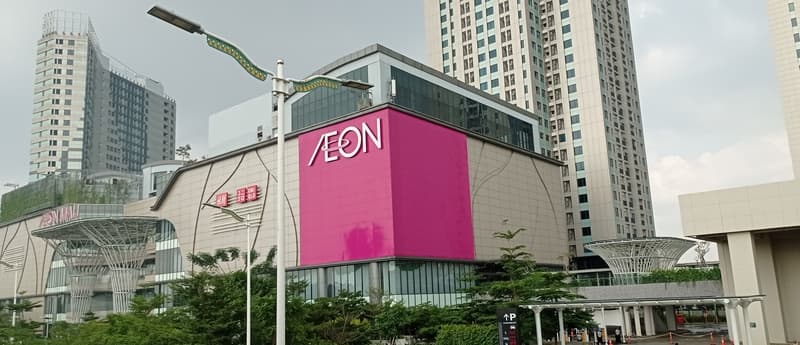
Six weeks ago, a shopping mall in southern Japan threw itself a party. Aeon Mall Kumamoto reopened on June 13 after years of rebuilding, a big deal for a town that watched the same site get wrecked by an earthquake a decade earlier. Then on Tuesday afternoon, July 28, a powerful quake shook the region. About an hour later, one side of the building blew apart, scattering steel and concrete across a parking lot built for 5,000 cars. By Wednesday, officials confirmed at least 13 people dead, with workers still unaccounted for inside.
Here is what happened, who is missing, and why investigators keep coming back to one word: gas.
The quake came first, then the blast an hour later
The earthquake hit Kumamoto prefecture on the island of Kyushu at 4:27 p.m. local time. Japan's Meteorological Agency measured it at magnitude 7.1 on its own scale, while the U.S. Geological Survey put it at 6.8. The epicenter sat about 9 miles south of Kumamoto at a depth of roughly 6 miles. It registered the highest reading on Japan's seismic intensity scale, and a tsunami advisory went up for parts of Kyushu before being lifted a short time later.
The strange part is the timing. According to reports from the scene, the shaking stopped, people got out, and roughly 60 minutes passed before police and fire crews started getting calls around 6 p.m. about an explosion-like sound and white smoke rising from the mall. That gap between the quake and the blast is exactly why this is being treated as more than just a collapse.
What the mall looked like after
Aerial footage from a news helicopter showed the damage in plain daylight. A whole section of exterior wall had peeled away, leaving the steel skeleton exposed. Part of the roof had caved in, and there was a large hole punched through the top. A dashcam even caught the moment a side of the building appeared to go up, throwing a cloud of smoke across a nearby road.
This was not a small store. The complex held around 200 shops, a movie theater, and parking for about 5,000 vehicles. After a Taiwan Semiconductor Manufacturing Co. factory opened nearby in 2024, the mall drew more than 8 million visitors a year. One man told a local broadcaster he was cleaning up dishes that the earthquake had knocked over inside a pub about 300 meters away when the blast went off. The second floor collapsed, which is where a lot of the trouble started for the people still inside.
The workers who never made it out
Here is a number that puts the danger in perspective: roughly 2,700 people worked at that mall. When the quake hit, staff moved fast. About 200 shoppers got out to the car park, and the mall operator said customers and employees had already evacuated before the explosion tore through the structure. That evacuation is likely why the death toll was not far higher.
But not everyone got clear. Early on, the public broadcaster reported 20 to 30 employees could not be reached. By Wednesday, police were saying the real number was lower, and the mall operator told reporters that four workers remained missing. Rescuers pulled eight people from the mall, five of them hurt. Police were blunt about the problem: they could not find a safe way into the building, so for a stretch of time nobody could even get inside to look.
Why everyone keeps saying "gas leak"
Investigators have not made a final call, but the clues all point the same direction. A government source told the Kyodo news agency the mall was apparently gutted by a gas explosion that brought down ceilings and walls. Chief Cabinet Secretary Minoru Kihara said something that stuck with a lot of people: during the search operation, firefighters and police reported the smell of gas inside the building.
Put the pieces together and the theory makes sense. A strong quake shakes a building full of gas lines. A line ruptures somewhere in the structure. Gas builds up in an enclosed space while everyone is outside in the parking lot. Then, around 90 minutes later, something sets it off. "The detailed cause is currently under investigation," Kihara said, but the sequence of events is what has drawn the attention.
The mall was not the only place that came down
About 25 miles away in the city of Yatsushiro, a tall smokestack partially collapsed at a Nippon Paper Industries factory. That collapse trapped people under the rubble too. The Kumamoto emergency team said seven workers were feared trapped there as of Wednesday. Crews managed to remove two survivors and two bodies from that site as the search went on.
Collapsed houses were reported in Yatsushiro as well, and rescue teams spent Wednesday combing through both the mall and flattened homes at the same time. The trouble was spread across the region, not focused on a single building.
Aftershocks kept rescuers on the sidelines
Soldiers from Japan's Self-Defense Forces joined firefighters, police, and the coast guard in the search. Thousands of military personnel were mobilized to speed up the effort. Prime Minister Sanae Takaichi framed it simply, warning that every second counted for anyone still trapped, and her government began preparing food and other supplies for the hardest-hit areas.
The problem was that the ground would not settle. As night fell on Tuesday, rescue operations were put on hold because of continuing aftershocks, with families standing by for any word about employees still believed to be inside. Sending crews into a half-collapsed building while the earth keeps moving is a good way to add more victims, so they had to wait.
This region has been here before
The reason this hits so hard in Kumamoto is that people there lived through something almost identical ten years ago. Two separate earthquakes struck the same prefecture in 2016, leaving at least 275 people dead, 2,739 injured, and tens of thousands of homes damaged or destroyed. An official at a nearby town hall said the shaking instantly reminded him of that disaster, and he watched roof tiles fall off nearby homes as it happened.
The mall itself was a symbol of moving past all that. When Aeon reopened it in June, the company called the project a "re-start" that marked both the shopping center's 21st anniversary and the region's recovery from 2016. Stone walls were also damaged again at Kumamoto Castle, the area's main tourist draw, which was hammered in 2016 and is still under repair.
Trains stopped, factories cleared out, power went dark
The damage did not stop at the buildings that fell. The quake knocked out power to thousands of homes, ruptured roads, and sparked at least eight fires, according to Japan's Fire and Disaster Management Agency. At least 50 people were taken to hospitals with injuries, and passengers on a high-speed train were hurt too. Kyushu Shinkansen bullet train service was suspended at the busy Hakata station in Fukuoka, and Kumamoto Airport temporarily shut down.
Some of the biggest names in tech felt it right away. TSMC, the world's largest chipmaker and the company whose nearby plant helped drive traffic to that very mall, evacuated its workers. Sony and Fujifilm cleared staff from their sites as well. Kihara urged residents in the worst-hit spots to follow evacuation instructions and pay attention to alerts on radio, TV, and online.
Where things stand
As of Wednesday, the confirmed count was at least 13 dead across the mall and the paper factory, with workers still missing at both. Rescue crews were back at it after the aftershocks eased, digging through the mall's collapsed second floor and the rubble around the factory smokestack. The number of people who might still be trapped inside the mall was not clear, in part because staff records and the wrecked layout made it hard to say who was where.
What stings most is the calendar. A building meant to prove that a town had recovered stood open for six weeks before it became the center of another rescue operation. Investigators still have to nail down whether ruptured gas lines caused the blast, and families are still waiting to hear about the people who clocked in that Tuesday and did not come home.
Most read
This week