Mercedes Recalls 310,000 Cars Over Door-Lock Rollaway Risk
One tiny part deep inside the door is behind the whole thing.

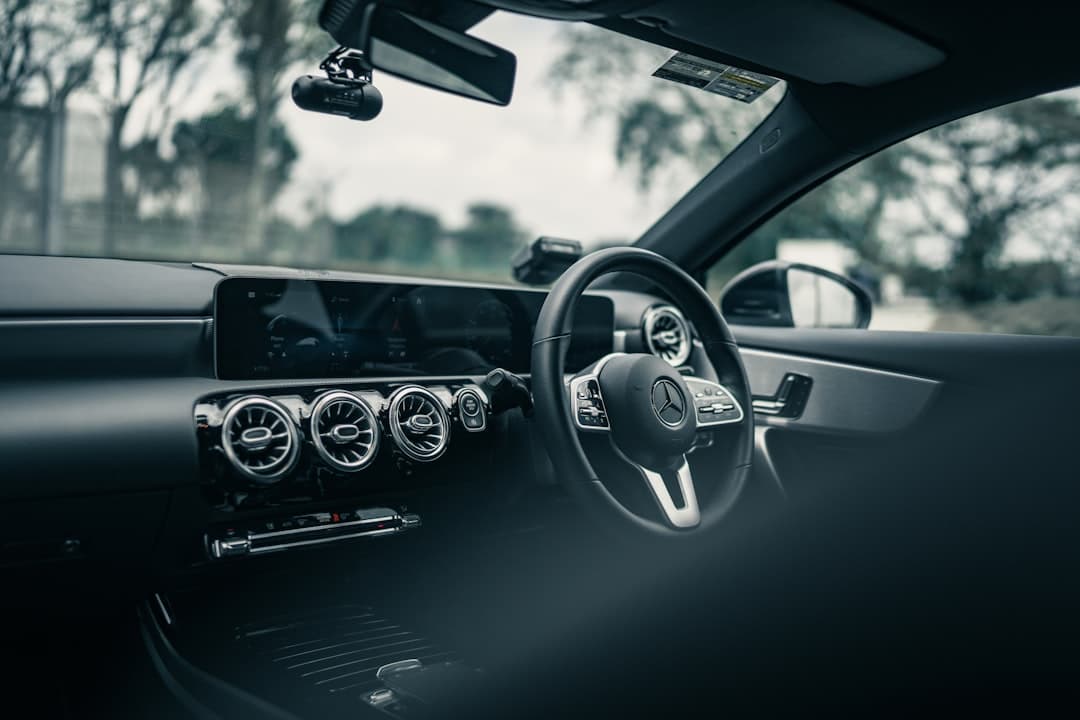
A parked car has exactly one job. Stay parked. Mercedes-Benz just told federal regulators that 310,667 of its vehicles might not hold up their end of that deal. The company is recalling them because a small part inside the driver's door can quietly stop working. When it fails, the car can roll away on its own while nobody is sitting in it.
No crashes. No injuries. Mercedes says it hasn't seen a single one of these cars actually roll off in the United States yet. But the math on 310,000 vehicles sitting in driveways and parking garages was enough to trigger one of the biggest recalls the brand has filed all year. If you own a newer compact Mercedes, this one is worth two minutes of your attention.
It All Comes Down to One Cheap Switch
The troublemaker here is a micro-switch buried inside the driver's door lock. Its job sounds boring. It tells the car whether the driver's door is open or shut. That's it. But over time, moisture can creep into the plastic housing wrapped around that switch. Sit a car through enough heat, humidity, and condensation, and that moisture reaches the electrical contacts and corrodes them. Once the contacts rust up, the switch stops reporting the truth.
A broken door sensor turns into a rolling car through a feature Mercedes calls Auto-Park. That system automatically clamps on the electronic parking brake the second it senses the driver has climbed out. To do that, it leans on the door signal. If the corroded switch tells the car the door never opened, the car assumes you're still sitting in the seat. So it never fires the parking brake. Park on a slope, walk away, and physics takes over.
The List of Affected Models Is Long
This is not one oddball trim getting flagged. The recall spans seven model lines and covers a chunk of Mercedes' compact and near-luxury lineup. That means sedans, SUVs, coupes, and convertibles all landed on the same list. The affected vehicles run across the 2019 through 2026 model years, and when you count every version, including the sporty AMG trims and the 4Matic all-wheel-drive setups, you end up with 72 separate variants.
The specific groups include the 2019-2022 A-Class, the 2020-2021 CLA, the 2022-2023 C-Class, the 2024 CLE coupe and convertible, the 2020-2026 GLA and GLB, and the 2023-2024 GLC. Cars like the AMG C43 4Matic sedan, the CLE300 and CLE450 cabriolets, and the GLC300 coupe are all in the group. Two of these platforms aren't even mechanically related, which is part of why the recall casts such a wide net.
The Radio Might Rat Out the Problem
The scary part about this failure is that it can happen without any obvious warning. There's no dashboard light that screams "your door switch is dying." But there is one clue drivers can watch for. Since the whole issue comes down to the car not realizing the door opened, other things tied to that signal can act weird too.
The tell is your radio or interior lights. Normally those shut off when you open the door and step out. If the switch has failed, the car doesn't know you left, so the radio keeps playing and the lights stay on after you've walked away. If you get out of your Mercedes and the music is still going, that's not a fun feature. That's a symptom.
Mercedes Had Clues About This for Years
The timeline on this one is more interesting than the average recall. Between 2021 and 2024, Mercedes was already getting reports of door switch failures. At the time, the company decided those reports "did not appear to give rise to any potential safety risks," so it kept watching without acting.
Then in May 2025, a report from outside the United States pushed the company to dig deeper. It kept analyzing the problem into 2026, when engineers finally pinned down the root cause: the housing material around the switch was letting moisture seep in and corrode the contacts. So the underlying flaw was on Mercedes' radar for a while before the formal recall landed. In total, the company logged 176 field cases tied to the defect, all involving comfort-function glitches rather than actual rollaways.
You Can't Fix This With a Download
Plenty of modern recalls get solved while you sleep. The car pulls down a software patch over the air, and you never touch a wrench. This is not one of those. Because the failure is physical corrosion on metal contacts, no line of code can un-rust a switch. The only fix is swapping out the whole driver's door lock assembly for a new one built with a redesigned, corrosion-resistant micro-switch.
That means every one of these 310,667 cars has to physically visit a dealership. And there's a wrinkle worth flagging. Mercedes hasn't said in its recall paperwork whether it will have enough replacement parts on hand once owners start calling. With a repair this size, that could turn into a scheduling headache. If you get a notice, calling early beats calling late.
What Owners Actually Need to Do
The repair costs nothing. Federal law requires safety recalls to be free, so the dealer will inspect and replace the door lock at no charge to owners or lessees. Mercedes plans to mail owner notification letters by September 18, 2026. You don't have to wait on the mail, though. Affected vehicle identification numbers became searchable on the NHTSA website starting July 31, 2026, so you can plug in your VIN today and know for sure.
If you'd rather talk to a human, Mercedes-Benz customer service is at 1-800-367-6372, and the federal vehicle safety hotline is at 888-327-4236. One piece of practical advice in the meantime: if your car might be affected, try not to park on a hill. A flat surface takes gravity out of the equation, which matters a lot if the parking brake decides to nap. And if that radio keeps playing after you shut the door, get the car looked at.
This Is the Biggest Mercedes Recall of the Year
At 310,667 vehicles, this is the largest safety recall Mercedes-Benz has filed in the U.S. all year, and it's more than twice the size of its previous biggest one. It has been a busy stretch for the brand. In February, Mercedes recalled roughly 11,900 EQB electric SUVs over a high-voltage battery issue, telling owners to park those outside. In April came a driveshaft recall covering 24,092 vehicles. In May, about 144,049 cars got flagged for an instrument cluster display that could go blank, though that one was patched with a simple software update. This door-lock campaign dwarfs all of them.
Mercedes isn't the only automaker whose parking system got outsmarted by electronics this year. Back in June, Ford recalled 741,000 trucks and SUVs after a glitch in its park-by-wire system could let vehicles roll on their own. The mechanical guts were different, since Ford's problem lived in the transmission's shift-to-park logic rather than a rusty door switch. But the flavor of the failure was the same: a computer module that assumed something about the car that simply wasn't true, and a heavy machine that started moving because of it.
That's the theme running underneath all of it. Cars keep getting smarter, and more of their basic functions now depend on tiny sensors reporting accurate information. A door switch that costs a few bucks and lives in a spot nobody thinks about can decide whether two tons of metal stays put. When one of those sensors gets it wrong, the fallout can be a whole lot bigger than the part. Check your VIN, book the appointment when your letter shows up, and keep your Mercedes off the steep spots until it's fixed.
Most read
This week

Entertainment
Michael Douglas Says He Hid Kathleen Turner Affair for 40 Years
Crime
Nathalie Belizaire Charged After 4 Children Found Alone During Cruise

Crime
Two Oxford Vape Clerks Charged in Ole Miss Kratom Investigation

Crime
Sinema's Ex-Bodyguard Arrested Again Over Knife at Phoenix Gun Shop

Entertainment
Judge Grants Restraining Order Against Halle Berry Over Choking Claim