Passengers Restrain Man Who Tried to Open Door on Frontier Flight 3345
Three flights diverted in ten days after passengers lost control at 36,000 feet.

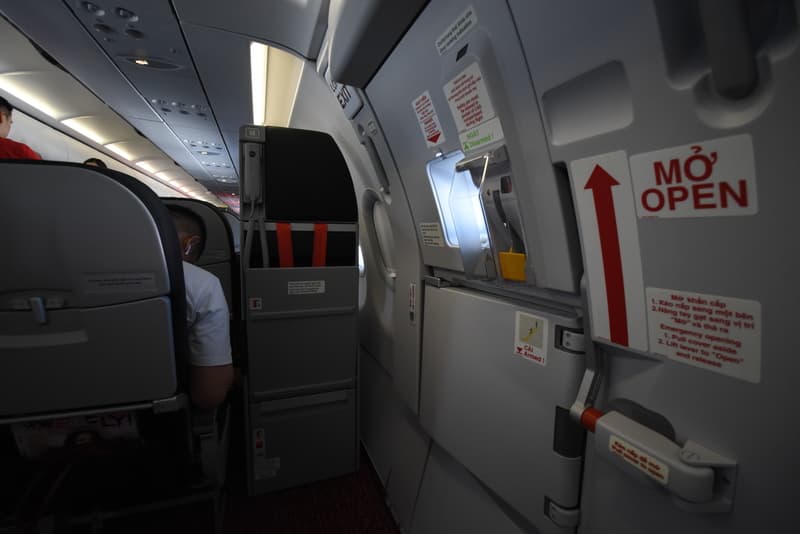
Flying used to be boring. You sat in your tiny seat, ate your tiny pretzels, watched a movie on a screen the size of a paperback, and landed. That was it. But something has shifted in American air travel over the past few years, and late May 2026 gave us back to back reminders that some people simply cannot handle being 36,000 feet in the air inside a metal tube with 150 strangers.
Two separate flights, two separate airlines, two separate passengers who decided mid-flight was the right time to try prying open an airplane door. One of them also went after the cockpit. Let's talk about what happened, who stopped it, and what these people are actually facing now.
The Frontier Flight From San Juan That Never Made It to Chicago
On the night of May 31, 2026, Frontier Airlines Flight 3345 took off from San Juan, Puerto Rico, headed for O'Hare International Airport in Chicago. About 45 minutes into the flight, a 51-year-old passenger named Juan Gabriel Reyes decided he wanted off the plane. At 30,000 feet. Over the ocean.
According to a police arrest affidavit, Reyes told people on the plane he wanted to get off, then started trying to open the emergency exit door. Flight attendants told him to sit down. He ignored them. Then he walked to the front of the aircraft and shoved against the cockpit door, trying to force his way into the pilot's cabin.
The crew managed to move Reyes to a different seat. An off-duty flight attendant volunteered to sit in his row on the aisle, basically acting as a human barrier. But when that off-duty attendant got up to use the bathroom, Reyes allegedly grabbed at his bag. When told to stop, Reyes attacked the man and tried to choke him.
That's when other passengers jumped in.
The MMA Fighter in Seat 31-C
Josh Longood, a 37-year-old from Mansfield, Ohio, was on his way home from his brother's bachelor party in Puerto Rico. Longood is a former professional MMA fighter, and he'd been watching Reyes get increasingly agitated from his seat. He told a local news outlet that he already had his feet in the aisle because he could feel something bad was about to happen.
"As soon as he jumped on him, I just controlled him safely, kind of pushed him against the window," Longood said. He restrained Reyes using a seat belt and then helped other passengers shackle him with hand ties. But Reyes kept trying to slip out of the restraints. Longood had to physically hold him down for another 30 minutes while the plane diverted to Miami International Airport.
"He started to slip out on our descent to Miami, so I just kind of sat with him, holding him down and kind of treated him like a little kid that was throwing a tantrum," Longood said. A 2007 graduate of Mansfield Senior High and a 2012 Ohio State grad, Longood kept things calm and even joked with Reyes during the ordeal. The plane landed safely around 11:55 p.m. ET, where Miami-Dade Sheriff's police were waiting on the tarmac.
What Reyes Is Facing Now
Reyes was taken into custody by the Miami-Dade Sheriff's Office and then turned over to the FBI for questioning. He was initially arrested on a misdemeanor battery charge, but the situation has escalated since then. According to court records, Reyes now faces federal charges including interference with flight crew members and assault within maritime and territorial jurisdiction.
Longood told reporters he believes Reyes's behavior was fueled by alcohol. That lines up with what aviation experts have been saying for years: booze and flying at altitude is a bad combination that keeps getting worse. Frontier confirmed the flight continued on to Chicago a few hours after the emergency landing.
Nine Days Earlier, the Same Thing Happened on United
The Frontier incident wasn't even the first door-opening attempt that month. On May 22, United Airlines Flight 1551 departed Newark Liberty International Airport bound for Guatemala City. Somewhere over the eastern seaboard, a passenger moved toward Door 2L, the mid-cabin left exit, and tried to compromise the door mechanism at 36,000 feet.
Before getting any further, the passenger assaulted a fellow traveler near the door. The flight crew restrained him and the pilots immediately diverted to Washington Dulles International Airport, landing safely at approximately 8:38 p.m. The Boeing 737 MAX 8 was carrying 145 passengers and six crew members.
Air traffic control audio captured by ABC News recorded the pilot telling Potomac Approach controllers exactly what happened: "Door 2L, at thirty-six thousand feet, and then assaulted a fellow passenger." Federal law enforcement from the Metropolitan Washington Airports Authority met the plane on the ground. United confirmed no injuries were reported, provided overnight accommodations, and scheduled a replacement flight for Friday morning. The original flight was canceled.
Then a Third Incident, One Week Later
Just to pile on, another United flight had its own cockpit breach attempt on May 29. United Flight 2005 from Chicago to Minneapolis diverted to Dane County Regional Airport in Madison, Wisconsin, after a passenger made multiple attempts to reach the flight deck. Air traffic control recordings reviewed by ABC Chicago confirmed the passenger tried repeatedly to get into the cockpit before being restrained.
Three incidents in ten days. Two different airlines. All resulting in emergency diversions, federal law enforcement responses, and a whole lot of terrified passengers.
Can You Actually Open a Plane Door at Cruising Altitude?
Here's the thing everyone wants to know. The short answer is no. Not even close. It is physically impossible for any human being to open the door of a pressurized commercial aircraft at cruising altitude.
Modern airliners use what engineers call plug doors. These doors must first move inward before they can swing outward. When the cabin is pressurized (which it always is at cruising altitude), the air pressure inside the plane pushes against the door with enormous force, sealing it into its frame like a bathtub plug. At a typical cruising altitude with an 8 psi pressure differential, a standard airplane door measuring about 20 square feet has roughly 40,000 pounds of force pressing it into the frame. The strongest human on earth can exert maybe a few hundred pounds of force. It's not happening.
But the fact that it's physically impossible doesn't make the attempt any less dangerous. It causes panic. It diverts the crew's attention from flying the plane. It forces emergency landings that cost airlines hundreds of thousands of dollars. And it terrifies every single person on board who doesn't know the physics.
The Legal Consequences Are Brutal
The FAA operates under a zero tolerance policy for unruly passengers. That means no warnings, no counseling sessions, no second chances. If you interfere with a flight crew member, the FAA goes straight to enforcement action.
Civil penalties can reach $43,658 per violation. One incident can involve multiple violations, meaning a single outburst can generate a five or six figure penalty before any criminal charges enter the picture. On top of the fines, cases get referred to the FBI when warranted, and criminal prosecution can lead to felony convictions.
Then there are the airline consequences. Airlines maintain their own internal no-fly lists, and unruly behavior is the number one reason passengers end up on them. These bans can be permanent, at the airline's discretion, with no standardized appeals process. The TSA can also suspend or permanently revoke your PreCheck enrollment. A first offense can result in a suspension of up to five years, and serious incidents can mean permanent disqualification.
The Numbers Keep Climbing
The FAA had received 687 reports of unruly passengers in 2026 as of late May. That's more than 600 incidents in less than five months. While the numbers have dropped significantly from the record highs of early 2021, when mask mandates were fueling rage in every aisle, recent increases suggest the problem is not going away.
These incidents range from verbal arguments with crew to full blown physical assaults and attempts to access aircraft systems. Door opening attempts and cockpit breaches sit at the very top of the severity scale. The FAA's Common Strategy framework, developed jointly with the TSA and airlines after September 11, classifies these as the highest threat levels, triggering the most aggressive crew responses and immediate law enforcement involvement.
What Happens Next
Juan Gabriel Reyes is facing federal charges. The United Flight 1551 passenger's case remains under investigation. The passenger from the Chicago to Minneapolis cockpit breach attempt has not been publicly identified yet. In every case, the planes landed safely, the crews did their jobs, and regular passengers like Josh Longood stepped up when things got dangerous.
Longood put it simply when talking to reporters: "I knew I had to be the one to step in and I knew I could do it safely without anybody getting injured." Not everyone on your next flight will have MMA training. But three times in ten days, ordinary flights turned into something passengers will never forget. And all three times, the same basic truth held: no matter how hard someone tries, they're not getting that door open at 36,000 feet. The physics won't allow it. The law won't forgive it.
Most read
This week

World
Police Clear Crowd Blocking Harry and Meghan's Car in Nottingham

Crime
Police Arrest Four in Shooting of 49ers' Keion White
Crime
Armed Bystander Kills Teen Gunman After 4 Die at Oregon School
Crime
Jammed Rifle Stopped Aurora Temple Attack, Prosecutors Say

Politics
Trump Administration Seeks to Strip Ilhan Omar of Citizenship