Trump Urged Jensen Huang to Fight to Keep Nvidia Job
Private phone calls all week, and the president repeated the contents out loud.

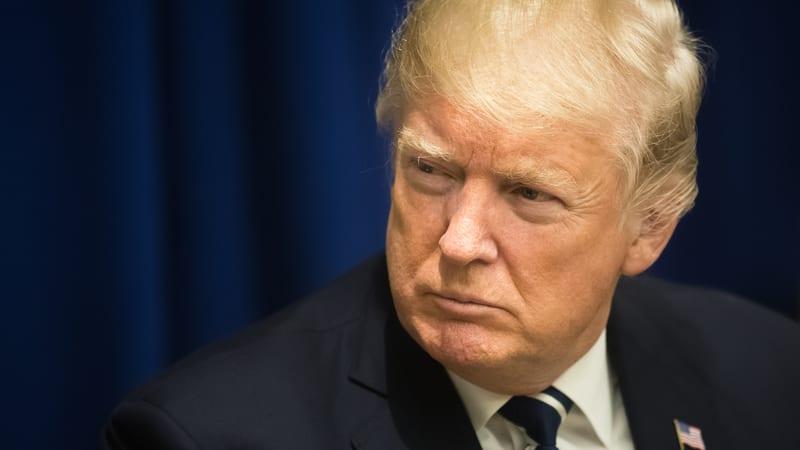
President Donald Trump called Jensen Huang on Tuesday and urged him to fight to keep his job as chief executive of Nvidia, two people familiar with the conversation told The New York Times. Huang announced his resignation on Thursday anyway.
Huang, 63, had run the chipmaker for 33 years and built it into a $4 trillion company that, until recently, was the most valuable in the world. He quit after reports of multiple affairs, including with two subordinates at Nvidia and with a businesswoman whom U.S. intelligence suspects of spying for Beijing.
Trump Confirmed the Calls Himself
Trump, 80, talked about the conversation with sports commentator Stephen A. Smith on the podcast Straight Shooter. Asked whether Huang should have stepped down, the president said it depended on one unresolved question.
"Well, the big thing is, was the woman a spy? And I don't know if that's been determined yet, but if the woman was a spy, yes. If the woman was not a spy, perhaps it would be different," Trump said.
He also told Smith what Huang said on the phone. "I spoke to him yesterday, he's going through hell," the president said. "What he feels most badly about is his wife and family." Trump called Huang "a tremendous talent" and predicted that "somehow, he'll end up on his feet."
CNN reported that the two men spoke by phone twice that week: once on Monday, when Trump said he called to check in, and again on Tuesday.
Aides Said the Markets Worried Him More Than the Spying
Aides told the Times that Trump was less concerned with the national security side of the scandal and treated it mainly as a matter of adultery, which he brushed off as having nothing to do with the country's defense.
What did bother him was the stock market. Aides said the president viewed Huang's success as tied to the U.S. economy and asked them what would happen to markets if Huang stepped down, worried about a sudden drop. Trump's close ties to Huang have drawn fresh scrutiny since the resignation.
The Woman at the Center of It
On Oct. 29, reports surfaced about Huang's close relationship with Alice Huang, a Chinese national and former executive at the Singapore-based firm Megaspeed, a data center company that bought Nvidia chips. The two are not related. Nvidia initially described the interactions as not unusual or unexpected.
U.S. intelligence officials suspect Alice Huang is a suspected spy for Beijing. The Justice Department has said it has reached no conclusion, and China's foreign ministry has rejected the allegations.
On Nov. 8, Huang admitted the affair in a letter to employees. "I was unfaithful to my wife," he wrote. "My actions hurt her and our children. There is no excuse for what I did." At that point Trump still said Huang should stay in the job, calling him an "honorable guy" and adding, "I think he probably has an excuse for it."
Two More Names in Three Days
On Nov. 11, The New York Times, citing five people who had worked at Nvidia, reported that Huang had shared an "affectionate" relationship with Kimberly Powell, the company's vice president of health care, who reports directly to him. Nvidia, Huang and Powell did not confirm it.
Reuters reported a third alleged relationship the next day, with an Nvidia subordinate it did not name.
The whole collapse, from the first report about Alice Huang to the resignation, took less than three weeks.
Inside His Last Hours in the Job
Bloomberg, citing a person familiar with the situation, reported that Huang looked "broken and shattered" in his final hours as CEO, and that his "legendary energy" was gone. His "take-charge" manner had evaporated and he was using phrases like "whatever" and "I don't care."
People in the room as he resigned said the executive famous for picking over everything from chip design to junior employee wages "had given up." People who spoke with him in recent days said he was calling himself a "piece of s---."
Nvidia Moved Fast
The board accepted the resignation Thursday and named chief financial officer Colette Kress interim CEO. Longtime director Harvey C. Jones became the company's first board chair.
"The Board has full confidence in Colette and the leadership team, and we expect the company's operations, customer commitments and product roadmap to continue without interruption," Jones said in the release announcing the change. Kress was quoted in the same release. Huang was not.
The company said it would search for a permanent CEO and consider internal and external candidates.
Trump Named a Replacement Who Already Has Another Job
Hours after the resignation, Trump posted on Truth Social that "there is only one man to take his place" and named Tim Cook of Apple. "A Legend replaces a Legend!" he wrote. He raised Cook's name with Smith too, crediting him with making Apple "one of the great companies of the world."
Cook is not Apple's CEO. He handed the job to John Ternus on Sept. 1 and became executive chairman, a transition Macworld reported in April.
Replies piled on. "Not a great idea," one person wrote. "Apple is way behind on AI because of Tim's leadership." Another asked whether Cook would have to change his name from Tim Apple to Tim Nvidia, a callback to Trump calling him "Tim Apple" at a 2019 White House meeting.
Congress Has Dates on the Calendar
Senate Banking Committee Chairman Tim Scott, Republican of South Carolina, asked Huang to testify publicly on Dec. 3 and Commerce Secretary Howard Lutnick to appear on Dec. 10.
"Recent reports raise serious concerns about our national security and the protection of sensitive U.S. technology," Scott wrote on X. "The American people deserve answers." In a letter to Huang, he warned that if Huang did not appear voluntarily, the committee was prepared to use all tools at its disposal, including subpoenas.
Three House Republican committee chairs have separately asked Huang to sit for a transcribed interview on Dec. 1. Lawmakers on both sides of the aisle have pressed for an investigation of Huang and Nvidia.
What It Means If You Own an Index Fund
Nvidia shares fell Thursday after the announcement. Financial advisers told CNBC that people holding broad mutual funds and ETFs can mostly ignore the swings.
"It's not a big deal," said Philip Chao, a certified financial planner and chief investment officer at Experiential Wealth. "Most people are just reacting to the sensational aspect of this [news]."
The Vanguard S&P 500 ETF, a roughly $1.7 trillion fund, held about 8.4% in Nvidia as of Sept. 30. By Experiential Wealth's math, a 5% drop in Nvidia would cost that fund 0.42% of its value, and a 10% drop would cost 0.84%, all else equal. A flash poll of CNBC's Financial Advisor Council and Financial Advisor 100 on Thursday found 18 respondents planning to hold their Nvidia allocations steady for clients.
Not Everyone Read the Story the Same Way
Dave Lu, founder of Hyphen Capital, whose nonprofit fights discrimination against Asian Americans, wrote to CNBC that the community was "heartbroken" by the week's news.
"It's hard to describe what it meant to see someone who looked like us ascend to become the face of the AI revolution on the global stage," Lu wrote. "... From washing dishes at a Denny's to running the most valuable company in the world. Our kids were proudly dressing up in leather jackets for Halloween. That all came crashing down in a matter of days."
Lu noted that the U.S. government has not presented proof of espionage, and said Huang was being treated differently from white executives including Larry Ellison, Elon Musk, Bill Gates and Jeff Bezos, who reportedly had extramarital affairs and kept their jobs.
The Family, the Shares, and the Ballroom Check
Huang has been married to his wife, Lori, 64, for 41 years. They met as undergraduates at Oregon State's College of Engineering in the early 1980s after being paired as lab partners in an electrical fundamentals class. She is president of the couple's private charitable foundation, the Jen-Hsun Lori Huang Foundation, according to IRS filings cited by CNBC.
The couple jointly own around 800 million shares of Nvidia, worth roughly $135 billion even after the stock's recent slide, CNBC reported. Their two children, Madison and Spencer, both in their thirties, work at the company.
Huang had been a fixture in Trump's orbit, attending a White House luncheon with tech executives in September and a White House medal ceremony in October. Nvidia committed $25 million toward Trump's White House ballroom, The Washington Post reported.
Trump, describing the phone call to Smith, said Huang had told him what he regretted most. "He called me and he said, 'Uh, what I've done to my wife and family is...' that's what he talked about."
Most read
This week
World
148 Sickened Aboard Caribbean Princess, CDC Says

Business
Allstar Recalls 265,000 Sharper Image Fire Pits After Burns

Business
18 Hurt in Missouri Crash Involving Prison Bus and Ethanol Tanker

Entertainment
Larry Poindexter Dies at 66, Days After Being Hit by Car

Politics
Trump Faults Vance for Not Defending Iran War Decision, Report Says