Trump's Approval Rating Plunges to 37% and the Numbers Keep Getting Worse
The collapse is happening faster than almost anyone expected.

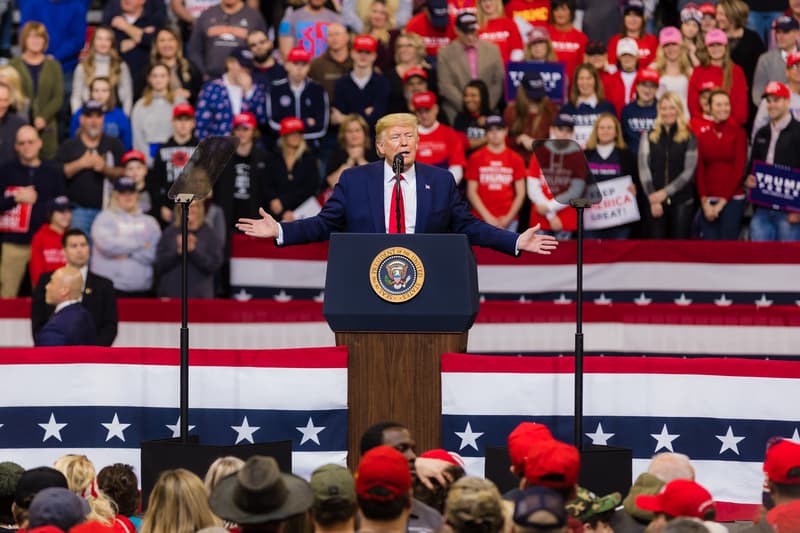
Donald Trump's approval rating has hit 37% among registered voters in a new New York Times/Siena poll released this week, marking his lowest point since returning to the White House in January 2025. That's a 3-point drop from the last time the same pollster checked in, and it continues a slide that has been picking up speed all year. The economy, gas prices, and the war in Iran are all dragging him down. And the bleeding isn't just coming from Democrats or independents. It's coming from inside the house.
The Big Number and Why It Matters
Let's put 37% in context. When Trump started his second term, his approval sat around 47%. That was already the second-lowest starting point for any president in modern polling history, trailing only his own first term. The fact that he's lost roughly 10 to 13 points since then tells you everything about the direction things are heading. The Silver Bulletin tracking average now puts his net approval at negative 20.1, and it's been hitting new lows almost weekly. Just one week earlier it was negative 19.1. The week before that, negative 18.6. This isn't a plateau. It's an accelerating drop.
Multiple polls from different organizations are all converging on the same picture. A Pew Research survey of over 5,000 adults put his approval at 34%. A Reuters/Ipsos poll landed at 34% among all respondents and 37% among registered voters. A Marist poll had him at 37% approve, 59% disapprove. An NBC News Decision Desk poll found 37% approval, 63% disapproval, with fully half the country saying they strongly disapprove. When every major pollster is finding the same thing using different methods, that's not noise. That's a signal.
The Economy Was His Signature Issue. Not Anymore.
Trump won in 2024 largely because voters trusted him on the economy. That trust has evaporated. According to the latest economic approval data, a CNN poll found his approval on the economy at just 30%, with 70% disapproving. That's a net rating of negative 40, the worst of his entire political career across both terms. To understand just how dramatic the shift has been, consider this: a Reuters/Ipsos survey taken the day Trump was inaugurated in January 2025 had him at plus 6 on net economic approval. The latest reading is negative 34. That's a 40-point swing.
In a YouGov tracker, the share of Americans who say the economy is "getting worse" jumped from 25% in January 2025 to 61% in May 2026. Only 18% say things are getting better. A CBS News poll found that 65% believe Trump's policies are making the economy worse in the short term, and about half think they'll make it worse in the long term too. When 73% of respondents disapprove of the way you're handling inflation, you've lost the argument.
Gas Prices Are Crushing Him
Nothing makes Americans angrier than watching the numbers climb on the pump. Gas prices have surged to a national average of $4.48 a gallon as of early May, according to AAA. Before the war with Iran, prices were below $3. That's a jump people feel every single week, and they know exactly who they blame. In an NPR/PBS News/Marist poll, 63% of respondents said they blame Trump for the increase. A third of Republicans agreed. And 81% of all respondents, including 79% of Republicans, said current gas prices are straining their household budget. When your own voters are telling pollsters they're hurting, that's a political emergency.
The CBS poll found that 59% say higher gas prices have caused financial hardship, up 8 points from April alone. More Americans now say their personal financial situation is worse than a year ago (40%) than at any previous point measured during Trump's second term. Only 19% say things have gotten better. The combination of tariffs, disrupted supply chains, and the closure of the Strait of Hormuz has pushed prices up across the board, from groceries to gas to everyday goods.
The Iran War Is Deeply Unpopular
The conflict with Iran has become a major weight around Trump's neck. About 65% of voters disapprove of how he's handling the war, and fewer than a quarter say the conflict has been worth its $29 billion (and counting) price tag. A full 64% of Americans say going to war with Iran was the wrong decision, including 73% of independents. A 48% plurality say they feel "less safe" because of the war, compared to 30% who feel more safe. Among independents, 58% feel less safe.
When polled about whether the war is worth it across multiple dimensions (financial cost, gas prices, regime change goals, casualties), majorities said no on every single one. The White House response, delivered by spokesperson Olivia Wales, was that the president doesn't make national security decisions based on "fluid opinion polls." That may be true, but elections aren't fluid. They happen on a fixed date, and the numbers right now look brutal for the GOP.
He's Losing His Own Voters
This is the part that should worry Republicans the most. Trump's support isn't just eroding among independents and Democrats. It's cracking within his own coalition. According to Pew Research, 78% of his 2024 voters currently approve of his job performance. That sounds high until you remember it was 95% in the early days of his term and 83% in January 2026. That's a 17-point drop among people who voted for him.
The cracks are widest among younger and Hispanic Trump voters. Only 57% of his voters under 35 currently approve, and just 70% of those between 35 and 49. Compare that to 87% among voters 50 and older. Hispanic Trump voters are at 66% approval, compared to 81% among White Trump voters. Among Republicans overall, 68% approve, down from 73% in January. Among "non-MAGA Republicans," approval fell from 69% to 55% in one CNBC survey. Even 37% of Republicans now disapprove of his handling of inflation, up 11 points since March.
The "Keeps His Promises" Problem
One of the steeper declines in the Pew data is on the question of whether Trump "keeps his promises." Only 38% of Americans say that describes him well, down from 43% last August and 51% right after his reelection in November 2024. Among Republicans specifically, 70% still say it describes him, but that's down 14 points from November 2024. The share who describe him as "mentally sharp" also dropped, from 48% last August to 44% now.
And there's a broader trust issue. A majority of Americans (56%) say the overall level of ethics and honesty in the federal government has fallen during Trump's term. Only 19% say it has risen. Meanwhile, 54% of Americans believe Trump is using his office for personal gain, and 70% reject his repeated suggestions about serving a third term. A January 2026 poll found that only 21% of respondents thought he was focusing on the right priorities, versus 47% who said his priorities were wrong.
What This Means for the Midterms
Historically, the party that holds the White House loses seats in midterm elections. In 2018, under Trump's first term, Democrats won the popular vote by nearly 9 points and flipped 41 House seats. In 2010, Republicans flipped 62 seats under Obama. Right now, Democrats lead by 5.3 points on the generic ballot, which is a swing of nearly 8 points from the 2024 election when Republicans won the House popular vote by 2.6%. A New York Times/Siena poll found that 50% of registered voters would vote for the Democratic candidate in their district today, up from 47% last September.
Democrats have a 10-point lead in the NPR/PBS News/Marist congressional ballot test. They also lead on voter enthusiasm, which is critical in midterms when turnout tends to be lower. In the Senate, Democrats now have serious pickup opportunities in North Carolina, Maine, Alaska, and Ohio. Iowa and Texas are no longer considered safe for Republicans. In the House, 21 Republicans won their seats in 2024 with margins under 8 points. Every one of those seats is now in play.
Analyst Harry Enten flagged one number that captures the danger for the GOP better than anything else: Trump received about 91% of the vote from Republican-leaning independents in 2024. Today, only 53% of that group approves of his job performance. That's down from 73% at this same point during his first term. If those voters stay home or flip in November, Republican candidates across the country are going to feel it. The question isn't whether Democrats will gain seats. It's how many.
Most read
This week
Politics
Seven Senate-Confirmed Treasury Officials Exit Amid Bessent Outbursts
Entertainment
Jim Bakker, Televangelist Who Went to Prison for Fraud, Dies at 86

Crime
Marine Devin Ballard Arrested in Okinawa Hotel Killing of Anna Yagi
Politics
Dennis Hastert, House Speaker Who Went to Prison, Dies at 84

World
Coast Guard Suspends Search for 6 on Air Ambulance Off Nantucket