TSA Seizes More Than 300 Drones at World Cup Sites
Bring one near a stadium and you may not get it back.

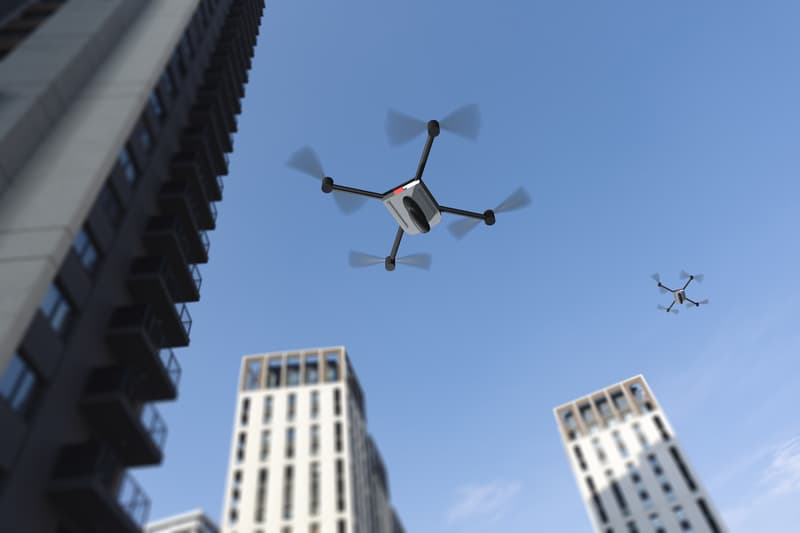
So you bought a fancy new drone and figured the World Cup would be the perfect place to grab some epic footage of the crowd, the stadium, maybe a goal celebration from above. Here is the problem with that plan: the federal government has already taken more than 300 of those drones out of the sky, and the people flying them are not getting them back.
The Transportation Security Administration announced the seizures on Tuesday, and the number covers just the first couple weeks of the tournament, which started June 11. The TSA called it the most thorough airspace security and drone effort in U.S. history. Whether you believe that exact claim or not, 300 confiscated drones in less than two weeks is a real number, and it tells you how many people decided the rules did not apply to them.
The rules are stricter than most people realize
Here is where a lot of folks are tripping up. On match days, every kind of aircraft, drones included, is banned within three nautical miles of a stadium and up to 3,000 feet in the air unless air traffic control specifically signs off on it. That is a big bubble of restricted sky.
The rules do not stop at the stadiums either. At fan gatherings and festivals, drones are barred within a one-nautical-mile radius and up to 1,000 feet off the ground. The FAA labeled every World Cup venue a "No Drone Zone," which is exactly what it sounds like. No taking off, no landing, no flying through. The point is that thousands of fans are packed into one spot, and nobody wants an unidentified flying object buzzing over their heads while they watch a game.
The fines will make your wallet hurt
If losing your $1,500 drone is not enough to scare you off, the price tag attached to breaking these rules should do it. The TSA spelled it out plainly: flying a drone in a restricted zone is a federal crime that can cost you up to $100,000 in criminal fines, plus prison time and the loss of your equipment.
There is also a separate civil penalty that can reach $75,000 per violation. Add it up and one bad decision with a remote control could cost you more than a car. The FBI is allowed to use specialized tools to grab drones out of the air, and once they do, the operator can face federal charges and immediate arrest. This is not a parking ticket situation. People are getting handcuffed.
One Atlanta arrest stands out from the rest
Most of the people getting caught are probably hobbyists who did not read the fine print. One case in Atlanta is a lot more complicated. On June 12, agents say they spotted 37-year-old Lorenzo Rojas-Martinez standing in a parking area near Centennial Olympic Park, flying a drone and recording video of the FIFA Fan Festival.
When agents asked for his ID and checked his license, they say they learned he had been removed from the country twice already and was in the U.S. unlawfully. He was charged with operating a drone in a restricted zone and illegal reentry after removal. According to investigators, he first crossed into the U.S. through Texas in 1999, was deported in 2013, came back, and was deported again in 2019. He also has a prior conviction for cocaine distribution. He was handed over to ICE. The FBI's Atlanta task force said his drone was one of 21 they had seized in that area alone.
Cities across the country are racking up seizures
The 300 number is spread across a lot of host cities, and the local stories are piling up. In Florida, the FBI's Miami field office said it wrote tickets to 49 drone operators and seized 54 drones in that state by itself. In Kansas City, a joint operation grabbed eight drones and their controllers for breaking flight restrictions around the stadium and a fan zone, with two operators handed violation notices on top of that.
Seattle had its own crackdown, where police seized eight drones and arrested two pilots. Seattle Police Chief Shon Barnes did not mince words when he talked to local reporters. "The anti-drone detection systems are monitored by our partners at the FBI," he said. "They have the technology to jam the signal or capture the drone if they need to. Do not bring your drones. Please don't do that so you don't lose your devices." That is about as direct as a police chief gets.
The technology catching these drones sounds like sci-fi
The way authorities are bringing these drones down is genuinely interesting. One method uses a device called a "DroneHunter," which is basically a drone that hunts other drones. It fires a net at the target, snags it, and then deploys a parachute so the captured drone floats gently to the ground instead of crashing into a crowd. It is a clean way to take something out of the sky without raining debris on people below.
There is also a lot of detection tech working behind the scenes. Radio-frequency sensors use AI to pick up drone signals that humans cannot hear, which matters because crowd noise stays loud and steady the whole match. And here is the twist a lot of fans miss: the government banned your drone while flying its own. Skydio's autonomous drones are being used in every host city as eyes in the sky, feeding high-quality video to security teams for crowd monitoring. Authorized drones good, your drone bad.
The price tag on all this security
None of this happened by accident. Before the tournament, the federal government distributed $250 million specifically for counter-drone security. FEMA handed that money to the 11 World Cup host states plus Washington, D.C., to buy equipment, software, and training to detect, track, and disable unauthorized drones.
Andrew Giuliani, who runs the White House Task Force on the World Cup, said all 78 matches being held in the U.S. will have counter-drone protection. The seizures so far are an early test of whether that quarter-billion dollars was money well spent. The FBI also set up an International Police Cooperation Center that acts as a command post, pulling in law enforcement from 46 countries. FIFA expects more than 5 million people to attend the 104 matches, so the security footprint is enormous by design.
What officials are not saying
For all the firm talk, there are some details the government has kept quiet. Officials have not released a full city-by-city breakdown of where the 300-plus drones were seized, and they have not given a total count of arrests or charges. So we know the headline number, but not the fine print behind it.
One thing worth keeping in mind: there is no indication that any of these seized drones carried weapons or were part of a planned attack. Most appear to be regular people who wanted cool footage and ignored the rules. That does not make it legal, but it does mean the 300 number is more about enforcement than any single threat.
If you see one, here is what to do
The advice from every agency involved is the same and it is short. Leave your drone at home if you are anywhere near a World Cup stadium or fan event. The cameras and footage you think you will get are not worth losing the device, eating a five-figure fine, or getting arrested at a soccer game.
If you spot a drone behaving in a way that seems off, authorities want you to report it by calling 911 or 1-800-CALL-FBI. The tournament runs through July 19, with the final at MetLife Stadium in New Jersey. That is almost a month of matches still to play, which means the enforcement teams are not going anywhere, and that 300 number is only going up. If you own a drone, the smartest move is simple. Keep it in the case until the whole thing is over.
Most read
This week
Health
Pennsylvania Measles Cases Top 1,000, Largest Outbreak in 30 Years
Crime
Andrew Tanaka Charged With Four Counts of Attempted Murder on I-35
Crime
FBI Arrests 18-Year-Old in ISIS Plot to Attack Mall of America
Crime
Christa Pike Awake and Speaking After Tennessee Execution Fails
Politics
Seven Senate-Confirmed Treasury Officials Exit Amid Bessent Outbursts