United Flight to Spain Returns After Device Named 'BOMB' Appears
One tiny setting on a teenager's device caused a massive mid-ocean emergency response.

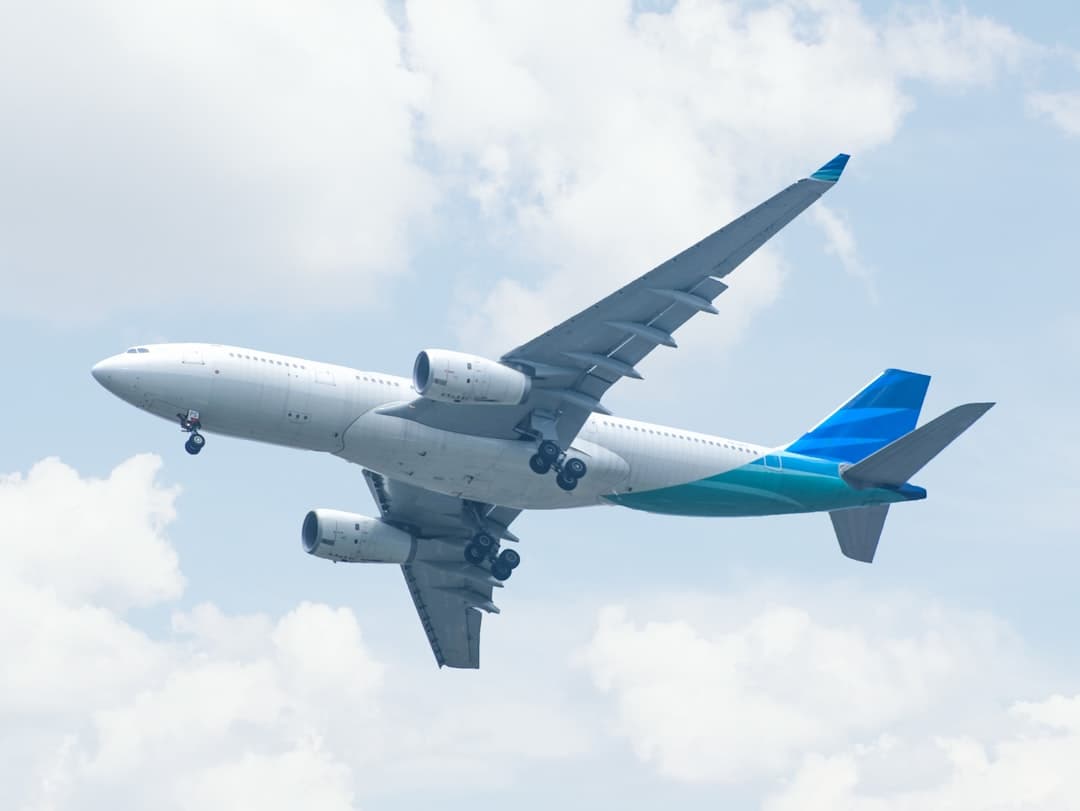
A Saturday evening flight to Spain turned into a ten-hour nightmare for 190 passengers, and it all started with one word on a Bluetooth screen. United Airlines Flight UA236, a Boeing 767 headed from Newark to Palma de Mallorca, was cruising at 32,000 feet over the Atlantic when the crew made a startling announcement over the PA system. Every passenger needed to shut off their Bluetooth. Immediately.
What followed was a tense chain of events that ended with the plane reversing course, a massive police presence on the tarmac, and one 16-year-old in very serious trouble.
The Word That Turned a Plane Around
About an hour and a half into the flight on May 30, 2026, a passenger or crew member noticed something alarming on their phone's Bluetooth pairing screen. A device name reading "BOMB" was broadcasting to every phone, tablet, and laptop within about 30 feet. Because Bluetooth discovery is completely passive, nobody had to do anything to see it. The name just appeared automatically on nearby devices, popping up the way any nearby speaker or headphone would when you're looking for something to pair with.
A passenger flagged it to a flight attendant. And from that moment, there was no pumping the brakes on what came next.
The Crew Gave a One-Minute Warning
The flight crew made repeated announcements, each one more urgent than the last. They told passengers that the directive was coming straight from United's corporate headquarters in Chicago. Turn off your Bluetooth, or this plane is going back to New Jersey. It wasn't a suggestion. It was a deadline.
Passengers described the cabin atmosphere shifting quickly from confusion to anxiety to outright frustration. The crew gave a final one-minute ultimatum. When at least two Bluetooth devices remained active after that countdown expired, the decision was made. The pilots punched in the 7700 squawk code, the universal aviation signal for an in-flight emergency, and began turning the 767 back toward Newark.
At that point, the plane was somewhere around the longitude of Nova Scotia. FlightRadar24 data showed it executing a full 180-degree turn over open ocean.
This Wasn't Just the Pilots' Call
One detail that stands out about this incident: the decision to divert didn't come from the cockpit alone. United's entire operations center in Chicago was involved. That means dispatchers, security coordinators, and corporate leadership all weighed in before the plane reversed course. The airline's ground infrastructure also coordinated law enforcement to meet the aircraft on arrival.
This wasn't a panicked captain making a snap judgment. It was a coordinated, company-wide security response. And under current aviation protocols, they really had no choice. A device name reading "BOMB" visible to dozens of passengers triggers the same mandatory response as someone standing up and yelling the word out loud. There's no "wait and see" option when you're in the middle of the Atlantic Ocean.
What Happened on the Ground Was Its Own Ordeal
The plane landed back at Newark just before 9:00 PM. But for the 190 passengers on board, the chaos was far from over. The aircraft didn't pull up to a regular gate. Instead, it was directed to a remote area north of the terminal, where a stair truck was waiting. Onlookers inside the terminal shared photos of a long line of police cars parked on the tarmac.
Passengers were told to grab their passports and phones only. Everything else, including carry-on bags, stayed on the plane. They were loaded onto buses and driven around the tarmac for roughly an hour while security teams swept the aircraft and all checked luggage.
Then came the kicker: everyone had to go through TSA security screening a second time. Even though their bags were still sitting on the plane. The reasoning was straightforward. Authorities wanted to make sure the offending device hadn't been ditched or handed off to someone else during the chaos.
United handed out meal vouchers while passengers waited. Small comfort for a Saturday night stuck in Newark.
The 16-Year-Old Behind It All
Law enforcement traced the Bluetooth signal to a 16-year-old passenger who reportedly admitted the device was his. According to multiple outlets, the teenager was taken into custody for questioning. Authorities ultimately determined that neither the kid nor the device posed any actual threat.
Some reports initially said the device was a portable Bluetooth speaker. Others identified it as a Fitbit, the wearable fitness tracker that also has Bluetooth capability. One interesting wrinkle that came up in online discussions: a company called Hellottec actually manufactures a Bluetooth speaker literally named "BOMB." That raised the question of whether the device name was a factory default rather than something the teenager deliberately chose.
That distinction matters. A lot, actually. But for the aviation security system, intent is irrelevant in the moment. A device broadcasting "BOMB" at 32,000 feet gets treated as a real threat, full stop.
Passengers Were Livid
Reddit and TikTok blew up with firsthand accounts almost in real time. One person on the flight posted: "Now we all have to go back through airport security for some reason. Even though all of our bags are still on the plane." The captain and flight attendants reportedly made comments during the ordeal implying that someone was "playing a joke," which only made the cabin mood worse. Multiple passengers were overheard saying things like "this little joke is ruining it for everyone."
One TikTok user who identified herself as a passenger posted about the ordeal in detail, and later followed up with a video of herself drinking sangria, geotagged to Palma de Mallorca. So the trip did happen. Eventually. The replacement flight, operated by the same 767 (registration N67052), didn't take off until around 2:30 AM the next morning. It landed in Spain at 3:47 PM local time on May 31, roughly nine and a half hours behind schedule.
The Flight Was Already Having a Bad Day
Here's the thing that makes this even more painful for the people on board. Flight UA236 was already running late before any of this happened. The plane departed nearly two hours behind schedule due to an unrelated technical issue. So if you were one of those 190 passengers, your evening went something like this: a two-hour delay, an hour and a half of normal flight, a dramatic U-turn, a landing surrounded by police, an hour on a bus circling the tarmac, a second trip through TSA, a wait for a new crew, and a 2:30 AM departure. The total delay from the originally scheduled arrival time was over nine hours.
United Airlines told multiple outlets that the flight returned to Newark "to address a potential security concern" and that it eventually continued with a new crew. That's it. No mention of consequences for the teenager, no apology, no further comment.
What Could Happen to the Teen
Whether the kid meant it as a prank or didn't even realize his device name would cause a problem, the legal situation is no joke. Triggering a false bomb threat, even through a device name rather than spoken words, can constitute a federal offense under U.S. law. The charges could include interference with a flight crew or conveying false information about a threat to aviation. "It was just a prank" is not a legal defense when federal agents are involved and an airline burns tens of thousands of dollars in fuel alone on a transatlantic return leg.
The FBI has reportedly opened an investigation. United has not publicly stated whether the teenager will face a lifetime ban from the airline, though that's standard procedure in cases involving bomb threats, real or otherwise.
A Gap Nobody Thought About
This whole situation exposed something that security experts are now talking about. TSA screens for weapons, liquids, and prohibited physical items. Nobody at the checkpoint is running a Bluetooth scan looking for device names like "BOMB" or "EXPLOSIVE." It's a gap. A person doesn't need to carry anything illegal to cause a full-scale security response. All they need is a Bluetooth-enabled device with a threatening name and a cabin full of people whose phones are set to discover nearby devices.
People online pointed out the obvious: anyone with an actual bomb wouldn't advertise it via Bluetooth. That's true. But aviation security doesn't operate on probability assessments at 32,000 feet. It operates on protocols. And the protocol says: treat it as real until you can prove it's not.
So the next time you're setting up a new speaker or renaming your phone's Bluetooth, maybe pick something boring. "John's Speaker" works fine. It won't get you questioned by the FBI, and it definitely won't turn a plane around over the Atlantic Ocean.
Most read
This week

World
Yorkshire Wildlife Park Reopens Tiger Area to Thin Crowds
World
Police Clear Crowd Blocking Harry and Meghan's Car in Nottingham
Crime
Police Arrest Four in Shooting of 49ers' Keion White
Crime
Armed Bystander Kills Teen Gunman After 4 Die at Oregon School
Crime
Jammed Rifle Stopped Aurora Temple Attack, Prosecutors Say