US Secretly Preps Military Action Against Cuba
Six kinds of units, a four-month window, and a document that never says Cuba.
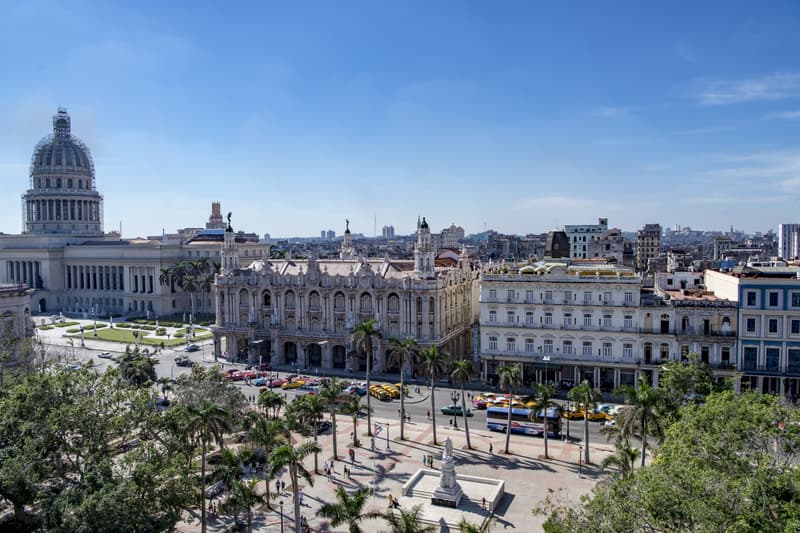
The U.S. Army Reserve has asked its subordinate commands whether they could give U.S. Southern Command police forces, medical personnel and other support units within the next four months, according to an internal Army message reviewed by CBS News.
The message never mentions Cuba. Multiple U.S. officials told CBS News the request is part of continued military planning aimed at the island. They spoke on condition of anonymity because they were not authorized to speak publicly.
Nothing in the document indicates that any unit has received deployment orders.
Six types of units, and a 90 to 120 day window
Army Reserve headquarters wanted feedback on the possible availability of six kinds of formations that would fall under Southern Command. The units would be "possibly [be] needed in 90-120 days," the message says, and commands were told to respond to headquarters by Sept. 25.
One is a combat sustainment support battalion, which handles logistics: transportation, maintenance, fuel and supply. The message also asks about an engineer battalion and an expeditionary sustainment command, the outfit that runs logistics across an entire theater of operations.
The other three are medical and security formations. A medical brigade to command and coordinate medical units. A forward resuscitative and surgical detachment, which provides emergency surgery and trauma care closer to U.S. forces. And a military police brigade, the kind of formation that oversees security, detention and other law enforcement missions.
The document does not say how many troops would be needed, where they would go, or what operation they would support. Southern Command's region covers Central and South America, including the Caribbean.
What Southern Command would and would not say
A spokesperson for U.S. Southern Command told CBS News: "Due to operational security concerns, we do not disclose details or comment on U.S. operational movements or potential deployment timelines associated with current or future operations, contingencies, or planning. However, U.S. Southern Command continuously coordinates with the Joint Force to assess a range of potential requirements across its [area of responsibility] in support of assigned missions."
The Army Reserve did not respond before publication.
Seafloor surveys and an air assault option
Earlier this year, American forces conducted reconnaissance on the seafloor and the maritime approaches around Cuba, multiple U.S. military personnel told CBS News. Separately, U.S. airpower components were put on heightened readiness and told to pre-stage personnel for a possible deployment. Those plans did not come to fruition.
In July, CBS News reported that military planners had looked at a range of options for possible action against the island. One was an Army-led air assault involving thousands of soldiers, carried out by the 101st Airborne Division, the only unit trained for that task. Officials stressed at the time that the briefings did not mean the president or the Pentagon had decided to go ahead.
In May, CBS News reported that U.S. intelligence officials were assessing how Cuba would respond to possible U.S. military action, as the Trump administration accused Havana of tightening its ties with Russia, China and Iran. The intelligence community's 2026 annual threat assessment largely describes Cuba as an enabling environment for larger geopolitical competitors rather than as an independent strategic threat.
Trump tells the UN the Cuban government will fall
Speaking at the United Nations General Assembly in New York on Sept. 22, President Trump said his administration was seeking a "fundamental change" on the island. He predicted Cuba's communist government "will fall" and said "freedom will be coming to Cuba." The Cuban delegation walked out during his remarks.
Trump also called Cuba "an absolutely failed state" and said the United States was reasserting its power, "including American military power where necessary," running through steps it has already taken in the region. He said the communist government is under "the biggest pressure they've ever been under."
He said Secretary of State Marco Rubio was "deep into negotiations" with Havana, and vowed the United States would not let foreign adversaries build a stronger foothold "on our own doorstep."
Rubio's offer, and who he will not deal with
Rubio said in New York on Sept. 23 that Washington is open to talking with Havana about a political transition to new leadership and an end to the decades-old trade embargo imposed after Fidel Castro's 1959 revolution. "Cuba has a golden opportunity to place itself on an irreversible path towards a better future," he said. "We are prepared to be helpful in that regard if they are open to it."
He drew a line on who qualifies. Washington is willing to work with Cuban leaders whose "hands are not stained with blood," Rubio said, while acknowledging that some are "at least publicly quite recalcitrant."
Rubio, the child of Cubans who left the island before the revolution, said American businesses and investors, including the Cuban diaspora, are ready to step in and help rebuild the economy if there is progress on political reform. Cuban officials deny that any talks are taking place.
Havana calls it economic warfare
Cuban President Miguel Díaz-Canel has vowed to counter any U.S. attack and has accused the United States of "aggression" and "economic warfare" for blocking oil imports to the island.
Cuban Foreign Minister Bruno Rodríguez called the embargo a policy of "economic asphyxiation" on Sept. 7 and described the blockade as "genocidal." The Cuban government says the embargo cost its economy $8bn between March 2025 and February 2026, the highest figure it has recorded and 7 percent more than the previous reporting period. That total does not include restrictions on the island's energy supply imposed in January or secondary sanctions imposed in May, Rodríguez said.
The fuel squeeze began in January
The U.S. squeeze on Cuba's fuel imports began in January and is still in place. A Jan. 29 executive order threatened tariffs on any country that supplies the island with oil. A Russian oil tanker carrying 100,000 tonnes of crude arrived in Cuba on March 30. In April, Cuba said it would pardon more than 2,000 prisoners.
On Sept. 17, ahead of the General Assembly, the Trump administration sanctioned four state enterprises in Cuba's nickel industry, four military research and development enterprises and three officers who run them.
More than 230 killed in 70 strikes
Since September 2025, the U.S. military has killed more than 230 people in 70 strikes in the Caribbean Sea and the eastern Pacific Ocean. That is a sharp break from the military's historical role in these waters, which was maritime drug interdiction and arrest.
Some legal experts have said the strikes amount to illegal extrajudicial killings, because U.S. forces are barred from intentionally targeting civilians or people suspected of criminal activity unless they meet the legal standard governing the use of military force.
Other operations in the region have been joint ones. In April, American and Ecuadorian troops launched a mission to dismantle a suspected criminal hub run by a narco-terrorist organization. On Sept. 24, U.S. troops and Drug Enforcement Administration agents helped Ecuadorian authorities arrest more than 30 people affiliated with Mexico's Jalisco New Generation Cartel.
Officials have a name for the broader posture. Since returning to office, Trump has pushed a more muscular U.S. role in the Western Hemisphere under what they call the "Donroe Doctrine," a Trump-era corollary to the Monroe Doctrine aimed at limiting foreign adversaries and other perceived threats in the region.
The annual vote Cuba keeps winning
Every year since 1992, the General Assembly has adopted a non-binding resolution calling for the embargo to be lifted, usually by a large majority. A July 7 vote on whether to even hold a debate on the resolution showed some slippage: 136 member states in favor, nine against and 30 abstentions, including longtime supporters Germany and Canada. The annual embargo vote is due again later this year.
Several world leaders used their General Assembly speeches to criticize the blockade. Brazilian President Luiz Inacio Lula da Silva said on Sept. 22: "In Cuba, the world watches in dismay as 10 million people face collective punishment from an illegal economic embargo and energy siege."
What Trump said in March
The president has been unusually direct about Cuba for months. On March 16, he told reporters in the Oval Office that he believed he would have "the honor of taking Cuba," then added: "Taking Cuba in some form, yeah." He also said, "I think I could do anything I want with it, if you want to know the truth."
Later that month he put it in four words: "Cuba's going to be next."
The Army Reserve message sits at a different altitude than any of that. It is a staffing question, and it asks about availability rather than ordering anyone anywhere. It also asks about surgeons, fuel handlers, engineers and military police, and it gives a window of 90 to 120 days.
Most read
This week
Entertainment
Michael Douglas Says He Hid Kathleen Turner Affair for 40 Years
Crime
Nathalie Belizaire Charged After 4 Children Found Alone During Cruise
Crime
Two Oxford Vape Clerks Charged in Ole Miss Kratom Investigation
Crime
Sinema's Ex-Bodyguard Arrested Again Over Knife at Phoenix Gun Shop
Entertainment
Judge Grants Restraining Order Against Halle Berry Over Choking Claim