Burglar Uses Waymo Robotaxi as Getaway Car in San Francisco Theft
The driverless car was supposed to be the perfect witness. It wasn't.

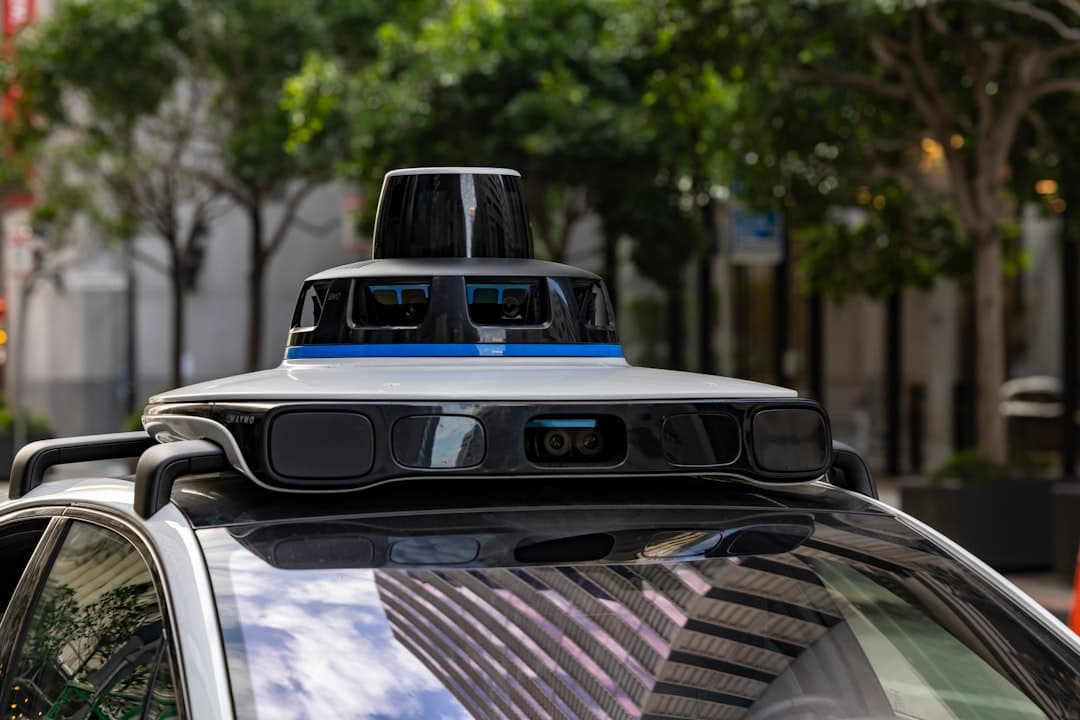
A burglar in San Francisco hailed a Waymo robotaxi, used it as a getaway car during a theft, and vanished. Six months later, police still have no idea who did it. The whole thing took less than three minutes. And the driverless car, packed with roughly 29 high-definition cameras and tied to a user account requiring payment information, turned out to be almost useless as a witness.
The case is strange, a little funny, and more than a little alarming. It raises real questions about what these camera-covered autonomous vehicles actually record, how long they keep it, and whether any of it can be used when it matters most.
What Happened at Hot 8 Yoga
The break-in happened in January 2026 at Hot 8 Yoga, a studio on Fillmore Street in San Francisco's Marina District. Security footage from the studio shows the suspect pulling up in a white Waymo Jaguar I-Pace, leaving the robotaxi idling outside, walking into the studio, grabbing an armful of men's activewear, and walking right back out. He loaded the stolen clothes into the trunk, climbed in, and the Waymo drove him away. The whole operation took under three minutes.
The studio manager put it simply: "He just stole a bunch of men's shorts."
It wasn't exactly the heist of the century. No broken windows, no safe-cracking, no high-speed chase. Just a guy, some yoga shorts, and a robot car waiting patiently at the curb like an Uber that doesn't ask questions.
Why the Cameras Didn't Help
Here's the thing everyone assumes about Waymo cars: they're rolling surveillance machines. Each vehicle is packed with around 29 high-definition cameras, inside and out, giving them a full 360-degree view of the world. They also require a user account tied to payment information. So you'd think catching someone who literally climbed into one and sat there during a crime would be, well, easy.
Sgt. Tim Faye, the detective assigned to the case, said it himself: "I would think it would be easier to solve in a Waymo."
But police didn't file a search warrant until April 2026, three months after the burglary. By then, Waymo had already deleted the interior footage from the ride. The company retains ride recordings temporarily, but it doesn't publicly disclose exactly how long. Whatever the retention window is, three months exceeded it.
The exterior footage was technically still available, but it was useless for identification. Waymo blurs faces on exterior camera footage for privacy reasons. So even though the cameras captured the suspect approaching and entering the vehicle, his face was obscured.
And the account data? It went nowhere. Police suspect the burglar used a burner phone or stolen credentials to set up the Waymo account, which is apparently not that hard to do. The account information Waymo turned over as part of the search warrant didn't lead to a real person.
The Gap Between Perception and Reality
This case puts a spotlight on something most people haven't thought much about. We assume autonomous vehicles are always watching and always recording. And technically, they are. But recording and retaining are two different things. Waymo's own support page says the company keeps information "while the account remains active" and retains certain data "when required by law or for legitimate business purposes." But it doesn't give a specific number of days or weeks for video footage. The language is deliberately vague, saying personal information won't be kept "longer than reasonably necessary."
That vagueness worked against investigators here. They didn't know exactly how long they had to get a warrant before the footage disappeared. And by the time they did, it was gone.
There's also a tension in how Waymo handles data requests from police. The company has said publicly that it complies with valid legal demands like warrants and subpoenas, but pushes back on requests it considers overly broad. Co-CEO Tekedra Mawakana has stated: "We obey law enforcement, but we also push back when appropriate." The company doesn't publish detailed numbers on how many data requests it denies.
So we're in a weird spot. The cars collect massive amounts of data. Terabytes per day across the fleet. But the data either gets deleted before cops can get to it, or it's been blurred to the point where it can't identify anyone. For privacy advocates, that's probably reassuring. For cops trying to solve a crime, it's a dead end.
The LA Case Went Very Differently
Interestingly, this isn't even the first time someone used a Waymo as a getaway car. In Los Angeles, also in January 2026, a suspect allegedly robbed a grocery store and then climbed into a Waymo to flee. That case ended very differently. Police cruisers pursued the Waymo vehicle, turned on their lights, and the car did what it was programmed to do: it pulled over. The suspect was arrested almost immediately.
The contrast between the two cases tells you everything. If police are physically present and can initiate a pursuit, a Waymo is actually a terrible getaway car. It obeys traffic laws. It stops for emergency lights. It doesn't speed. It's probably the most law-abiding vehicle on the road. But if there's any delay at all, if police aren't on scene when the crime happens, the digital trail can evaporate faster than you'd think.
In San Francisco, the burglar was long gone before anyone even realized what happened. The studio's own security cameras captured the whole thing, but the face wasn't clear enough for an ID. And by the time cops turned to Waymo's far more sophisticated camera system for help, the recordings had been wiped.
New California Rules Are Coming
California is starting to adjust to the reality that autonomous vehicles create a unique set of problems for law enforcement. Starting July 1, 2026, a new framework tied to Assembly Bill 1777 will let police issue citations directly to autonomous vehicle companies. That's a bigger deal than it sounds. Previously, traffic tickets were written to drivers, and robotaxis don't have one. Officers literally didn't have anyone to hand a ticket to.
Under the new rules, police can issue a notice of noncompliance to the manufacturer. Companies then have 72 hours to respond. The law also requires improved communication systems for first responders and allows temporary geofencing to keep autonomous vehicles out of emergency zones.
These changes are mostly about traffic enforcement and emergency situations, not necessarily solving burglaries. But they reflect a growing awareness that existing laws weren't built for a world where the car is the only one driving.
A Crime That Was Basically Inevitable
Looking back, it's almost surprising this didn't happen sooner. Waymo launched its self-driving service in San Francisco in June 2024. By May 2025, the company had completed over 10 million paid trips across its markets. That's a lot of rides, and it was really just a matter of time before someone realized a robotaxi is, in a way, the perfect accomplice. It doesn't remember your face. It doesn't ask where you're going or why you have an armful of stolen yoga pants. It doesn't call the cops. It just drives.
Waymo vehicles have already been part of plenty of strange incidents in San Francisco. They've been vandalized, spray-painted, blocked by angry bystanders, and even set on fire in Chinatown. But a human using one as a willing partner in crime is a different category entirely. It's not the car misbehaving. It's the car doing exactly what it was told to do, by someone who had no intention of getting caught.
Still At Large
As of early June 2026, the SFPD has not publicly identified or arrested anyone in connection with the Hot 8 Yoga burglary. The case remains open. Police have declined to comment further on an active investigation. The stolen items were men's activewear, likely worth a few hundred dollars at most.
The burglar got away with it. Not because they were some criminal mastermind, but because they apparently understood two simple things: Waymo deletes its footage, and a burner account is easy to set up. That's it. No disguise needed beyond whatever the exterior cameras would blur anyway. No high-tech hacking. Just a basic understanding of data retention policies and a willingness to steal some shorts.
It's a small crime with big implications. If a petty thief can beat the system this easily, it raises obvious questions about more serious crimes. Waymo's data retention practices are built to protect rider privacy, which is a legitimate concern. But the tradeoff is that the same policies that keep everyday riders' data from being hoarded indefinitely also let a burglar disappear into the San Francisco fog, one pair of stolen yoga shorts at a time.
Most read
This week

Politics
Kyle Kennedy, Granddaughter of Robert F. Kennedy, Dies at 42

Politics
Don Jr. Urged Trump Against Iran War, The Atlantic Reports

Crime
Shotgun in Bend School Shooting Was Birthday Gift, Sources Say
Politics
Trump Calls on New Mexico to Rename Itself New America
Business
Air Force Instructor Ian Patterson Dies in 170-Foot Fall at Alamodome