Wildfire Sets Off 400 Buried WWII Shells in French Village
Residents thought the blasts were gas tanks. The real cause was buried far deeper.

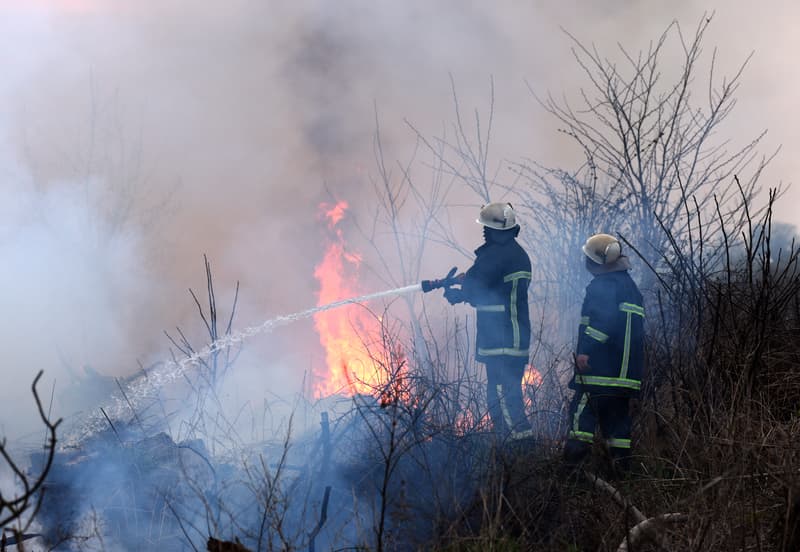
A wildfire near Bordeaux did something last month that nobody in the village of Le Porge saw coming. As the flames pushed through town in late July, the ground itself started going off. Loud bangs, one after another, dozens in a single night. Residents assumed propane tanks were cooking in the heat. They were wrong. Buried under their own streets and forests sat hundreds of World War II shells, and the fire heated them until they blew.
The village sits in the Gironde region of southwestern France, wine country, a short drive from the Atlantic beaches. It is a quiet place with about 3,500 people. For roughly ten days it was anything but quiet, and the reason had been sitting silently in the dirt for more than 80 years.
The Second Night Sounded Like a Battlefield
Mayor Martial Zaninetti counted more than 100 explosions on the second night of the fire. He described it plainly to a French broadcaster: it sounded like the sound of war. Not fireworks. Not a gas line. War.
The shells did not just pop in place. They flew. "They were going to the right, to the left," the mayor said, and one of them punched clean through a house. Picture living in a small beach town, watching a fire crest the tree line, and then watching decades-old ordnance get launched across your neighborhood like it was 1944 again. Nobody in Le Porge signed up for that.
For a while, even the firefighters on scene thought the noise was household gas cylinders bursting. It took time before anyone connected the blasts to something far older and far stranger buried under the pines.
What the Demining Crews Pulled From the Ground
Once the fire was under control, civil protection specialists moved in and started digging. They recovered more than 400 shells and munitions, a mix of German and French hardware. Mostly mortar rounds, plus a batch of high-explosive anti-tank shells. Philippe Delemotte, who runs the Bordeaux bomb disposal unit, said his team responded to the first blasts and pulled 75 shells out of a single field.
Delemotte pointed to the specific pieces they found, including a French mortar shell and some German 5-centimeter rounds sitting side by side. That detail matters. It tells you both sides left stuff behind here, which fits the region's history. This part of France saw German occupation and then Allied liberation, so the leftovers came from more than one army.
The plan now is to move the recovered munitions to a military site and destroy them under controlled conditions. That is standard practice. You do not haul live 80-year-old explosives down the highway and hope for the best.
Nobody Had These Bombs on a Map
The eerie part is that the village had no record of any of it. "There were ammunition depots buried in land within our municipality, but we didn't know it, and they exploded," Zaninetti said. This was not some marked old military base with a fence and a warning sign. It was completely undocumented for generations.
Fire Commander Thomas Mimiague was blunt about the mystery. "We don't really know why they're there; we think they were just abandoned," he said. Delemotte's best guess is that the site was an old demolition pit, a spot where leftover ammunition from the end of the war got dumped and was supposed to be destroyed but never fully was.
Delemotte also noted this is not routine, even for his crew. Bomb disposal teams in France do run into stray ordnance now and then, but he said what made Le Porge unusual was how the shells were scattered everywhere rather than stacked in one neat pile. The explosions themselves ended up doing the crew a favor by revealing where to look.
Eighty Years Later, They Still Went Off
You might assume that ammunition sitting in wet forest soil since the 1940s would be a dud by now. Rusted, dead, harmless junk. That assumption is exactly what got tested here, and it failed. These live mortars detonated on their own from the heat of the fire, no digging or handling required.
That is the whole point of the story for anyone living on top of old battlefields. Time does not automatically defuse this stuff. Give it the right trigger, in this case intense ground heat, and an 80-year-old shell can still do exactly what it was built to do. Le Porge got a real-time demonstration of that on a night most residents would rather forget.
Europe is full of buried leftovers like these. They keep turning up during construction digs, farm plowing, droughts, and now wildfires. Most sit undisturbed for decades. This time a fire went looking for them.
The Fire That Emptied the Town
Before the bombs became the headline, the fire alone was already a disaster. It broke out in mid-July, spreading through drought-dried forest in the Gironde after a heatwave and water shortages that started around July 22. The flames burned for roughly ten days before crews got the upper hand.
In Le Porge, the fire destroyed more than 180 homes. Most of the town's residents had to clear out as the flames closed in, with hundreds of firefighters deployed to hold the line. Images from the aftermath showed people picking through the charred rubble of houses that were standing a couple of weeks earlier.
Despite the 100-plus explosions and shells flying into buildings, officials reported no deaths and no serious injuries tied directly to the munitions. Given how the shells scattered across town in the dark, that outcome could have gone a lot worse.
Streets Marked 'Absolute Danger of Death'
On August 4, the Gironde prefect authorized residents to return to the main neighborhoods after a safety check. But the all-clear did not cover the whole area. Two housing estates stayed sealed while clearance work continued, marked with signs that read "Absolute danger of death, shells present." Not a phrase you expect to see nailed to a fence in a beach town.
Authorities also kept the nearby Atlantic coast access, a local campground, and the neighboring village of La Jenny off-limits while teams swept for anything they might have missed. In peak summer, in a region that lives on beach and campsite tourism, shutting all of that down is no small thing.
The sweeps are slow and careful by design. Crews are working charred, unstable ground looking for ordnance that already proved it can go off without warning. Getting families back into their houses was step one. Making the forests and dunes safe again is a longer job.
France's Largest Wildfires on Record
Le Porge was one piece of a much bigger emergency. Across France, the summer fires burned more than 160,000 hectares, about 617 square miles, ranking as the largest wildfires the country has ever recorded. The blazes did not stay put either, with fires also spreading into Greece and Italy during the same stretch of extreme heat.
President Emmanuel Macron called the situation "the most severe we have ever recorded, the toughest since the Second World War." That line hits different when a village in the same region is literally digging Second World War shells out of the ash. Prime Minister Sebastien Lecornu praised emergency crews and said the country had "stood firm" against an unprecedented crisis.
The evacuations reached far beyond one town. Roughly 330,000 people were moved across France and Spain during the two-week heat event. Le Porge just happened to be the spot where the fire dug up the past and set it off, one shell at a time.
For the people back in their homes, the strangest souvenir of this fire is not the burn scars on the trees. It is the knowledge that they were living on top of an old war stockpile the whole time and never had a clue. The fire is out. The digging is still going on.
Most read
This week

Entertainment
Michael Douglas Says He Hid Kathleen Turner Affair for 40 Years

Crime
Nathalie Belizaire Charged After 4 Children Found Alone During Cruise

Crime
Two Oxford Vape Clerks Charged in Ole Miss Kratom Investigation

Crime
Sinema's Ex-Bodyguard Arrested Again Over Knife at Phoenix Gun Shop

Entertainment
Judge Grants Restraining Order Against Halle Berry Over Choking Claim