900 Snakes Escape Flooded Farm in China After Typhoon Maysak
A collapsed wall in one village turned a flood into something stranger.

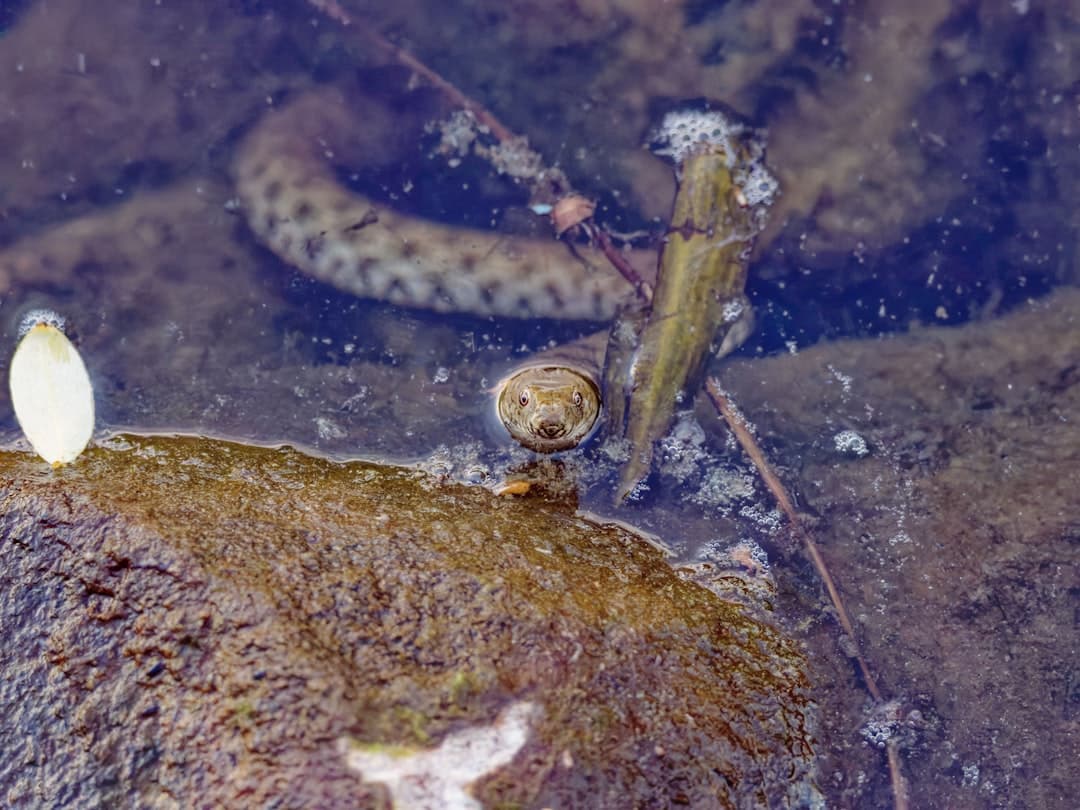
On the morning of July 6, floodwaters tore through a snake farm in southern China and let loose somewhere between 800 and 900 snakes. Some were venomous monocled cobras. Others were harmless water snakes. Either way, they all ended up in the same place: the flooded streets and homes of a village where people were already stuck, waiting on help that couldn't reach them.
The farm sat in Dengwei village, in the Yunbiao area of Hengzhou City, part of southern China's Guangxi Zhuang Autonomous Region. Days of heavy rain had pushed two nearby reservoirs past what they could hold. When the farm's walls gave out, the snakes went out with the current. What followed became one of the strangest side stories to come out of a flood disaster that killed at least 20 people.
How a Reservoir Breach Set the Snakes Free
The rain came from Typhoon Maysak, which stalled over Guangxi and dumped water for days. Two reservoirs, Liulan and Yunbiao, took on more than they were built to handle. Around 11 a.m. on Monday, two sections of the dam at Liulan Reservoir gave way, and the water surged downstream into low-lying villages.
The snake farm was right in the path. A local official named Wu Zhi, who heads the Dengwei village committee, said the farm's walls collapsed and the snakes were swept out. "The vast majority of the snakes have been swept away by the floodwaters," he told local media. "Currently, only a small number are found lingering on floating trash and debris trapped on the water's surface."
Video that spread online showed snakes cutting through brown water with their heads up, weaving between houses. In one clip, you can count at least three of them swimming out in the open. In another, two villagers stand knee-deep in the flood, trying to catch snakes with bamboo sticks. It's the kind of footage that went viral fast, and it's easy to see why.
Cobras, Ratsnakes, and a Lot of Water Snakes
The farm mainly bred three kinds of snakes: monocled cobras, king ratsnakes, and Oriental ratsnakes, along with non-venomous water snakes. The cobras got everyone's attention, and for good reason. They carry venom, and they were now loose in a place packed with stranded people.
But Wu was quick to point out that most of the escaped snakes weren't dangerous. A large share were water snakes, which have no venom. Another farmer, a man surnamed Lei, said his own operation sat on higher ground and came through the flood fine. He figured the snakes that got loose mostly came from smaller farms down in the low areas.
Lei also made a point a lot of people missed in the panic. Many farmed snakes in the region live in mountain forests and don't last long underwater. Herpetologists agreed that these land snakes have a high die-off rate if they stay submerged too long. So while "900 snakes loose" sounds like a horror movie, a big chunk of them likely didn't survive the water. Local farmers said the survivors were mostly the ones clinging to floating debris on the surface.
A 10-Man Team With Nets and Stun Guns
Once the farm collapsed, a response started almost right away. Wu said authorities pulled together a team of 10 people to hunt down the snakes using fish nets and stun guns. Neighbors who lived on higher ground and hadn't been flooded out formed their own snake-catching crews too, helping the people stuck below.
Wu had one clear message for everyone else: do not try to grab a snake with your bare hands. If you find one in your house, leave it for the crew.
That advice didn't fully stick. Videos showed villagers standing waist-deep in water, poking at snakes with sticks and scooping them up with nets and brooms. One clip showed a man prodding a snake stuck in a bamboo broom. It's a reminder of how fast people reach for whatever's handy when the pros can't get to them. Officials said the snakes the rescue team was pulling in were mostly the non-venomous kind, though the search kept going as more turned up on debris.
Trapped on Rooftops With No Signal
The worst part of this story isn't the snakes. It's that people couldn't get away from them. The flood knocked out cell towers and buried roads, so entire areas lost their phone signal. Relief workers couldn't drive in. Supplies couldn't get through. That combination turned a bad situation into something much harder to survive.
Families were stuck on rooftops and upper floors, sharing tight space with whatever the water carried in. A resident surnamed Shen said several of her neighbors had been bitten but couldn't reach a hospital because the water was too deep to cross.
"Many people have been bitten and haven't received timely medical care," a local volunteer told a Shenzhen news outlet. "The main issue is that relief supplies cannot get in. The water is too high and the rain is too heavy. People can only rely on self-rescue." Officials confirmed at least one person was getting emergency treatment for a snakebite, and reports from the ground suggested more villagers were bitten and still waiting.
The Flood Behind the Snakes
The snakes made the headlines, but they were one piece of a much bigger disaster. Typhoon Maysak, China's 10th named storm of the year, first hit land on Friday on the island province of Hainan. It grounded flights and shut down ferries before crawling north into Guangxi and parking there.
The numbers tell the story. At least 20 people died and 331 were injured, according to authorities. Eleven of those deaths came in Hubei province, where tornadoes, thunderstorms, and high winds hit hard on Monday night. Another four people were killed in the Nanning area. A woman in the tech city of Shenzhen said her brother's family, including a 9-month-old baby, was trapped in their home in the Qintang district.
In Nanning alone, the flooding affected roughly 55,000 people and forced nearly 48,000 out of their homes. Across the country, 62 rivers rose above their flood-warning levels, and the Qingshui River in Guangxi hit the highest mark in its recorded history. Guangxi issued its top-level flood alert after water at 70 monitoring stations crossed the danger line. Footage from Guigang showed roads turned into rivers, with cars half-buried in the water.
What the Government Is Doing
President Xi Jinping called for all-out effort on rescue, relief, and treating the injured, according to state media. He pushed for better monitoring and early warnings, which is the standard line after a disaster like this.
On the money side, China's Ministry of Finance and Ministry of Emergency Management set aside 160 million yuan, about 23.5 million dollars, in relief funds for Guangxi and five other provinces that got hit. Authorities also shipped out 150,000 units of basic relief supplies to the flood zones. Maritime officials shut down 201 ferry crossings, 371 passenger ferries, and 27 transit routes to keep people off the water.
As for the snakes, the cleanup was still going as the latest reports came in. Some were caught. Many were presumed dead in the floodwater. The rest were somewhere out there in a flooded region where, honestly, the snakes ranked low on the list of problems. The central government was juggling a disaster spread across multiple provinces, and Guangxi was sitting right near the center of it. Between the dam breaches, the deaths, the tens of thousands out of their homes, and yes, the cobras in the water, it added up to one of the roughest stretches of flooding the region has seen in years.
Most read
This week

Crime
Texas Judge Bars J.R. Smith From Contacting Accuser

Health
Pennsylvania Measles Cases Top 1,000, Largest Outbreak in 30 Years
Crime
Andrew Tanaka Charged With Four Counts of Attempted Murder on I-35

Crime
FBI Arrests 18-Year-Old in ISIS Plot to Attack Mall of America

Crime
Christa Pike Awake and Speaking After Tennessee Execution Fails