Climber Dies After Fall on Longs Peak in Rocky Mountain Park
The route gets called the easy way up. The mountain disagrees.

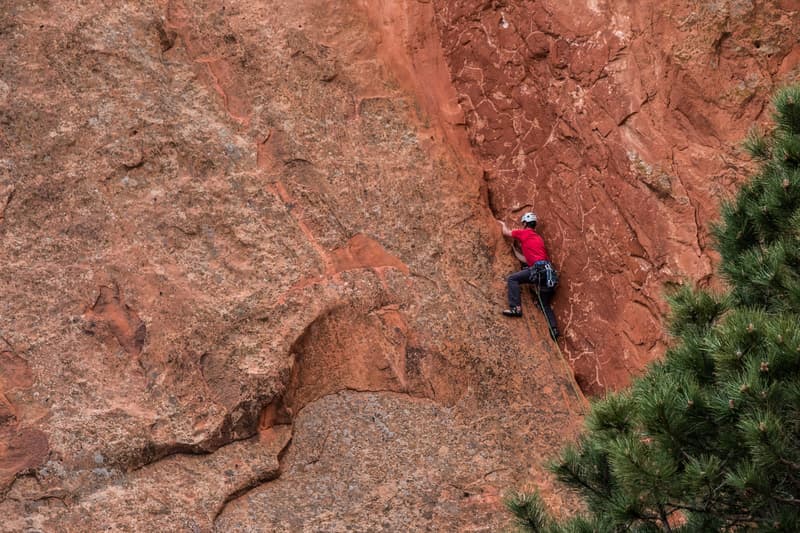
A climber set out on one of Colorado's most famous mountains last Sunday and never made it back down. Rocky Mountain National Park's search and rescue team got word early in the afternoon that something had gone wrong high on Longs Peak, on a well-known line called Kiener's Route. By the time rescuers reached the spot on the upper east face, the climber was already dead. Park officials confirmed the death but have not released the person's name, their age, or any details about how the fall happened.
Longs Peak stands at 14,259 feet, which makes it the tallest thing in the entire park. It looms over the town of Estes Park and shows up on postcards, license plates, and about a million Instagram posts every summer. It also has a reputation, and not the fun kind. This is a mountain that has killed a lot of people, and Sunday added one more name to that list.
The route that sounds easy but isn't
Here's where the story gets a little misleading if you only read the top line. Kiener's Route is often described as the "easiest" way up the challenging east face of Longs Peak. The American Alpine Institute uses that exact word. But "easiest" is doing a lot of heavy lifting there. The route still includes third and fourth class scrambling plus a handful of pitches rated 5.4 to 5.5, which means real rock climbing with real consequences if you slip.
The same folks who call it the easiest option also flat out say it "should not be taken lightly." It's considered an entry point into intermediate alpine climbing, and it usually takes one to two days to finish. Translation: this is not a walk-up. You need ropes, skills, and the good sense to turn around when things go sideways. Plenty of people show up thinking "easiest route" means "beginner friendly." Those are not the same sentence.
A recovery that needed a helicopter from Wyoming
Getting to a fallen climber on the upper east face of Longs is no small thing. The terrain up there is steep, remote, and technical, the kind of place where you can't just hike a body out. So the park closed Kiener's Route overnight and brought in air support. The Teton Interagency Helitak crew, based out of the Grand Teton area in Wyoming, provided a helicopter to help park personnel reach and recover the climber.
Recovery operations wrapped up Monday morning, and the route reopened after that. The fact that it took a specialized helicopter crew from another state tells you everything about where this happened. This wasn't a fall on a trail. It was on a wall of rock most people will never see up close. The incident is still under investigation, and park officials have not said whether weather, a rope failure, loose rock, or a simple misstep played a role.
Longs Peak has a body count
If you want to understand why longtime Colorado climbers talk about Longs Peak with a certain amount of respect and dread, look at the numbers. More than 70 people have died on the mountain since Rocky Mountain National Park was established in 1915. In 2022 alone, at least six people died there. That puts it among the deadliest mountains in the whole national park system.
A big part of the problem is weather. Longs is famous for turning on you fast. A clear blue July morning can become a screaming lightning storm with sleet and near-freezing wind by early afternoon, and there is nowhere good to hide when you're clinging to a rock face at 13,000-plus feet. Summer is prime climbing season, which also makes it prime accident season. The mountain is beautiful and it is also completely indifferent to whether you booked the day off work.
The 1925 climb that gave the route its name
The route has a name for a reason, and the backstory is grim in a way that fits the mountain. Kiener's Route is named for Walter Kiener, a Swiss-born mountaineer who, along with fellow climber Agnes Vaille, made the first winter ascent of the east face in 1925. Reaching the summit was the triumph. The descent was a disaster.
On the way down, Vaille fell down a steep face and later died of exposure while waiting for help. Kiener survived, but he lost several fingers and most of his toes to frostbite. So the "easiest" route up the east face is literally named after a climb where one person died and the other came home missing pieces of himself. That history has hung over the mountain for a full century now, and it should probably give anyone a moment of pause before they rack up their gear.
It wasn't the only fatal 14er climb this season
The Longs Peak death didn't happen in a vacuum. Colorado has 53 peaks that top 14,000 feet, the famous "fourteeners," and every summer brings a wave of climbers and, sadly, a wave of accidents. Just days before the Longs Peak incident, a hiker died on Little Bear Peak, a 14,041-foot summit in the Sangre de Cristo range in southern Colorado.
That one happened on June 27. The hiker was going up the West Ridge Indirect approach when a large chunk of rock broke loose and sent the climber falling a great distance. Rescuers found the person in critical condition with severe injuries. Getting them off the mountain was brutal work, with crews battling sustained 60 mph winds that made helicopter operations dangerous. The Colorado Army National Guard brought in a UH-60 Blackhawk with hoist capability, and medics ran intensive life-saving efforts. The hiker did not survive.
Little Bear is the one experienced climbers warn about
If Longs Peak earns respect, Little Bear earns straight-up fear. It's widely considered one of the most technically demanding and dangerous fourteeners in the entire state. There is no route to the top rated easier than class four, which is a big deal. Most fourteeners have at least one walk-up option for regular hikers. Little Bear does not. Every way up involves exposed, technical terrain where a mistake can be your last one.
The mountain's most infamous feature is a section called the Hourglass, a steep chute known for loose rock that comes rocketing down on climbers below. The West Ridge Indirect approach, where the recent fall happened, is popular precisely because it dodges the worst of the Hourglass rockfall. But it trades one danger for another. As one climbing site puts it, you swap extreme rockfall for brief but extreme exposure on the ridge, with the crux sitting around 13,640 feet and drop-offs on both sides. Last July, another climber on the Hourglass was hit by a boulder described as "microwave-sized" and fell about 30 feet.
Why smart people keep getting caught out
The uncomfortable truth is that a lot of these accidents involve people who are not reckless idiots. They involve prepared, capable folks who ran into rockfall they couldn't predict, weather that moved faster than the forecast, or a single loose hold at the exact wrong moment. Rock breaks. Wind picks up. A cloud that looked far away is suddenly overhead. On terrain this steep, the margin for error is razor thin.
Peak season runs through July and August, when thousands of people flood Colorado's high country chasing summits. The routes get crowded, the parking lots fill before sunrise, and the mountains stay exactly as unforgiving as they've always been. The word "easiest" shows up in a lot of route descriptions, and it fools people every year. On a 14,000-foot mountain, easiest is a relative term. It means easier than the terrifying option next to it, not easy in any sense your average weekend hiker would recognize.
Park officials still haven't said what caused Sunday's fatal fall on Longs Peak, and the investigation continues. What's clear is that a climber went up a route that gets called beginner-friendly by people who have never actually stood on it, and they didn't come back. The mountain has been collecting stories like this for over a hundred years. This is just the newest one, and it probably won't be the last of the summer.
Most read
This week

Entertainment
Jim Bakker, Televangelist Who Went to Prison for Fraud, Dies at 86

Crime
Marine Devin Ballard Arrested in Okinawa Hotel Killing of Anna Yagi

Politics
Dennis Hastert, House Speaker Who Went to Prison, Dies at 84

World
Coast Guard Suspends Search for 6 on Air Ambulance Off Nantucket

Crime
Sky Whatley Charged With Simple Battery Over Onstage Slap