About 100 Feared Dead After Guyana Ferry Capsizes
The government says the boat was within limits. Survivors say otherwise.
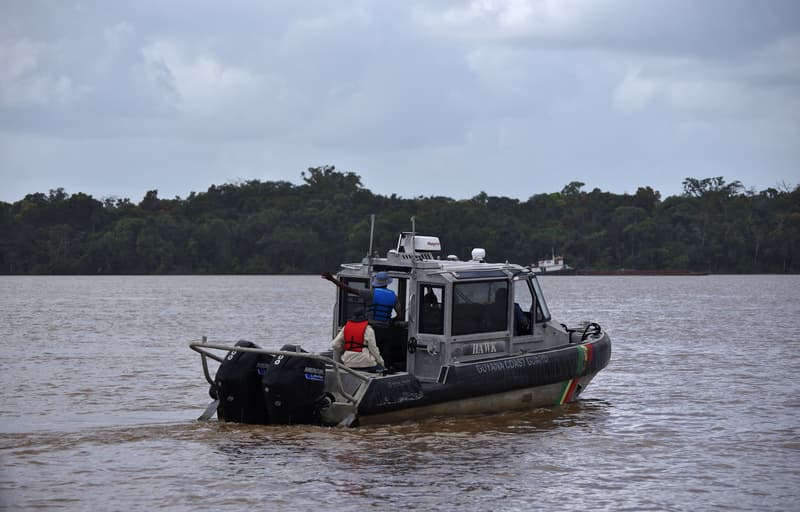
The MV Barima left the docks at Georgetown, Guyana, at 3:15 p.m. on Saturday. By 11 p.m., the ferry had flipped over and sunk in the dark water off the country's northwest coast. Now, days later, around 100 people are feared dead in what officials are calling Guyana's worst maritime disaster in decades.
The boat was headed to Port Kaituma, a remote village about 240 kilometers from the capital that you basically can't reach by road. People there depend on ferries like this one to get anything in or out. On this trip, officials now believe about 179 people were on board. As of the latest count, 76 survived and 53 bodies had been recovered, with divers still searching for the rest, according to the families gathered in Charity waiting for news.
Survivors Say the Boat Was Packed to the Brim
Here's where the government's story and the passengers' story stop matching up. Officials keep saying the ferry was within its limits. On paper, the MV Barima could carry more than 390 passengers and 126 tons of cargo, and it was loaded with about 268 tons when it went down. So technically, under the cap.
The people who were actually on the deck tell it differently. Survivors said the boat was jammed with people and heavy cargo, including engines, vehicles, fuel containers, and commercial goods packed tight below deck. One man said it was more crowded than any trip he'd ever taken. Another survivor, Elena Moonsammy, told a local outlet the ferry tilted after a big wave hit, and water rushed in within seconds. She clung to a floating box to stay alive. She had been holding her two-year-old's hand, and they got separated.
Nobody Knew How Many People Were Really Aboard
This part is hard to wrap your head around. When the boat first sank, authorities said it had 133 people, based on the official manifest: 116 passengers and 17 crew. Then they went back and watched footage of people boarding. The real number was 179.
That's a gap of 46 human beings who weren't written down anywhere. Rescue teams started pulling people out of the water and realized a bunch of them weren't on any list at all. At one point, 32 rescued survivors weren't in the ferry's records. When you don't know who was on the boat, you don't know who to look for. Families showed up asking about relatives who weren't on the manifest, and no one could tell them anything for certain.
The Captain and Crew Tested Positive for Marijuana
After the accident, medical exams were done on the crew. The captain and at least one other crew member tested positive for cannabis. Public Works Minister Juan Edghill confirmed the captain and other crew members are now in police custody. The loading team at the port, the people who decided what went on the boat and where, got suspended too.
Survivors added more detail that will matter in the investigation. They said the ferry had engine trouble not long after it left. Instead of turning around, the crew tried to fix it out on the water. Passengers also said they raised concerns about water getting into the vessel, and crew members waved it off as normal. If those accounts hold up, the string of decisions made that night is going to be the center of everything.
Rescuers Were Working in the Dark, Literally
The distress call came in around 11 p.m. to an air traffic control tower. By then it was pitch black out on the North Atlantic coast, about seven miles from shore. And the rescue teams didn't have the right gear. Early on, they had no vessels with scanners that could detect people in the water, so they were relying on their eyes and ears, listening for shouts, looking for anyone floating.
Some survivors said they were stranded in the water for hours. That's a big reason families are angry. Eventually, oil and gas companies in the area sent out boats with scanners, and the government activated divers to go inside the sunken ferry. The search zone got expanded to more than 400 square miles. Brazil and Trinidad and Tobago sent help too. But those first critical hours, when timing decides who makes it, were spent in the dark.
Families Are Still Waiting in Charity
The town of Charity, up in the north, has become the place where people wait. Some are waiting for a body. Some are still hoping. Samantha Ramin lost two of her three children. Rescuers found the body of her young daughter. Her baby boy is still missing. "I know my baby is in that boat," she told reporters.
Another survivor drifted in the water shouting for help and found his son and three other people holding onto a floating box. He and his son lived. His wife, his daughter, and four grandchildren had not been found. Stories like that are stacking up. Assistance centers opened in Georgetown, Port Kaituma, and Mabaruma to give families official updates and support while they wait for answers that keep changing by the day.
The Boat Was 87 Years Old
The MV Barima was built in 1939. That's not a typo. The 131-foot ferry was 87 years old and still running a scheduled government route. The government says it completed its mandatory maintenance in 2024 and was operating with new engines, and that it carried 250 life jackets, two rigid life rafts, and six inflatable ones.
The route it ran matters for understanding why the boat was so full. Port Kaituma sits in an isolated corner of the country where sea and river travel is the main link to the rest of Guyana. When a ferry is one of your few ways to move people and goods, it fills up fast, and it fills up with a lot of cargo. The village is near the former site of Jonestown, where more than 900 Americans died in 1978, a reminder of just how remote this part of the country really is.
What Happens Now
Prime Minister Mark Phillips launched an investigation into possible negligence by the crew, and the government announced an independent commission of inquiry. That commission is supposed to figure out two things: what happened before the ferry ever left the dock, and whether the crew followed proper procedures once problems started. Phillips promised legal consequences for anyone found responsible, whether for negligence or criminal wrongdoing.
President Irfaan Ali, who was out of the country when the ferry sank, said he was "deeply distressed" and that "no effort will be spared." But the families in Charity have heard the promises. What they want now are simpler things. They want to know exactly who was on that boat. They want the bodies found. And they want a straight answer about how a vessel from 1939 ended up at the bottom of the ocean with as many as 179 people on it. The government still says the ferry was within its limits. The survivors say it was overloaded. Somewhere between those two accounts is the reason about 100 people didn't make it home.
The conflicting numbers make it hard to say anything with full certainty right now, and officials admit as much. Divers are still going into the wreck. The count of the missing could still shift. For the people standing at the water's edge in Charity, though, the math has already been done in the cruelest way possible. They know who left on that boat, and they know who hasn't come back.
Most read
This week