FTC and 20 States Sue Dollar General Over Register Overcharges
Twenty states and the FTC say your receipt has not been telling the whole story.

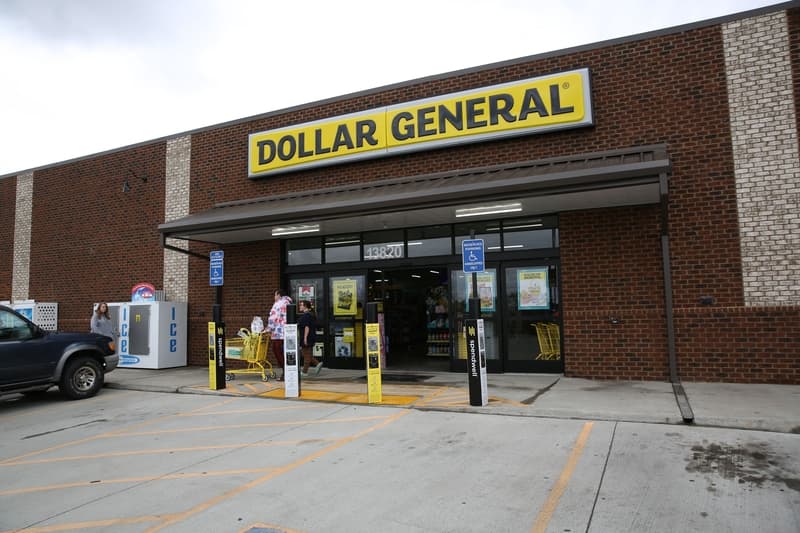
The Federal Trade Commission and 20 states sued Dollar General on Monday, accusing the discount chain of charging shoppers more at the register than the prices posted on its shelves, its price tags and its ads.
The complaint, filed in the U.S. District Court for the Middle District of Tennessee, says thousands of Dollar General stores have "taken advantage of vulnerable shoppers by extracting millions of dollars in unlawful overcharges with insufficient safeguards to prevent the practice."
Dollar General shares dropped about 4% after the FTC announced the case.
Christopher Mufarrige, director of the FTC's Bureau of Consumer Protection, said in a statement that the company had "betrayed the trust of millions of American consumers" and harmed people who are already struggling to make their paychecks last.
The states signed on to the suit are Alabama, Arizona, Arkansas, California, Connecticut, Florida, Illinois, Iowa, Kansas, Louisiana, Michigan, Mississippi, Nebraska, New Jersey, North Carolina, Ohio, Oklahoma, Tennessee, Utah and Wisconsin.
The allegations have not been proven in court. Dollar General says it will fight them.
FTC says every undercover visit turned up an overcharge
FTC investigators made undercover purchases at Dollar General stores in Ohio, Pennsylvania, Missouri and Maryland between January and April. Every single purchase rang up higher at the register than the price advertised elsewhere, according to the complaint.
One visit on Jan. 16 at a store in Cleveland produced 58 items. Thirteen of them carried a different price at checkout than the price listed on the product label or the shelf.
The filing also says Dollar General's register screens move so quickly that customers have a hard time catching a wrong price while it happens.
More than 29,000 complaints about price honoring
Between January 2023 and the end of March 2026, Dollar General received more than 29,000 complaints about price honoring, the FTC says. The agency argues the company knew and did not fix it, failing "to implement policies and practices to adequately address the problem."
The complaint includes partially redacted internal Dollar General emails and company communications.
A December 2025 investigation by The Guardian reported that Dollar General stores failed more than 4,300 government price-accuracy inspections across 23 states over three years. Employees told the paper that understaffing made it hard to keep up with replacing outdated labels.
According to the complaint, the company had procedures meant to keep shelf prices and register prices lined up, but did not make sure updated price labels actually made it onto the shelves.
North Carolina inspectors logged 400 pricing errors
North Carolina Attorney General Jeff Jackson said at a news conference Tuesday that state inspectors found 400 pricing inaccuracies at 10 North Carolina Dollar General locations across 28 inspections over a two-year period.
"We're suing Dollar General because they're ripping people off, and they know it," Jackson said. "They've failed state inspections and been told over and over to fix these mistakes. They haven't, so we'll see them in court."
North Carolina has more than 1,000 Dollar General locations, with at least one in nearly every town, according to the state Department of Justice. Jackson said over a million North Carolinians shop there every week.
The week before the federal suit, the North Carolina Department of Agriculture fined 10 Dollar General locations in eight counties over overcharging. Nine stores belonging to other companies were fined for price-scanning errors at the same time.
The federal filing runs 95 pages and says Dollar General failed to correct the issue despite extensive corporate knowledge of it.
Dollar General says it will defend the case vigorously
Dollar General pushed back the same day. In a written statement, the company said the lawsuit "suggests that we have abandoned our mission and willfully disregarded the affordability needs of our customers. Nothing could be further from the truth."
"Our goal is 100% accuracy between shelf and register prices in every store," the company said, adding that "occasional price discrepancies can occur" and that store teams are instructed and expected to fix them for the customer.
The retailer said it learned of the FTC investigation in early February 2026 through a civil investigative demand dated Jan. 30, 2026. It says it turned over more than 200,000 documents and over 350 gigabytes of data, and made company representatives available for sworn testimony.
On Sept. 23, three days after the sworn testimony wrapped up, Dollar General says it received a draft complaint and a draft settlement order from FTC staff. The company called the money the agency demanded "orders of magnitude larger than" any realistic assessment of what pricing discrepancies actually cost shoppers, and said the FTC's consumer-redress math contains "many methodological flaws."
Dollar General said it was surprised the FTC sued instead of responding to its counteroffer, and that it would defend the litigation vigorously.
Missouri and New York got there first
Missouri Attorney General Catherine Hanaway said her office is finalizing a settlement with Dollar General over the same allegations. Missouri sued the chain in 2023 after a state investigation that covered 147 stores and checked prices on more than 50 products, from toilet paper to lemonade to lip balm.
"The price on the shelf was different from what they were getting charged at the register," Hanaway said. "And we did lots of undercover buys and found about a $7 difference between the total of prices marked on the shelf and the average shopper's ticket."
New York settled 11 days before the federal case was filed. On Oct. 15, Attorney General Letitia James announced Dollar General had agreed to provide $1.875 million in food and goods to settle allegations of repeated overcharging.
A bottle of Tilex in Granite City, Illinois
A St. Louis television station spot-checked a Dollar General in Granite City, Illinois, after the lawsuit was announced. Bounty paper towels marked $6 on the shelf rang up at $6. Pedigree dog food marked $1.80 rang up at $1.80. A bottle of Tilex cleaner marked $5.95 on the shelf rang up at $6.
Shoppers outside the store mostly said they had not been burned. "They never overcharge that I know of," said a customer identified as John. "I ain't never been got like that," said Elaine Lumpford.
Asia Smith, who shops there for the coupons, said she has never been overcharged and that she speaks up when she notices something.
Jackson, the North Carolina attorney general, has described the gaps as sometimes a dime, sometimes a quarter, sometimes a dollar or more, small enough that most people pay and move on.
Who actually shops at Dollar General
Dollar General operates more than 20,000 stores nationwide and calls itself "America's neighborhood general store." It says its locations sit within five miles of roughly 75% of the U.S. population.
Households earning $35,000 or less account for about 60% of the company's total revenue, according to the lawsuit.
Business has been good. Second-quarter net sales rose 5.2% year over year to $11.3 billion, helped by higher-income shoppers trading down. CEO Todd Vasos told analysts in August that the rural footprint is central to the model: "Our mature store base is a unique competitive advantage that enables us to serve customers in smaller, rural communities across the country."
Michigan Attorney General Dana Nessel, one of the plaintiffs, said in a news release that consumers everywhere deserve to be treated with respect in any store where they choose to spend their money, and that the goal is to restore some truth in pricing across the country.
What the states are asking for
The FTC and the states say the conduct violates the FTC Act, the Gramm-Leach-Bliley Act and state consumer protection laws. Dollar General has said it believes the agency's theory of monetary recovery rests on an incorrect reading of the Gramm-Leach-Bliley Act that will not survive a court challenge.
The suit asks the court to stop the alleged pricing practices, impose civil penalties and return money to affected customers.
North Carolina officials told shoppers to check their receipts before leaving the store and to ask the store to correct the price if they were charged more than the tag. Complaints in that state go to the Department of Agriculture Consumer Services' Standards Division, through its online complaint form or by phone at 984-236-4750.
The filing landed days before the midterm election, with food and gas prices still elevated and officials in both parties advertising their consumer protection work.
Dollar General said it remains willing to talk settlement while the case proceeds.
Most read
This week
Entertainment
Donnie Iris Dies at 83, Weeks After Last Pittsburgh Show
Crime
Baltimore Man Charged After Teen Escapes Basement With Fire Extinguisher
World
Harry and Meghan Leave UK as Philippines Probes Thomas Markle
Crime
Jacob Morley Escapes Tennessee Prison, Flees in Stolen Truck
Crime
Homicide Detectives Investigate Singer Gus Ormo's Death in Pool