Brazilian Hiker Falls 492 Feet After Taking Summit Selfie
He had already taken the photo when one small movement changed everything.

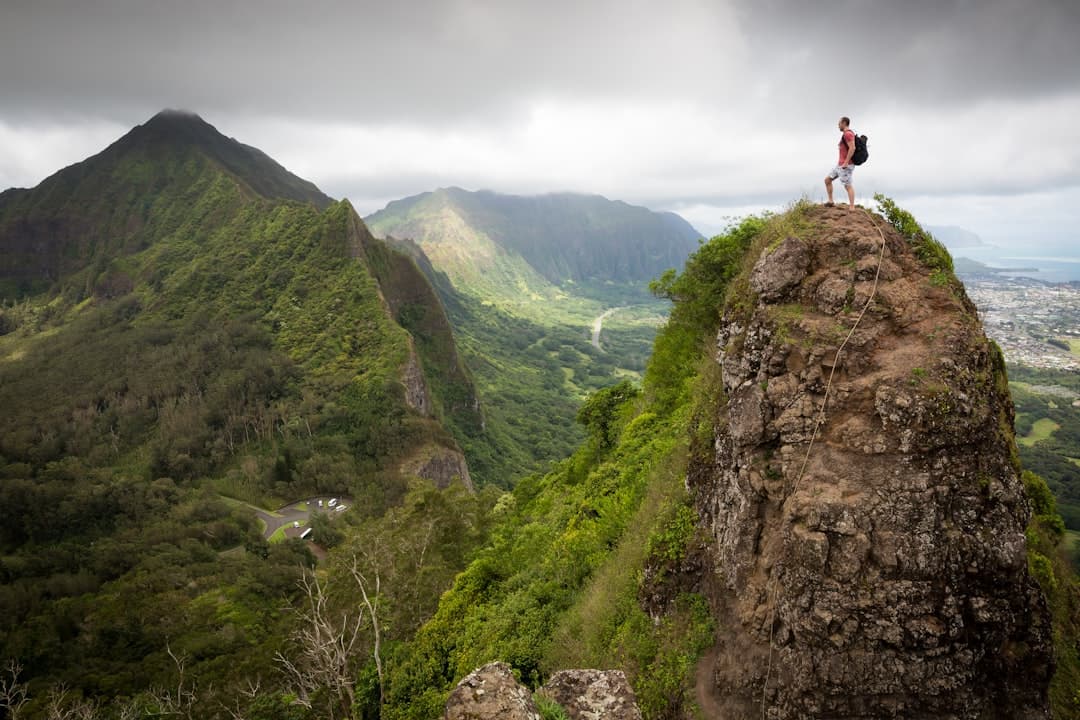
A 44-year-old hiker in Brazil made it to the top of a popular rock formation, took his photo, and then slipped while climbing back down. He fell nearly 500 feet. The whole thing was caught on camera, and a woman in his group can be heard telling him to be careful just seconds before he lost his footing.
His name was Caio Rocha Aguiar Arrabal, and the fall happened on the morning of June 28 on the Pedra do Macaco trail in Maricá, a town in Rio de Janeiro state. He had climbed onto an exposed rock at the summit to snap a picture from the viewpoint. Then he tried to get down. He never made it.
Here's what actually happened up there, who Caio was, and why this particular rock keeps drawing people into dangerous positions.
What Happened at the Top of Monkey Rock
Pedra do Macaco translates to "Monkey Rock," and it sits at the end of a trail that runs about 700 meters and climbs to roughly 230 meters in altitude. The spot where Caio fell is around 150 meters up, which works out to about 492 feet. That's the exact number military police confirmed after the accident.
To get the shot, visitors have to climb onto the rock at the very top, which is fully exposed with no barriers. Caio got up there fine. The trouble came on the way down. According to the account from rescue teams on the scene, he started descending backwards, then changed his body position to turn and face forward. That's when he lost his balance and went over the edge.
Rescue instructor Matheus Moura, who happened to be nearby, pointed to one detail he called crucial: Caio was coming down the wrong side of the rock. On a formation like this, the side you pick matters. One route is manageable. The other drops off into open air.
The Video Everyone Is Talking About
The reason this story spread so fast is the footage. One of the women in his hiking group was filming him the whole time. You can see Caio perched on top of the rock, taking his photo, then starting his climb down. As he shifts his weight, he slips.
The woman recording had already warned him. In the clip, she tells him to watch himself, and moments later she screams as he drops out of frame. Witnesses told a Brazilian outlet that he was warned of the danger in the seconds right before the fall. He reportedly screamed on the way down.
The video ended up all over social media, which is part of why the accident got picked up by outlets around the world. It's a hard thing to watch, and it's the kind of clip that sticks with people because everything looks so ordinary right up until it isn't.
He Was Training to Become a Guide
Caio wasn't a random tourist wandering up a mountain. He was part of a team leading a group of hikers from Araruama, a nearby town, along the trail that day. But there's an important wrinkle: he didn't yet hold a formal guide's license, and it was his first time on that particular route.
He was there to learn the trail and get familiar with it, essentially training to become a guide in the region. So he was experienced enough to be helping lead a group, but new to this exact climb. That matters when you're standing on a rock where knowing which side to come down is the difference between a good photo and a fatal mistake.
His brother, Tair Arrabal, posted a tribute on Instagram. Translated, it said Caio died "while doing what he loved: hiking in his beloved Lakes Region." The family asked for prayers for his parents, his children, and his friends.
A Four-Hour Rescue Through Dense Forest
Once Caio went over the edge, witnesses called for help. Firefighters and Civil Defense teams launched a rescue operation at 11:40 a.m. But getting to him was its own ordeal. The area below the cliff is thick with vegetation and steep, rough terrain, and the crews couldn't just walk in.
The whole operation lasted around four hours. Moura described it as "a very complex, very difficult rescue," one that required rope climbing through densely wooded areas. Teams used rope ascension techniques at several points and needed aircraft support to reach the spot. By the time they got to Caio, he had already died.
His body was eventually recovered with the help of a helicopter crew. Four hours is a long time to search a hillside for one person, and it gives you a sense of just how remote and unforgiving that section of the trail really is once you leave the marked path.
Why This Spot Is So Risky
Here's the tricky part about Pedra do Macaco. The trail itself is considered pretty straightforward for most of the way. It's the final push to the summit that changes things. That last climb onto the rock requires real mountaineering experience and specialist skills, not just a decent pair of hiking shoes and some enthusiasm.
The viewpoint also has very little in the way of signage or safety barriers. There's no railing keeping you from the edge, no fence, no warning sign at the exact spot where a wrong step ends badly. People climb up onto that exposed rock all the time to get their photos, and most of them come back down fine.
That's exactly what makes a place like this so deceptive. When hundreds of people do something without incident, it stops feeling risky. But the margin for error at the top is small, and there's nothing physical there to catch you if you get it wrong.
This Was Not the First Accident on That Rock
Moura, the rescue instructor, made a point that should give anyone pause. He said this isn't the first accident of its kind at that exact spot. People regularly climb the same rock for the same photos, and there have been incidents there before.
What made Caio's fall different is that it appears to be the first fatal one recorded at the rock. The earlier accidents were non-fatal. So the danger has been there and known for a while, and this time it ended in a death that was captured on video for the world to see.
That history is part of why the story hit so hard locally. This wasn't a freak event on a spot nobody had ever gotten hurt on. It was a known problem area that finally produced the worst possible outcome.
The Bigger Problem With Summit Photos
Caio's fall became a talking point because it fits a pattern people have seen play out over and over. Someone climbs to an exposed high point, focuses on getting the shot, and stops paying attention to their footing at the exact moment they can least afford to. The camera comes out, the awareness goes down.
What stands out in this case is that Caio wasn't distracted by his phone when he slipped. He had already taken the photo. He fell during the climb down, when the hard part was supposedly over and he was heading back to safety. That's a reminder that the descent off any exposed rock deserves as much focus as the climb up, if not more.
The one concrete lesson the rescue team kept coming back to was the wrong side of the rock. On familiar terrain, a guide would have known which route down was safe. Caio didn't have that knowledge yet on this trail, and there was no barrier or sign to point him the right way.
If you spend any time on trails, you already know the pull of a great view and a good photo. This story is a hard case of what can go wrong when an exposed summit, no safety barriers, and one wrong step all line up at the same time. Caio Rocha Aguiar Arrabal was 44, he loved hiking, and he was doing exactly that when he died.
Most read
This week

Crime
FBI Arrests 18-Year-Old in ISIS Plot to Attack Mall of America
Crime
Christa Pike Awake and Speaking After Tennessee Execution Fails
Politics
Seven Senate-Confirmed Treasury Officials Exit Amid Bessent Outbursts
Entertainment
Jim Bakker, Televangelist Who Went to Prison for Fraud, Dies at 86

Crime
Marine Devin Ballard Arrested in Okinawa Hotel Killing of Anna Yagi