Christa Pike Awake and Speaking After Tennessee Execution Fails
Tennessee injected her twice. Six days later, her lawyers delivered an unexpected update.

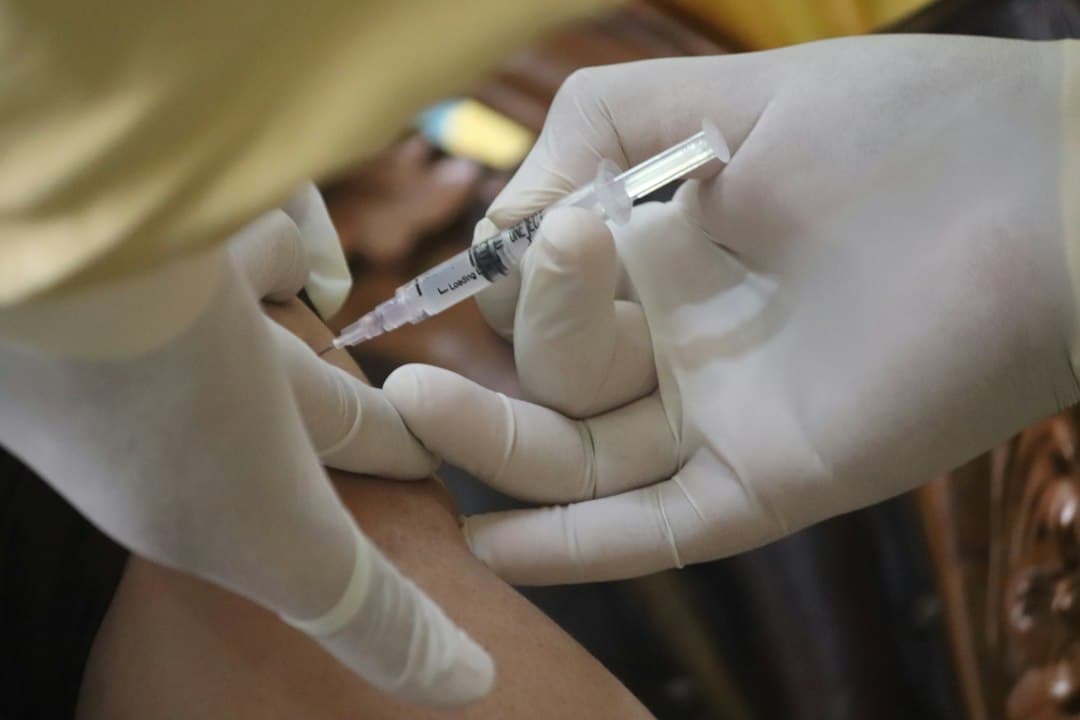
Christa Gail Pike is conscious and speaking in a Nashville hospital, her attorneys said Tuesday, six days after Tennessee injected her twice with the sedative pentobarbital and failed to kill her.
Pike, 50, was still in intensive care when her lawyers gave that update. They said she remains handcuffed and shackled to her hospital bed despite the damage to her arms, and that her prognosis is unclear, with a long recovery expected at a minimum. On Sunday, October 4, she was still unconscious and breathing on a ventilator. The Tennessee Department of Correction has not released details about her condition beyond confirming she is still hospitalized.
The failed execution on September 30 has already cost the state's prison chief his job, frozen every remaining execution in Tennessee for the year, and put a former U.S. attorney in charge of figuring out what went wrong inside the death chamber at Riverbend Maximum Security Institution.
What witnesses heard from outside the chamber
Associated Press journalist Kim Chandler, one of the media witnesses, said the blinds to the execution chamber closed for the first time at 7:46 p.m. and opened again three minutes later.
"Her mouth fell open a few times, and she began to loudly snore. She gasped a few times," Chandler said, according to Al Jazeera. After the curtain closed for the final time, Chandler said Pike could be heard snoring loudly, clearly alive, until media witnesses were told to leave the area around 8:53 p.m.
Her lawyers filed a federal motion in the middle of it, trying again to stop the execution. "Ms Pike has not lost consciousness and still has a heartbeat and is audibly snoring," they wrote, according to court documents seen by the media. She was eventually taken to a hospital instead of being pronounced dead.
Seven needles and a needle bent at 90 degrees
An emergency motion filed October 2 in Davidson County Chancery Court, asking a judge to order the Department of Correction to preserve all evidence from the attempt, lays out what Pike's legal team says happened on the gurney.
At least seven needles were used to gain IV access, the motion states, and one of them was "bent in a 90-degree angle when it was removed." Pike "could be heard crying, whimpering, and breathing loudly" as the two doses were administered, at one point saying her arm "feels like it's about to burst open."
The filing describes pentobarbital as "caustic and highly alkaline" and says it "burns upon contact." Both of Pike's arms were "swollen, burned, and blistered" by the time she reached a Nashville-area hospital, according to the motion, which also said hospital staff were working to clear the drug from her system.
Her attorneys believe the IV lines were never properly placed, so the pentobarbital went into the tissue of her arms rather than her bloodstream. They alleged in a court filing cited by the Associated Press that members of the execution team did not recognize that lines may have been misplaced or that veins had "blown" during the process.
The prisons commissioner is stepping down
Republican Governor Bill Lee announced on October 3 that Department of Correction Commissioner Frank Strada will leave his post at the end of the month.
Strada said stepping aside was "in the best interest of Tennesseans as the independent review moves forward." He added: "I believe this review is entirely appropriate and necessary, and I look forward to doing everything I can to help determine exactly what occurred." He has also said he believes the state carried out its responsibilities in line with the established protocol.
Lee said Strada "has served with integrity, and I appreciate his willingness to put the interests of Tennesseans first during this difficult moment." An interim commissioner will be named later.
Pike's lawyers, Randy Spivey, Kelly Gleason, Stephen Ferrell and Luke Ihnen, were blunt about it. "The resignation of Commissioner Strada is justified, but it does nothing to help Christa now," they wrote. "What happened to her Wednesday reflects a systemic failure that goes far beyond any one person." They said they hope the review exposes "the profound problems within Tennessee's entire death penalty system."
Strada's record followed him into the story. He took over Tennessee's prison system in January 2023 after working as deputy director of the Arizona Department of Correction, where advocates say three executions were botched in 2022. The Death Penalty Information Center called each of those three "visibly problematic." Corinna Lain, a University of Richmond law professor and author of "Secrets of the Killing State: The Untold Story of Lethal Injection," told Newsweek that Strada "was the person in charge of Arizona's department of corrections when it botched three executions in 2022. He left the department shortly after and then was hired to lead Tennessee's department of corrections."
Lee ordered a review and halted executions
The governor's office appointed former U.S. Attorney Ed Stanton to conduct an independent review of the department's actions in carrying out Pike's court-ordered sentence. The review will determine whether the protocol was followed and whether changes are needed.
Stanton has done this work for Tennessee before. The state retained him in 2022 to review its lethal injection protocol, and his findings prompted the state and the attorney general's office to substantially rewrite that protocol before executions resumed.
Lee told reporters on October 1 that, so far as the state knows, the Department of Correction followed exactly the protocol as outlined. He said Tennessee needs to understand "why the outcome is different this time than ever before." Every remaining execution in the state for 2026 has been put on hold.
Theories about why two doses did not work
Tennessee's protocol approves a single drug, pentobarbital, and allows a backup injection if the prisoner is still alive. There is no written step for what happens when the second dose also fails.
Clive Stafford Smith, a human rights lawyer who has represented death row prisoners in the United States, offered two possible explanations to Al Jazeera. One is expired product. "Something that we've been observing a lot for the last 10 years is that they administer drugs that are no longer valid," he said, noting that drug makers often object to their products being used in executions, which pushes states toward unreliable suppliers.
The other possibility he raised was difficulty finding a usable vein. Ferrell, one of Pike's attorneys, said his team warned officials for months before the date that her medical history could make IV access hard and raise the risk of a drawn-out attempt. Pike had argued in court that she has small veins.
A federal appeals court put the execution on hold on the morning of September 30, about an hour before it was due to begin. The U.S. Supreme Court lifted that stay hours later, clearing the way for the state to proceed.
The 1995 killing that sent Pike to death row
In January 1995, Pike was 18 and enrolled at a Job Corps vocational center in Knoxville. She, her 17-year-old boyfriend Tadaryl Shipp and 18-year-old Shadolla Peterson lured 19-year-old Colleen Slemmer, a classmate, away from the center and tortured and killed her. Knoxville police said the attack happened at an abandoned steam plant near the University of Tennessee.
A pentagram was carved into Slemmer's chest, something Shipp later admitted to. Pike delivered the killing blow to Slemmer's head and kept a piece of her skull, later bragging to another student that she had kept it as a "souvenir," according to NBC News.
Pike and Shipp confessed and were convicted of first-degree murder in 1996. Pike was sentenced to death. Shipp, too young for a capital sentence, got life with the possibility of parole. Peterson, who acted as a lookout, testified for the prosecution and received probation. Slemmer's mother, May Martinez, has spoken publicly in support of the execution.
Pike was the only woman on Tennessee's death row and would have been the first woman executed in the state in more than 200 years. She does not dispute her role in the killing. Her lawyers say the jury never heard about the abuse and neglect in her childhood, including two rapes.
Nothing like it in the modern era
Pike is the first person reported to have survived a lethal injection after the drugs were actually administered, according to the Death Penalty Information Center, whose executive director called the attempt "the worst we've ever seen and unlike any other botched execution in the modern era."
Lain put the distinction plainly to Newsweek: "We've never had someone who has survived their own execution when the drugs are going into them." Earlier failures, she said, happened when officials could not get into a prisoner's veins in the first place.
It was also the second time since May that Tennessee could not finish an execution. Staff called off the execution of Tony Carruthers after placing an IV in his right arm but failing to establish a backup line. The governor ordered officials to wait at least a year before trying again. Four people have been executed in Tennessee since 2025, according to the department.
What Pike's lawyers are asking for now
Her legal team is pressing Lee to commute her sentence to life in prison without the possibility of parole, pointing to what she went through on September 30. They have called it chemical torture. Lee rejected a clemency petition seeking that same outcome in the days before the execution date.
Laura Porter, executive director at the U.S. Campaign to End the Death Penalty, told Newsweek that attorneys and community leaders across Tennessee had tried for some time to get the administration to take the problems with the state's execution process seriously and were ignored. "Hopefully, this is the beginning of accountability and an end to secrecy that enables these debacles," she said.
Whether Tennessee can try to execute Pike a second time is now an open legal question. Legal scholars have said historical precedent suggests a second attempt could be allowed, though it would draw extensive court challenges. President Donald Trump has continued to push for expanding capital punishment since the failed attempt, saying it should remain available for major drug traffickers, human traffickers and people convicted of killing police officers.
For now, Pike is in a hospital bed in Nashville, restrained, with her lawyers saying she is taking recovery one day at a time and that nobody can yet say how much of it she will get back.
Most read
This week

Health
Pennsylvania Measles Cases Top 1,000, Largest Outbreak in 30 Years
Crime
Andrew Tanaka Charged With Four Counts of Attempted Murder on I-35

Crime
FBI Arrests 18-Year-Old in ISIS Plot to Attack Mall of America
Politics
Seven Senate-Confirmed Treasury Officials Exit Amid Bessent Outbursts
Entertainment
Jim Bakker, Televangelist Who Went to Prison for Fraud, Dies at 86