Pennsylvania Measles Cases Top 1,000, Largest Outbreak in 30 Years
A state and the federal government cannot agree on a basic number here.

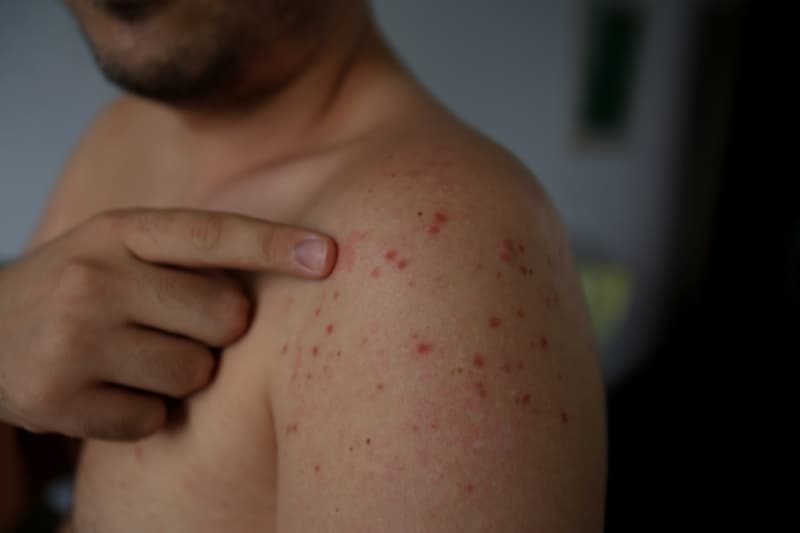
Pennsylvania has now confirmed 1,004 measles cases in 2026, the largest outbreak in the United States in three decades. The state Department of Health posted the number on Monday, October 5, along with 198 hospitalizations and five measles-associated deaths.
The count pushed Pennsylvania past South Carolina's outbreak earlier this year, which topped out at 997 cases and was contained within six months. Pennsylvania's started in late April and is still growing.
"I would bet that this goes on for at least another three to six months," said Dr. John Goldman, an infectious disease expert at the University of Pittsburgh Medical Center. "We have seen an increase in vaccinations, but we aren't seeing enough people get vaccinated to stop the epidemic."
Cases have turned up in 39 of the state's 67 counties.
The five people who died
Two of the dead were unvaccinated adults, an 18-year-old and a 40-year-old woman who had a history of asthma. The teenager died with severe brain inflammation. Two were infants too young to have received the measles, mumps and rubella shot, and one of those was a newborn whose mother went into labor a month early.
The fifth death, confirmed by the health department on Wednesday, September 30, was an unvaccinated resident of Lancaster County. The state has not released the person's age. It was the third death tied to measles in that county this year.
Pennsylvania announced its first two measles-associated deaths in August. Those were the first measles deaths recorded in the state in 35 years. Confirmed infections have more than doubled since.
The state uses a specific definition: a measles-associated death is counted when someone with confirmed measles dies within 30 days of developing symptoms, unless the death came from something unrelated.
Lancaster County is carrying most of it
Lancaster County, about 60 miles west of Philadelphia, has 391 confirmed cases, close to 40 percent of the state total. It is home to the nation's largest Amish population, roughly 44,000 residents as of 2025, along with some of the oldest Mennonite communities in the country.
Goldman said there is nothing in the religion itself that is anti-vaccine, but that vaccination rates in those communities have historically run below the general population.
"There's nothing special about Lancaster. The exact same thing could happen in any county in the country that has a large percentage of unvaccinated people," Goldman said. "If it hasn't happened yet, it's only because measles hasn't gotten into that county yet."
What doctors are seeing in the hospitals
Nearly a third of Pennsylvania's cases have been in children, and 18 percent of those pediatric patients have needed hospital care. Dehydration has been a common reason, especially in babies and younger kids, said Dr. Evan Shirey, a pediatric infectious disease physician at Penn State Health Golisano Children's Hospital in Hershey.
Doctors are also seeing liver problems in young patients. "One of the more common things that the measles virus can do is cause hepatitis or infection of the liver," Shirey said. "These children will feel very sick, very nauseous, with abdominal pain and vomiting, and they can't take a bottle or can't keep food or liquid down."
Some children have developed brain inflammation, or encephalitis, with lasting neurological damage. "In some of these cases, it's a child who can't recognize their own mother, who's disoriented and confused," Shirey said. Others have picked up secondary bacterial infections.
Fifty-three pregnant patients
The Pennsylvania Department of Health said that of 977 cases reported as of Friday, 53 were among pregnant women. The department also said more than 100 cases in the state have been in children under the age of 4.
One of the two infants who died had congenital measles, passed in utero by an unvaccinated mother who was infected. The other infant was reportedly 6 weeks old and had a genetic birth disorder, and it is not clear whether that baby was exposed before or after birth.
Dr. Sharee Livingston, an OBGYN in Lancaster County, never saw a single case of measles during her training in the mid-2000s. She estimates she has treated at least a dozen infected patients in the past six months.
"Air doesn't know that there's a border between Pennsylvania and Ohio, or that there's a border between New Jersey and New York," Livingston said. "We are dealing with a respiratory illness, and even if we weren't dealing with a respiratory illness, none of us live in a vacuum."
Doctors do not give the MMR shot during pregnancy because it contains a live virus, which makes vaccination beforehand the deciding factor. Dr. Kevin Ault, an OBGYN at Penn State Health in Hershey and a fellow with the American College of Obstetricians and Gynecologists, pointed out that more than a quarter of cases have been in adults of childbearing age. "At any given time, about 1 percent of Americans are pregnant," Ault said. "So there's an intersection there of unvaccinated adults and pregnant people that are going to be in this scenario."
The American Academy of Pediatrics released new guidance on congenital measles in early September, estimating that 25 to 30 percent of babies whose mothers have measles at birth are also infected. Dr. Pia Pannaraj, a member of the academy's Committee on Infectious Diseases and a professor of pediatrics at the University of California, San Diego, said the guidelines had been in the works for a while but took on urgency after the infant deaths in Pennsylvania.
"Many doctors that are practicing right now might never have seen measles in their lifetime, so they know it from the textbooks, but that's not the same as having a patient," Pannaraj said. "So we're having to educate providers: 'How do you recognize measles? This is what the rash looks like.'"
The state says it asked for federal help. The CDC says it never got the request.
Pennsylvania says it began requesting an Epi-Aid investigation from the Centers for Disease Control and Prevention in September, on condition that the agency recognize the state's deaths. An Epi-Aid is a short-term field investigation the agency runs for urgent public health problems, sending epidemiologists and extra staffing to a state.
After the fifth death was confirmed, the CDC said in a statement that it was "deeply saddened to hear of another death" in the state, and listed Texas, South Carolina, Virginia, Kansas, New Mexico and Wisconsin as states that requested Epi-Aids and worked with federal teams. "CDC has not received a formal Epi-Aid request from Pennsylvania," the statement said. "If requested, CDC stands ready to deploy epidemiologists to support the state's identified needs."
The death count itself is also contested. The federal tally listed two measles deaths nationally as of Tuesday, September 29, without saying where they happened. Pennsylvania has reported five.
That gap sits at the center of a fight between Governor Josh Shapiro and U.S. Health Secretary Robert F. Kennedy Jr. over how the deaths are classified. Kennedy has accused Shapiro of politicizing the deaths and initially questioned whether the two reported in August were linked to measles at all. "The announcement appears to have been premature, and the deaths may even have been altogether fabricated by one of the Governor's hopeful staffers," Kennedy wrote on X on August 26.
Epidemiologists have said that counting measles-associated deaths is a long-standing approach used by both the World Health Organization and the CDC.
Shot clinics are running at double speed
More than 53,000 MMR doses were given statewide in September, more than twice what a typical month looks like in Pennsylvania. Health department staff themselves have administered more than 8,800 doses, about 3,500 of those in August and more than 2,500 in September. State and local health departments have been running pop-up clinics and home visits.
Fewer than 1 percent of the state's cases have been in people fully vaccinated with MMR. The CDC puts one dose at 93 percent effective and two doses at 97 percent, with the first shot recommended at 12 to 15 months and the second between ages 4 and 6.
Nationally, kindergarten coverage has been sliding. In the 2025 to 2026 school year, 92.4 percent of kindergartners had the MMR vaccine, down from 95.2 percent in 2019 to 2020. The 95 percent mark is the level generally considered necessary for community immunity, and the National Foundation for Infectious Diseases says Pennsylvania counties with no reported cases sit above it.
How fast it moved
In the first quarter of 2026, Pennsylvania had 12 sick people, 83 percent of them young children and almost all unvaccinated, with a single hospitalization. By the end of March, at least a week had gone by with no new cases.
Six months later the state logged 106 new cases in a single week, and two-thirds of all its cases have been in adults. Patricia (Patsy) A. Stinchfield, executive director of the Measles Collaborative, wrote that each infected person can pass the virus to 12 to 18 others, and that up to 9 of 10 unvaccinated people exposed will get infected.
The Measles Collaborative grew out of a May 2026 summit convened by the National Foundation for Infectious Diseases and the Infectious Diseases Society of America. Eleven workgroups are writing practical guidance for clinicians who have never managed a measles case, and the group launched its website on October 6.
The national number
Measles cases in the United States have passed 3,800 this year, confirmed in 45 states and Washington, D.C., according to CDC data. The Johns Hopkins measles tracker puts the national figure at 4,020. Pennsylvania alone accounts for close to a quarter of them.
No year since 1991 has produced this many measles cases in the country. The disease was declared eliminated in the United States in 2000.
South Carolina's outbreak, which ended in April, had been the largest in roughly 30 years. It was linked to a community of people who emigrated from Ukraine over the past few decades, and state officials there credited a surge in vaccinations with ending it.
Most read
This week
Crime
Andrew Tanaka Charged With Four Counts of Attempted Murder on I-35
Crime
FBI Arrests 18-Year-Old in ISIS Plot to Attack Mall of America
Crime
Christa Pike Awake and Speaking After Tennessee Execution Fails
Politics
Seven Senate-Confirmed Treasury Officials Exit Amid Bessent Outbursts
Entertainment
Jim Bakker, Televangelist Who Went to Prison for Fraud, Dies at 86