Cuba's Power Grid Keeps Collapsing and Almost No One Is Paying Attention
An entire country just ran out of fuel, and it's barely making headlines.

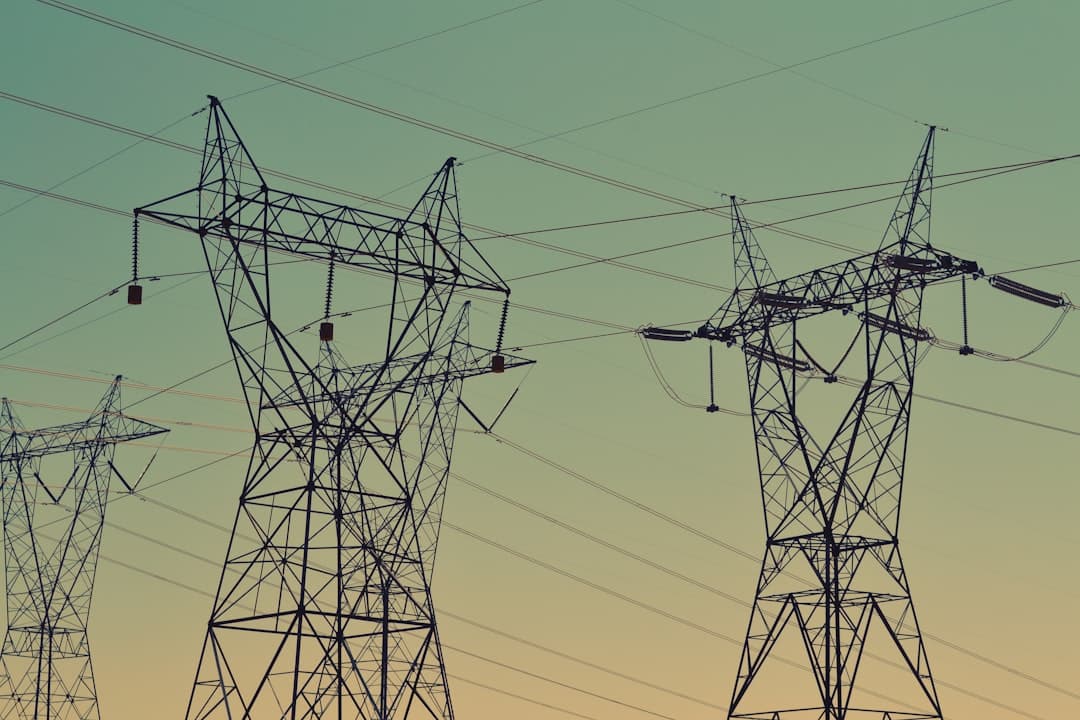
Ninety miles off the coast of Florida, an entire country is going dark. Not in a metaphorical sense. Literally dark. Cuba's electrical grid has collapsed completely seven times since 2024. As of mid-May 2026, the Cuban government admitted it has run out of oil and diesel entirely. People in Havana are living with maybe two hours of electricity in a 36-hour stretch. And unless you've been specifically looking for this story, you probably had no idea.
This isn't a brownout or a temporary inconvenience. This is an island of 10 million people watching their country's infrastructure disintegrate in real time. Here's what's actually happening, how it got this bad, and why the silence around it is so strange.
The Grid Isn't Just Struggling. It's Falling Apart.
Cuba's electricity system depends almost entirely on oil-fired power plants. Over 90% of the country's electricity comes from thermoelectric stations, most of which were built between the 1960s and 1980s using Soviet, Japanese, and Czech technology. The total installed capacity is around 6,000 MW, but decades of wear mean effective output on a good day sits well below 2,000 MW. On a bad day, which is most days now, the deficit exceeds 1,700 MW.
That means the government can only meet about 50 to 70 percent of the country's electricity needs on an average day. During peak evening hours, when families are home trying to cook, charge phones, or just exist, the gap is even worse. Nine thermal power plant units were out of service as of early April due to breakdowns and maintenance. The grid collapsed completely twice in March 2026 alone, once on March 5 and again on March 16, the second triggered by a boiler leak at the Antonio Guiteras plant in Matanzas, Cuba's largest power station.
There's No Oil Left. That's Not an Exaggeration.
On May 14, 2026, Cuba's Energy Minister Vicente de la O Levy appeared on state television and said something extraordinary: "We have absolutely no fuel, oil, and absolutely no diesel." The only things keeping any part of the grid alive are gas from Cuba's own wells and some domestic crude oil production, which covers only about 40% of the country's needs. And that domestic crude is heavy, high in sulfur, and actually damages the already deteriorating infrastructure when it's burned.
The fuel situation cratered after the Trump administration signed Executive Order 14380 in January 2026, which authorized tariffs on any country that directly or indirectly supplies oil to Cuba. Mexico halted shipments almost immediately. Venezuela, which had been sending Cuba about 26,500 barrels per day, was already in crisis after U.S. intervention there. Since January 9, 2026, Cuba received exactly two small oil deliveries: one from Mexico in January and one carrying cooking gas from Jamaica in February. One Russian tanker reportedly made it through in late March. That's it. For a country that burns about 100,000 barrels per day, those shipments were a drop in the bucket.
What Daily Life Looks Like Without Power
Try to imagine this for a second. You wake up. No lights. Your fridge hasn't been running for 18 hours. Whatever food was in there is spoiled. There's no water because the pumps that push water through the municipal system need electricity to run. You can't charge your phone. You can't communicate with anyone. Your neighborhood has been in the dark so long people are cooking multiple meals at once during the brief windows when power flickers back on, because they don't know when they'll get another chance.
That's not a worst-case scenario. That's a regular Tuesday in much of Cuba right now. In some parts of Havana, outages have stretched to 24 consecutive hours. Family members of Alejandro de la Fuente, who chairs the Cuba Studies Program at Harvard, reported getting maybe two hours of electricity in a 36-hour window. Hospitals have canceled surgeries. Hotels, one of the few sources of hard currency in the country, are either running on expensive backup generators or simply shutting down.
One detail from an IEEE Spectrum report sticks with me: a Havana resident named Angel Rodriguez was photographed using a transformer salvaged from an old television set to charge a battery, preparing for the next blackout. That kind of improvisation isn't clever. It's desperate. And it's becoming a way of life.
Eastern Cuba Gets Hit the Hardest
Not everyone suffers equally, and that's part of what makes the situation so volatile. Havana gets partly shielded from the worst outages because of its political and economic importance. The capital is where the government sits, where the embassies are, where whatever tourism remains is concentrated. So when there's only enough power to keep some of the lights on, Havana gets priority.
Eastern provinces like Guantánamo, Santiago de Cuba, and Holguín get what's left, which is often nothing. The eastern half of the country was plunged into total darkness in the latest collapse on May 14. Power lines damaged by Hurricane Helena in September 2024 still haven't been repaired. These are also poorer provinces, which means fewer people have backup generators, fewer businesses can absorb the losses, and fewer families have the resources to cope.
That geographic inequality breeds real resentment. When people in Santiago de Cuba sit in the dark for three days straight while Havana's government buildings stay lit, the political implications are obvious.
People Are Protesting, and the Government Is Cracking Down
On the evening of May 14, AP journalists in Havana watched residents banging pots and pans in the streets and setting fire to trash cans. The "cacerolazo" protest, where people bang cookware to express anger, is a tradition across Latin America. In Cuba, where public dissent has historically been met with force, the current wave of protests is being described as among the largest in the country's recent history.
Demonstrations have broken out not just in Havana but across multiple provinces. The government's response has been predictable: increased security presence and hard language from leadership. During the October 2024 protests, President Díaz-Canel stated that protests would not be tolerated and demonstrators would be "processed rigorously under revolutionary law." Internet access was cut during those protests, and police were deployed to physically clear the streets.
A 50-year-old Havana resident named Maite Rodriguez summed it up simply: "The situation is terrible. There is nothing we can do about it; these are things that happen, and there is no solution in sight."
The U.S. Role in This Is Complicated
There's no clean narrative here. Cuba's grid was already crumbling before the U.S. tightened the screws. Years of neglect, lack of capital investment, dependence on aging Soviet-era technology, and an inability to access international credit markets had already pushed the system to the breaking point. The crisis has been building since at least 2024, with rolling blackouts becoming routine well before the current blockade.
But the January 2026 executive order turned a crisis into a catastrophe. By effectively threatening any country that ships oil to Cuba with U.S. tariffs, the administration cut off the island's last remaining lifelines. Mexico stopped. Venezuela couldn't help. Russia sent one tanker. The result: a country that runs on imported oil suddenly had none.
Secretary of State Marco Rubio offered $100 million in humanitarian aid, with the condition that it be distributed through the Catholic Church rather than the Cuban government. Cuba is reportedly considering the offer. A U.S. delegation that included CIA Director John Ratcliffe flew to Havana for meetings. Cuba released over 2,000 prisoners in early April as part of diplomatic talks. There's clearly some kind of negotiation happening behind the scenes, but none of it has turned the lights back on.
Solar Parks Are Coming, But They Can't Fix This
China has been pouring money into Cuban solar energy. In 2023, China shipped $5 million worth of solar equipment to the island. In 2025, that number jumped to $117 million. The plan is to build nearly 100 solar parks by 2028, and 34 parks were already online as of early 2026, contributing about 560 MW at peak capacity. China is also backing construction of Cuba's largest wind farm.
Here's the problem: solar generates power during the day. Cuba's peak demand is in the evening. Without large-scale battery storage, which Cuba doesn't have and can't afford, solar panels sitting idle after sunset do nothing to prevent the nighttime blackouts that are making life unbearable. And Cuba's grid is so old and fragile it can't even handle the voltage fluctuations that come with solar input, which sometimes makes things worse rather than better.
Renewables currently account for less than 5% of Cuba's electricity mix. The goal is 24% by 2030. Given the current trajectory, that target feels like it belongs to a different universe.
Why This Matters Even If You Don't Care About Cuba
Hundreds of thousands of Cubans have left the island since 2022. When conditions on the ground involve no electricity, no diesel, empty grocery shelves, and hospitals that can't perform surgeries, that number is only going to grow. Cuba imports 70 to 80 percent of its food. The UN Secretary-General has expressed "extreme concern" about the humanitarian situation. UN experts have called the U.S. executive order a serious violation of international law.
Cuban Americans in Miami are already feeling the weight. People like Robert Diaz send money to relatives every month just so their families can eat. The crisis isn't contained to the island. It radiates outward to Florida, to immigration policy, to U.S. foreign relations, and to the question of what happens when 10 million people on your doorstep run out of everything at once.
This story deserves more than a 30-second news segment. It deserves sustained attention. Because right now, an entire country is running on fumes, and those fumes just ran out.
Most read
This week
Health
Pennsylvania Measles Cases Top 1,000, Largest Outbreak in 30 Years
Crime
Andrew Tanaka Charged With Four Counts of Attempted Murder on I-35
Crime
FBI Arrests 18-Year-Old in ISIS Plot to Attack Mall of America
Crime
Christa Pike Awake and Speaking After Tennessee Execution Fails
Politics
Seven Senate-Confirmed Treasury Officials Exit Amid Bessent Outbursts