Graham Documentary Shows Late Senator Faulting Trump on Iran War
He defended the president in public. On camera, he said something very different.

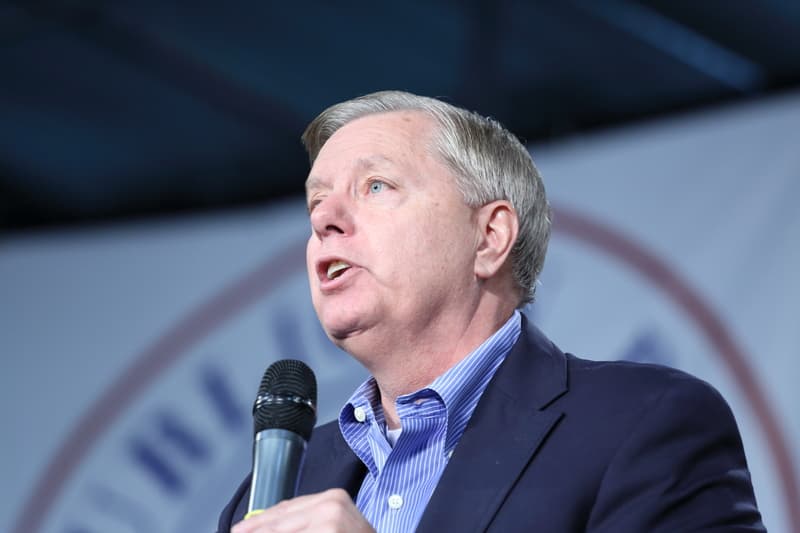
Lindsey Graham spent the better part of a decade as one of Donald Trump's loudest cheerleaders. He went from calling Trump a "kook" in 2016 to golfing with him and defending him on every cable channel that would have him. So it says something that the last real window we have into what Graham actually thought about the president has him sounding annoyed, worried, and ready to march into the Oval Office to set things straight.
That window comes from hundreds of hours of documentary footage that surfaced after Graham died on July 11 at age 71. In one clip from June, the South Carolina senator vented that Trump was blowing the war with Iran. "He's letting this thing slip away," Graham said. "We had them on the ropes, and his indecision is coming back to hurt us." Coming from a guy who almost never criticized Trump in public, those words landed hard in Washington.
The film that caught it all
The footage comes from a project called "Lindsey's Game," shot by British filmmaker Alex Holder. Holder says he spent roughly four and a half years trailing Graham with a camera crew, ending up with more than 400 hours of tape. He called it "a four-and-a-half-year period of just the most, really unparalleled access, to one of the most consequential politicians."
This wasn't a hit job or some sneaky ambush. Graham agreed to the whole thing. He wanted it done for the record and, he said, to get young people interested in working in government. The result is a level of access most reporters would trade a kidney for. The crew sat just feet away while Graham took phone calls with Trump, Israeli Prime Minister Benjamin Netanyahu, Saudi Crown Prince Mohammed bin Salman, Ukrainian President Volodymyr Zelensky, and even Jake Sullivan, who was Joe Biden's national security adviser. Holder is aiming to release the finished film in the coming months.
Graham called the Iran war his proudest work
If you followed Graham's career, none of the hawkishness will shock you. But hearing him say it out loud, on camera, is another thing. In the footage he calls his yearslong push for war with Iran "the best thing I've ever done." Not a bill he passed. Not a deal he brokered. A war.
He also reached for some heavy history to describe the players. Graham compared Trump and Netanyahu to Franklin D. Roosevelt and Winston Churchill, the two men who anchored the Allied side of World War II. That's a big swing, and it tells you exactly how Graham saw the stakes and, honestly, how he saw himself. He put his own name right in the middle of it, framing the fight as "a referendum on isolationism versus Lindsey Graham MAGA Trump." Third person and all.
Then came the part where he turned
Trump started the military campaign against Iran in late February. Months later, it still wasn't finished, and by June Trump had signed a preliminary deal instead of pushing for the knockout blow Graham wanted. That's when Graham's tone in the footage changed. One of the clips is literally labeled "Turning on Trump for Going Soft."
Graham told the crew he had to go talk to Trump face to face. "Open up the straits, keep the pressure on, unleash Israel to hurt them, and maybe you'll get a better deal," he said, laying out his own game plan. He also griped that hardly any Republicans in the administration were out there publicly selling the war, and said he was stunned by the silence. Here was a man who was one of Trump's most public defenders while privately becoming one of his sharpest in-house critics on foreign policy. Both things were true at the same time.
He didn't trust Trump's negotiators
Graham's doubts went past strategy and got personal about who Trump had running the show. He wanted Secretary of State Marco Rubio leading the Iran talks. Instead, Trump leaned on two of his most trusted envoys, Steve Witkoff and Jared Kushner. Graham questioned whether those two could deliver an outcome that matched his hawkish vision, and he said as much on camera.
He wasn't the only conservative grumbling, either. Around the same time, Fox News host Brian Kilmeade was airing his own frustration with the stalled conflict. So Graham's unease wasn't some lonely gripe. It reflected a real split on the right between the people who wanted to press the war and the people around Trump who wanted a deal and an exit.
The phone call with a Democrat
Here's a detail that says a lot about how Graham operated. In March, the cameras caught him talking with Jake Sullivan, the former national security adviser under Biden, about the headaches of Middle East negotiations. A Republican war hawk hashing out strategy with a Democratic former official is exactly the kind of thing that used to define Graham's whole brand.
Remember, this is the same guy who built the "three amigos" partnership with Senators John McCain and Joe Lieberman, a Republican, a Republican, and an independent former Democrat, all working the same national security beat together. Graham liked being in the room where things happened, and he didn't much care which party the other people in the room belonged to. The Sullivan conversation fits that pattern perfectly.
How Graham died
Graham died on July 11 from an aortic dissection, according to a preliminary finding from the Washington, D.C. medical examiner. He was 71. The timing was almost cruelly on brand for him: he had returned from a trip to Ukraine just hours before his death. The man was working foreign policy right up to the very end.
His sister, Darline Graham Nordone, was appointed to serve out the rest of his Senate term and helped coordinate the arrangements. The plans included an arrival ceremony at the U.S. Capitol to mark his 31 years in Congress, followed by a service at Washington National Cathedral and memorials back home in South Carolina the next day. In a nod to his years in the U.S. Air Force, an Armed Forces Body Bearer Team carried his casket into the Capitol before a Capitol Police guard took over.
A funeral packed with power
The guest list at the National Cathedral read like a Graham foreign policy address book. Netanyahu and Zelensky both showed up, which tells you how far his reach stretched. Trump delivered remarks, standing at the same podium as Fox News' Sean Hannity and Vice President JD Vance, who also spoke. Senate Majority Leader John Thune said it was fitting to give Graham a Capitol honor "as we say our final goodbyes," and added that "Lindsey was more than a colleague, he was a friend."
The son of pool hall owners, Graham first got to Congress in the 1994 Republican wave and was among the first Republicans from South Carolina to hold the seat since Reconstruction. He made his name as a manager in Bill Clinton's impeachment, won his Senate seat in 2002, and in Trump's second term chaired the Senate Budget Committee. Trump's team, for their part, insisted the respect ran both ways. A Trump adviser said the president viewed Graham as "one of his foreign policy experts."
What the tape really shows
The reason this footage keeps getting talked about isn't just the juicy quotes. It's the contradiction sitting right in the middle of it. In public, Graham was Trump's guy, the one who'd go on TV and defend nearly any decision. In private, with a camera crew rolling, he was second-guessing the president's biggest foreign policy call and questioning the people Trump trusted to carry it out.
That gap between the public loyalist and the private skeptic is the whole story. Graham signed off on this project himself, knowing the cameras were catching all of it, the cheerleading and the doubts alike. Whatever you thought of his politics, he left behind an unusually honest paper trail of what a modern Washington operator actually sounds like when he thinks the microphone is friendly. The full film is still coming, and if these first clips are any guide, the people named in it are going to be reading the reviews very carefully.
Most read
This week