Hunter Biden Says Dad's Pardon Was Not Good for America
He got the biggest favor of his life, then admitted why it was a bad call.

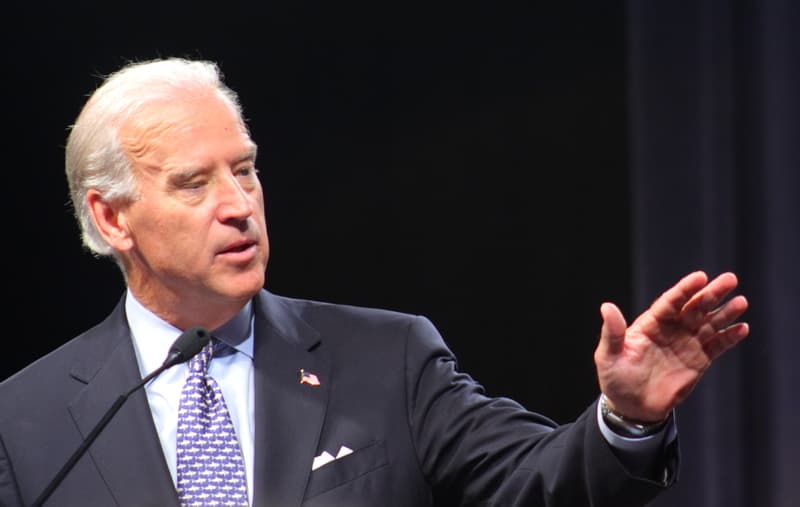
Hunter Biden just said something you almost never hear from someone who got a get-out-of-jail-free card signed by the President of the United States. He admitted it was a bad idea. Not for him, mind you. He is still thrilled about the pardon his father handed him. But he flat-out told the BBC that the whole thing was a mess for the country, for the Constitution, and for Joe Biden's place in the history books.
It is a strange kind of honesty. He is grateful and apologetic in the same breath. He knows how it looks, and he says he cannot pretend otherwise. So he is out here doing interviews, owning the criticism, and still finding room to take a swing at Donald Trump. Let's get into exactly what he said and why it matters.
The Exact Words He Used
During a BBC Newsnight sit-down, Hunter did not soften it. He ran through a checklist and answered his own questions. "Was it good for our Constitution? Was it good for the American people? Was it good for my dad's legacy? No, on all counts. It was not." That is about as blunt as it gets from a Biden.
He went further, calling himself "the most privileged person there is." He also said the pardon is "something that is easily criticized and for good reason. And I can't pretend otherwise." You do not usually hear a person describe the biggest favor of their life as fair game for critics, but that is exactly what he did.
Then he threw in the line that sums up the whole thing. "I was the only one in the world that could have gotten what I got from the only person in the world who could give it: my father." Translation: this happened because of who his dad is, and he knows it. He even admitted it is "not fair." So he is not hiding behind lawyer talk. He is saying the quiet part out loud.
What the Pardon Actually Wiped Away
To understand why this was such a big deal, you have to remember what Hunter was staring down. He was convicted on three federal gun charges tied to a 2018 firearm purchase. That conviction made him the first child of a sitting president to be found guilty of a crime. On top of that, he pleaded guilty to nine federal tax offenses.
At sentencing, he was looking at up to 25 years behind bars and fines that could have hit $750,000. Those are not small numbers. Then, in the final weeks of his presidency, Joe Biden signed an unconditional pardon on December 1, 2024. The clemency warrant did not just cover the two cases everyone knew about. It wiped out potential offenses stretching all the way back to January 1, 2014, right up through the day it was signed. That is a full decade of legal cover in one stroke of a pen.
Here is the part that stuck in people's throats. Joe Biden had said, over and over, that he would not pardon his own son. He pledged it publicly. Then he did it anyway. That reversal is a big reason Hunter now admits the whole episode is "easily criticized."
Why He Says He'd Take It Again
So if Hunter thinks the pardon hurt the country and his dad, why is he still grateful? His answer is Donald Trump. Hunter argues his father only signed it because Trump won the election, and that a free Hunter is harder to use as leverage than a jailed one.
"My dad would not have pardoned me if President Trump had not won," he said. He accused the president of running a "revenge tour" with an "absolute obsession with my dad." He also claimed that in a "normal circumstance" he would have fought the cases and won on appeal. That is a bold thing to say about a case you already pleaded guilty to, but that is his position.
His bigger point is about pressure. Hunter says that if he were sitting in a cell right now, Trump could squeeze his father and the rest of the family in ways that would be, in his words, unjust. Staying out of prison, he argues, protects the whole Biden family from being used as a bargaining chip. He framed himself as "the easiest target to intimidate" the family into silence. So in his telling, the pardon was both damaging and necessary. Damaging for the public. Necessary for his family.
The Claim That They Never Talked About It
One of the more eyebrow-raising things Hunter said is that he and his father never once discussed the possibility of a pardon before it landed. Think about that. The most controversial clemency decision of the entire Biden presidency, and the son says it was never a dinner-table conversation.
His reasoning is that a conversation like that could never stay private. "There is no way that you can have those kinds of discussions that would not become public," he told the BBC. He also turned the whole thing back on the critics with a question: "What would you have thought of my dad if he did not do that for me?" It is a clever way to reframe the debate. Instead of defending the favor, he asks you to imagine a father who refused to help his kid. Whether that convinces anyone is a different story.
A Rough Update on His Father's Health
The interview was not only about the pardon. Hunter also gave an update on his dad's health, and it was not good news. Joe Biden's office announced a prostate cancer diagnosis in May 2025, when the former president was 82. The office described it as an aggressive form with a Gleason score of 9, which is the most serious grouping, and said it had spread to the bone.
Hunter said the cancer has gotten worse. "I wish he would complain more, because it's not good, the cancer has spread," he said. He explained that it has "metastasized into his bones and further; it's very painful. And it's very debilitating in many respects." You could hear the strain when he talked about it.
"It's really tough, Paddy. And that's the real answer," he told the host. He called his father "the center of our family" and "our rock," saying his dad has been there for everyone in a way he can barely put into words. He also revisited the June 2024 debate that ended his father's reelection campaign, saying he watched from his California home and knew right away something was wrong. He has since wondered aloud whether the illness was already affecting his father that night.
The Comeback Tour Nobody Expected
This BBC interview is not a one-off. Hunter Biden has quietly turned into one of the most talked-about interview subjects of 2026. He reappeared on X for the first time with a short, pointed message: "You've never actually heard from me." That is the opening line of someone who plans to talk a lot more.
And he has. He has been sitting down with outlets across the political spectrum, from the BBC to a Substack interview, and he was reportedly lined up to talk with Tucker Carlson in August. That is a wide range of audiences for one guy to court. It tells you he is not trying to hide anymore. He is trying to control the story.
One thing he ruled out is running for office himself. So this is not a campaign launch. It reads more like a public reset, a chance to explain his side before someone else writes it for him. Across all these conversations, the theme stays the same. The pardon bruised his father's legacy and was not fair to the public, but he sees it as a shield against what he calls politically motivated payback. He gets to be both grateful and sorry, all at once.
Whatever you think of him, you have to admit it is an unusual move. Most people in his shoes would take the win and go dark. Hunter took the win and then went on camera to say the win was bad for everyone but him. "All I know is that I'm grateful that he did it for me," he said. That single sentence carries the whole contradiction he is living in.
Most read
This week
Entertainment
Michael Douglas Says He Hid Kathleen Turner Affair for 40 Years
Crime
Nathalie Belizaire Charged After 4 Children Found Alone During Cruise
Crime
Two Oxford Vape Clerks Charged in Ole Miss Kratom Investigation
Crime
Sinema's Ex-Bodyguard Arrested Again Over Knife at Phoenix Gun Shop
Entertainment
Judge Grants Restraining Order Against Halle Berry Over Choking Claim