Indonesia Candy Factory Fire Kills 3, 36 Workers Missing
An estimated 60 workers were inside when the fire started. A day later, dozens are still unaccounted for.

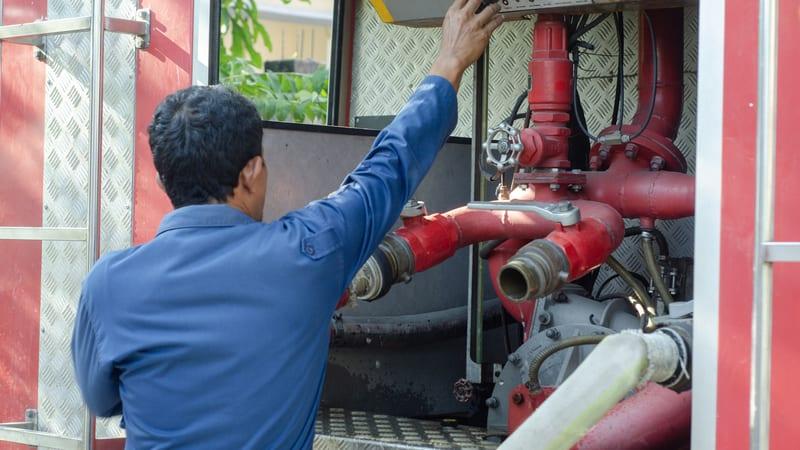
A fire tore through a candy factory in Indonesia's Banten province on Saturday, killing at least three people and leaving 36 workers unaccounted for, officials said.
The blaze started at the PT Fonusa Agung Mulia plant in Serang district, roughly 50 kilometers (31 miles) west of Jakarta. Banten province governor Andra Soni told reporters that an estimated 60 people were inside the building when it caught fire.
Rescue crews were still working the site on Sunday. Rizky Dwianto, an operations official at the Banten Search and Rescue Agency, said firefighters from Serang district and Banten province were fighting flames in several parts of the facility more than 12 hours after the fire began.
"The fire is still burning in several locations, and firefighting teams are continuing extinguishing and cooling operations," Dwianto said, according to the Associated Press.
Fifteen Pulled Out Alive, Four Taken for Treatment
Indonesia's National Search and Rescue Agency said 15 people were rescued alive from the factory, including four injured workers. The four were taken to a nearby hospital and a health clinic.
That leaves a wide gap between the number of people the governor believes were working and the number accounted for. Officials have not said whether every one of the 36 missing workers was inside the building when the fire erupted.
Search teams spent Sunday sweeping different sections of the plant, concentrating on spots where workers might be pinned under debris. Local fire department crews and the Indonesian Red Cross joined the operation.
Dwianto said the joint search-and-rescue team was making maximum effort to locate the victims while prioritizing the safety of the personnel working in the field.
Crews Arrived to Find the Plant Already Burning
Firefighters were alerted at about 4:30 p.m. local time (0930 GMT) on Saturday. By the time they pulled up, a large portion of the factory was already on fire, fire official Tubagus Machfudz told the broadcaster Kompas TV.
"When we arrived (on location)... a large area was already on fire. So we could not determine whether the company's protection system was functioning properly or not," Machfudz said, in remarks carried by Agence France-Presse.
Television footage showed flames swallowing the three-story building and pushing thick black smoke into the sky. Residents and workers nearby panicked as the fire spread. Inside, the floor of the burned-out structure was covered in twisted metal, blackened corrugated iron roofing and other debris.
Drone footage shot over the complex showed large parts of the factory destroyed and the roof caved in at several points, with smoke still rising on Sunday. Rescuers posted photos and video of officers walking into the charred building while small fires burned in spots.
Survivors Point to a Cooling Unit on the Third Floor
Workers who got out said the fire started in a cooling unit on the third floor, according to the Associated Press. That account comes from survivors, not from investigators, and no agency has confirmed it.
The local disaster agency said in an Instagram post on Sunday that the cause remains under investigation. Authorities have not announced a finding, and they have not said what the building's fire protection systems were supposed to do or whether they did it.
The Factory Makes Milkita, a Candy Americans Have Probably Never Heard Of
Fonusa Agung Mulia produces Milkita, an Indonesian brand of milk-based candies and snack products. It is a familiar name on shelves there, roughly the way a Werther's or a Milk Dud registers in an American checkout aisle.
The company describes itself on LinkedIn as a subsidiary of UNIFAM, one of Indonesia's major consumer-food companies. Search and rescue authorities identified Fonusa Agung Mulia as the owner of the plant.
Serang district sits in Banten province, the strip of western Java that borders Jakarta and absorbs a large share of the manufacturing that feeds the capital. The plant is close enough to Jakarta that news crews and provincial officials were on scene within hours.
Families Gathered at the Gate
Relatives of workers who could not be reached collected near the factory entrance, waiting for any word. Local broadcasters and social media accounts carried footage of the crowd outside the perimeter.
No victims have been publicly identified. Officials released a death toll and a missing count on Sunday without names attached.
First responders were photographed carrying at least one body out of the wreckage on Sunday morning.
Why the Missing Count Keeps Moving
The figure officials used on Sunday was 36 workers unaccounted for, down from an early count of 39 before three of them were found dead.
Part of the gap comes from how a headcount gets built. Shift rosters, workers who left early, people who walked out of the building and went straight home without checking in: each one moves the number before anyone finds a body.
The other part is the fire itself. Crews cannot search sections that are still hot, so cooling has to happen before entry, and the toll climbs in steps rather than all at once. Firefighters were still running cooling operations on Sunday, more than half a day after the first alarm.
Indonesia's Run of Deadly Fires
In December 2025, a fire tore through a seven-story building in Jakarta and killed at least 22 people. Police said it was likely caused by a drone battery explosion.
In 2023, an explosion at a nickel-processing plant in the east of the country killed at least 13 people.
Those incidents, and this one, have renewed questions in Indonesia about workplace safety standards and how ready manufacturing sites are to get everyone out. No conclusion has been reached about the Serang plant, and investigators have not released any findings on exits, alarms or staffing.
What the Rules Look Like on the American Side
For an American reader trying to place this, the comparison point is the Occupational Safety and Health Administration. Under U.S. rules, an exit route has to be a continuous and unobstructed path to a place of safety.
Most workplaces covered by those rules must have at least two exit routes, placed as far apart as practical so one blocked path does not seal everyone in. Where an OSHA standard requires one, employers also have to keep an emergency action plan that covers how to report a fire, how people evacuate, which routes they use, and how every employee gets accounted for once they are outside.
That last requirement is the one doing quiet work in a story like this. A headcount at the muster point is what tells firefighters who is still inside and roughly where to look, and it is the difference between a search with a target and a search of an entire three-story building. None of these standards apply in Serang, and nothing has been published about what the factory's own procedures required.
What Officials Have Not Said Yet
Authorities have not announced a cause. They have not confirmed the survivors' account about the cooling unit. They have not said whether the plant's fire protection equipment worked, and the fire official who reached the scene said the building was too far gone on arrival to judge.
They also have not confirmed whether all 36 missing workers were in the building when the fire started, which is the single number that will decide how much worse the toll gets.
As of Sunday, the official accounting stood at three dead, four injured, 15 rescued alive and 36 unaccounted for, with the cause under investigation and crews still cooling parts of the structure they had not been able to enter.
Most read
This week
Entertainment
Tony Stampley, Songwriter for Hank Williams Jr., Dies in His Sleep
Crime
Shooters Fire From Orchard Into California Concert, Wounding Nine
Crime
Nine Shot at Norteño Concert in Strathmore, California
Entertainment
Sheila Mangubat, 90 Day Fiancé Star, Dies at 35 in Philippines

Crime
Expectant Father Among 3 Killed at Ohio Baby Shower Shooting