Jon Kyl, Author of Arizona's Largest Water Settlement, Dies at 84
He spent 15 years quietly working one deal, and Washington barely noticed.

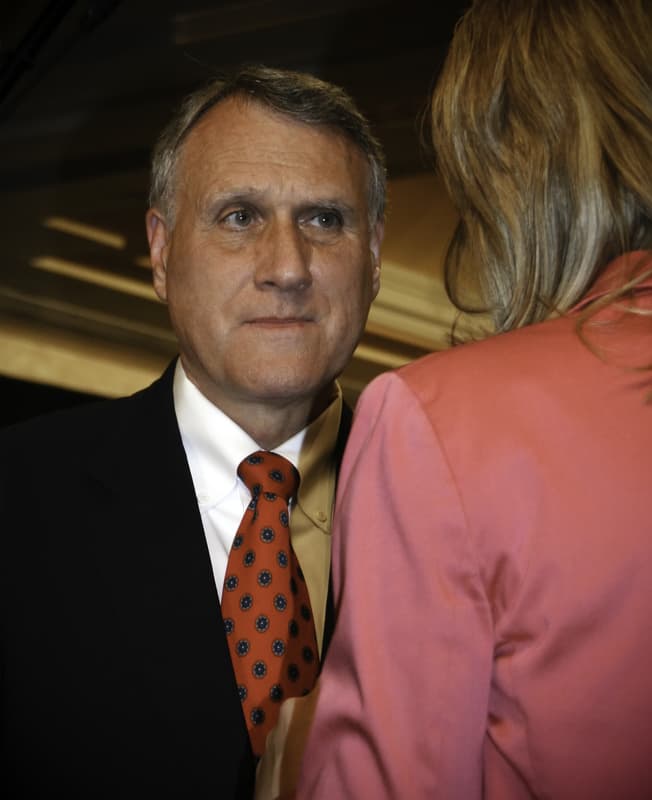
Former U.S. Sen. Jon Kyl, the Arizona Republican who rose to the No. 2 job in his party's Senate leadership and was the principal sponsor of what state officials call the biggest water settlement in Arizona's history, died Wednesday night. He was 84.
His family announced the death Thursday and said it was due to complications from a neurological disease. Gordon James, a communications professional and longtime friend of the Kyl family, said Kyl died Wednesday night from a neurological disorder.
Kyl had withdrawn from public life in December 2025 after announcing that he had been diagnosed with dementia. In the statement disclosing the diagnosis, he pointed back to Ronald Reagan's words when the former president revealed his own Alzheimer's diagnosis and quoted Reagan's phrase about heading into the sunset of his life. Kyl said he shared Reagan's confidence in the future of Arizona and the country, and that he considered himself a "very fortunate man."
"We know that Jon belonged to all of Arizona, a state he loved and explored with vigor, curiosity, and wonder," his family wrote. "Serving his state and nation in Congress was a privilege and responsibility he honored and respected. We are grateful for his full and meaningful public life."
From a 1986 House Race to Senate Whip
Kyl was elected to the U.S. House in 1986 and took office in 1987. He served four terms, then won a Senate seat in 1994 and started the first of three terms in 1995.
In the Senate he sat on the Finance and Judiciary committees, which put him in the middle of tax policy and judicial nominations. His colleagues elected him Republican whip in December 2007, the second-highest post in the party's Senate leadership, after Trent Lott resigned his seat, and he held it until he left in 2013.
TIME magazine put him on its list of America's 10 best senators in 2006 and put him on its list of the 100 most influential people in the world in 2010. He also served as vice chair of the Congressional Commission on the Strategic Posture of the United States, a panel created to help the country prepare for nuclear-armed adversaries.
Doug Ducey, the former Arizona governor who considered Kyl a mentor, described him in a February 2025 interview with The Associated Press as a workhorse among Washington's showhorses. "If you saw him on the plane, he was sitting in the aisle, in coach, and he was reading," Ducey said. "And he was reading potential bills or Senate business."
The Water Deal That Took 15 Years
Kyl was the principal sponsor of the Arizona Water Settlements Act, which Congress approved in 2004. The law authorized the Gila River Indian Community water rights settlement and amended the Southern Arizona Water Rights Settlement Act involving the Tohono O'odham Nation, ending decades of litigation.
The deal set the Gila River Indian Community's annual water budget at 653,500 acre-feet, enough to fill more than 320,000 Olympic-sized swimming pools. Sen. Mitch McConnell of Kentucky called Kyl's work ethic legendary in a 2012 floor speech and said Kyl had worked mostly behind the scenes for 15 years to get the settlement done.
"It was one of the hardest things I've ever done, but I was in a position to be the catalyst," Kyl told the Phoenix New Times in 2006. "There wasn't anybody else who could do that water deal. And it had to be done."
Tom Buschatzke, director of the Arizona Department of Water Resources, said in a statement that the agreement was one of the most technically and politically challenging of all tribal water settlements and the largest water settlement in Arizona's history. He said the resolution would not have been possible without Kyl's skillful leadership, and that his influence on water policy in the Southwest will be felt for generations.
He Was a Water Lawyer Before He Was a Politician
Before he ever ran for office, Kyl helped shape Arizona's 1980 Groundwater Management Act as an attorney representing Salt River Project. The code was the first of its kind and created a regulatory framework for managing groundwater in a drought-stricken state, centered largely on population hubs including Phoenix and Tucson.
Buschatzke also noted that Kyl successfully represented the state in a key Supreme Court case in 1983, years before he went to Washington.
Former Sen. Jeff Flake, the Republican who won the seat Kyl gave up in 2012, said Kyl did nine Indian water settlements during his career, which allowed Arizona tribes to get the water they needed and let the state grow sustainably. "For Arizona, you know, every Western state has similar issues; water issues, public land issues. And Jon took that on," Flake told reporters at the Capitol on Thursday. "That's the workhorse in him."
Arizona State University launched the Kyl Center for Water Policy in 2014, and Kyl lent his name, his expertise and his time as a spokesperson. Its director, Sarah Porter, said he took a practical approach and was generous with his time. "He's always sort of cared about the public good and been able to think about, 'What will this mean for the generations to come?'" Porter said. In a 2019 interview with PBS, Kyl said the water settlements he helped hammer out were among his proudest achievements.
Four Months Back in the Senate
When John McCain died in office in August 2018, Ducey appointed Kyl to fill the vacancy. Kyl was five years into retirement and working as a lobbyist. He served four months and stepped aside at the end of the year.
President Donald Trump praised the appointment and said he looked forward to working with "the extraordinary senator." One of Kyl's first orders of business back in the chamber was voting to confirm Brett Kavanaugh to the Supreme Court.
Flake, who had followed Kyl into the Senate, got a few months serving beside him. "So I got to serve with him in the Senate and also jokingly be the senior senator to him, which I didn't deserve," Flake said. "But it was just a wonderful relationship throughout."
Kavanaugh's Chief Sherpa
Kyl joined the lobbying firm Covington & Burling after leaving the Senate in 2013. His clients included the chipmaker Qualcomm and the Pharmaceutical Research and Manufacturers of America.
In 2018, working as a lobbyist, he guided Kavanaugh's confirmation and became known as the nominee's chief Sherpa, the informal term for the person who walks a Supreme Court pick through the Senate. He rejoined Covington & Burling after his short Senate return ended.
Flake said Kyl was effective at that work for a simple reason. "He was asked after he had left Congress to sherpa certain nominees through, and he was extremely effective in that because he had the respect of his colleagues," he said.
Oakland, Nebraska, to Tucson at 18
Jon Llewellyn Kyl was born April 25, 1942, in Oakland, Nebraska. He grew up in a rural farming district in Iowa that his father represented in the U.S. House.
At 18 he headed southwest to the University of Arizona, where he met his wife, Caryll. He earned a bachelor's degree there in 1964 and a law degree from the university's James E. Rogers College of Law two years later, then worked in Phoenix as an attorney. He is survived by Caryll and their two children.
The University of Arizona honored him earlier this year by establishing the Kyl Institute for National Security. "Sen. Kyl dedicated decades of his life to public service, and his record on national security and water policy left Arizona and the nation better than he found them," university President Suresh Garimella said. Kyl also joined ASU as a distinguished fellow and scholar in 2013 and later taught undergraduate classes from time to time.
A Record That Included a Border Fence and a Failed Deal
Kyl backed legislation authorizing construction of a fence stretching hundreds of miles along the U.S.-Mexico border. He later worked with Democrats on a bill that would have created a path to citizenship and temporary guest-worker status for people in the country without authorization. That proposal failed.
Ducey said Kyl's biggest marks in the Senate came from holding the Republican caucus together in opposition to Obamacare and from his firm support of Israel. National Journal ranked him the fourth-most conservative senator in 2007.
Tributes From Both Parties
Ducey said in a post on X that Kyl gave Arizona "nearly three decades of principled, thoughtful leadership" and gave him something just as valuable in his mentorship and friendship. "I'll miss him deeply. Rest in peace, Senator Kyl," Ducey wrote.
Gov. Katie Hobbs, a Democrat, called Kyl a dedicated statesman who always cared deeply for the state. Her Republican challenger, Rep. Andy Biggs of Gilbert, called him "an exemplary public servant who understood Arizona, fought tirelessly for our interests, and approached his responsibilities with humility and conviction." Democratic Sen. Ruben Gallego called him "a true statesman who often worked across the aisle for the good of all Arizonans."
Democratic Sen. Mark Kelly said Kyl's landmark work securing historic tribal water settlements defined the state in ways that will last long after his death. Former Gov. Jan Brewer said Kyl served the state and nation with extraordinary intellect, integrity and humility. Democratic former U.S. Rep. Gabrielle Giffords also released a statement.
Arizona Senate President Warren Petersen, a Gilbert Republican, said Kyl earned respect across the political spectrum without compromising his principles. "Whether he was negotiating complex water agreements or helping guide our nation's security policy, Senator Kyl brought credibility, good judgment, and a determination to deliver results," Petersen said.
Brenda Burman, general manager of the Central Arizona Project and a former Kyl staffer, said he understood that water is the lifeblood of Arizona communities. "It is often said when working on Arizona water issues that we stand on the shoulders of giants that came before us," she said.
Flake, speaking by phone, put Kyl's record in one line: if it meant a lot to Arizona, it meant a lot to Jon Kyl. He also said he never once heard Kyl disparage another member of Congress, which he credited for Kyl's ability to build coalitions across the aisle. James, the family friend who met Kyl while working on one of his campaigns, said he could not remember anyone of any party saying anything derogatory about him.
Kyl offered his own accounting of his time in Washington during a 2012 conversation with former Supreme Court Justice Sandra Day O'Connor. "At the federal level, and I regret to say that this is the case, but probably a lot of my better achievements were in preventing bad things from happening (rather) than forcing good things to happen," he said.
His family said memorial services will be announced at a later date.
Most read
This week