Patrick Stewart, Star Trek's Captain Picard, Dies at 86
He finished one last performance that audiences will not see until December.

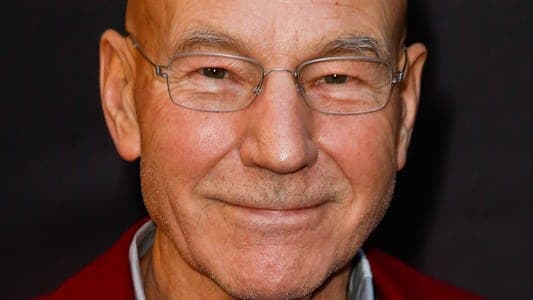
Patrick Stewart, the Royal Shakespeare Company veteran who became one of the most recognizable faces in American science fiction as Captain Jean-Luc Picard, died Wednesday, Oct. 28, at his home in Los Angeles. He was 86.
His longtime spokesperson, Kelly Bush Novak, announced the death Oct. 29 in a statement posted to Stewart's social media accounts. Stewart died after a "brief and poignant journey" with Alzheimer's disease and Lewy body dementia, the statement said. It is unclear when he was diagnosed.
Stewart's career ran more than six decades across stage, television and film. He played Picard for seven seasons of "Star Trek: The Next Generation" from 1987 to 1994, then took on Professor Charles Xavier in the "X-Men" movies starting in 2000. His last screen appearance, reprising Professor X in "Avengers: Doomsday," opens in theaters Dec. 18, 2026.
The statement that announced it
Stewart died "in the loving care of his beloved wife Sunny," according to the statement shared by his representative. "He has been held in the warm embrace of family and friends, surrounded by live music, prayer, tears, laughter," it read, adding that the family would cherish "the peaceful ease and reflection on his face, an enduring reminder of his invincible grace."
The same statement described a man whose off-screen life was crowded with causes: human rights, survivors of domestic violence, global refugees, veterans' mental health services and animal welfare, "particularly his cherished foster pitties." It also listed the things he was outside of work. "He was a Knight, Chancellor, motor sport enthusiast, and lifelong Huddersfield Football fan."
In place of flowers, the family asked for contributions to the Johns Hopkins Alzheimer's Disease Research Center Fund and to Alzheimer's Foundation of America Caregiver Resources.
He did not want the Picard job
Stewart was scouted for "The Next Generation" by producer Robert Justman, who saw him at UCLA and pushed him for the lead of the first live-action "Star Trek" spinoff. Stewart was 47 that year and had spent most of his adult life on British stages. The offer did not feel like a gift.
"I was unprepared for what being cast in an American TV series meant because I'd never done that before," he told NPR in 2020, in comments recounted after his death. "It was terrifying to me because what it meant was that I was going to have to shut down my career." He had been playing leading Shakespearean roles, with transfers to the West End and Broadway being offered. "And the idea that I would have to shut that down for six years was horrifying," he said.
Fans were not thrilled either. When the show debuted, plenty of them objected to a bald Englishman taking the captain's chair after William Shatner's James T. Kirk. That argument did not survive contact with the actual performance, and Picard became one of the franchise's most beloved characters.
Seven seasons, four films, then a streaming return
"The Next Generation" had a shaky start, with the loudest doubts during season one, and still ran seven seasons before ending in 1994. The cast moved to features that same year with "Star Trek: Generations," which paired Stewart with Shatner, followed by "Star Trek: First Contact," "Star Trek: Insurrection" and 2002's "Star Trek: Nemesis."
He came back to the character in 2020 for the Paramount+ series "Star Trek: Picard," which ran until 2023. Jonathan Frakes, Marina Sirtis and Brent Spiner appeared in recurring roles before the third and final season delivered a full "Next Generation" reunion under showrunner Terry Matalas. Matalas pitched a sequel series called "Legacy." Paramount did not greenlight it.
Writing about the role in his 2023 book "Making It So: A Memoir," Stewart drew the line between himself and the captain directly. "Like me, Jean-Luc has lived an unusual life that has taken him far beyond the bounds of normal human experience," he wrote. "In the end, he feels the call of home, as do I."
Professor X and the friend who played his enemy
Stewart first played Charles Xavier in 2000's "X-Men," opposite Ian McKellen as Magneto, and stayed with the character through "X-Men 2," "X-Men: The Last Stand," "X-Men Origins: Wolverine," "The Wolverine" and "X-Men: Days of Future Past." After Disney bought Fox, he turned up in the Marvel Cinematic Universe, beginning with 2022's "Doctor Strange in the Multiverse of Madness."
The McKellen friendship started on those movies and kept going on stage. The two appeared together in "Waiting for Godot" in the West End in 2009 and in repertory on Broadway in 2014 in Beckett's play and Harold Pinter's "No Man's Land." McKellen also officiated Stewart's 2013 wedding to American singer and songwriter Sunny Ozell.
They share the screen one more time in "Avengers: Doomsday," which reunites much of the "X-Men" cast and arrives in December. Stewart did not live to see it released.
Mirfield, a school exit at 15, and the RSC
Patrick Hewes Stewart was born July 13, 1940, in Mirfield, a town in the West Yorkshire coal-mining country. He grew up poor and in a home marked by domestic violence, and later described acting as a "safe space" and a "refuge from real life" that he found after a teacher handed him Shakespeare. "Now get up on your feet and perform," the teacher told him, Stewart recalled.
He dropped out of school at 15. He worked for a time as a newspaper reporter and eventually had to pick one career over the other. He chose acting. He lost his hair at 18, which did nothing to slow him down.
Stewart joined the Royal Shakespeare Company in 1966 and stayed until 1982, appearing in more than two dozen productions. He played Astrov in "Uncle Vanya" in 1974, Oberon in "A Midsummer Night's Dream" in 1977, Shylock in "The Merchant of Venice" in 1978 and the title role in "Titus Andronicus" in 1981. He made his television debut in 1967 on "Coronation Street," and spent more of his career on stage than on the Enterprise.
The silly stuff he never apologized for
Stewart kept a sense of humor about his place in pop culture that Shatner and Leonard Nimoy did not always manage. He played a snooty waiter in Steve Martin's 1991 comedy "L.A. Story," King Richard in Mel Brooks' "Robin Hood: Men in Tights" in 1993, and hosted "Saturday Night Live" in 1994.
He did voice work on "The Simpsons," "Family Guy" and "American Dad," and narrated Seth MacFarlane's "Ted" and its sequel. The "Family Guy" connection produced the first full "Next Generation" cast reunion, in animated form.
His straight dramatic work in that stretch went in stranger directions. He played Gurney Halleck in David Lynch's 1984 "Dune" and Leondegrance in John Boorman's "Excalibur" in 1981. He was the leader of a band of neo-Nazis in Jeremy Saulnier's horror-thriller "Green Room," a vain dance instructor in 2015's "Match," and a substance-abusing English newscaster in the Starz series "Blunt Talk." One of his last roles was voicing Sir Ritchfield in the animated "Sheep Detectives."
An Olivier, a Grammy and a knighthood
Stewart was nominated for four Emmy Awards and for a Tony. He won Olivier Awards for his theater work, including one for best supporting actor for playing Claudius in the 2008 "Hamlet" that starred David Tennant. He also won a Grammy for his recording of "Peter and the Wolf."
Queen Elizabeth II knighted him in 2010 for services to drama. He received a star on the Hollywood Walk of Fame in 1996 and added his hand and footprints outside the TCL Chinese Theatre in January 2020, days before "Star Trek: Picard" premiered.
After "The Next Generation" ended he went back hard to the stage, playing Prospero in "The Tempest" on Broadway in 1996, the title role in a "photo-negative" "Othello" at the Shakespeare Theatre in Washington, D.C., in 1997, and starring in "The Ride Down Mt. Morgan" on Broadway in 2000. He also adapted and performed a one-man "A Christmas Carol" in Los Angeles and on Broadway.
Jackman, Feige and Starfleet
Hugh Jackman, who played Wolverine alongside Stewart, wrote that the world had lost one of the greats of stage and screen. "And, in my book, a tremendous friend and man. I learned so much from him. I will miss you, Patrick Stewart, all of my days."
Marvel Studios said Stewart brought Xavier to life "with extraordinary grace, intelligence, and humanity, defining the character for generations of fans." Studio president Kevin Feige, in a statement to Variety, said the man he met turned out to be "brilliant, charming, warm, generous, with a quiet strength and gravitas."
The official "Star Trek" account posted a tribute calling him "A voice. A presence. A captain unlike any other." Shatner, posting on X, called Stewart a friend, a colleague and a magnificent actor who brought intelligence, grace and a deep sense of humanity to everything he did.
A second Star Trek death in three days
Walter Koenig, who played Ensign Pavel Chekov on the original NBC series from 1967 to 1969, died Oct. 25 at the age of 90. Stewart's death came days later. He is the first member of the "Next Generation" cast to die.
In 2008, writing about Stewart's return to classical theater in "Macbeth," The New York Times ran the headline "To Boldly Go Where Shakespeare Calls." Assessing his seven seasons on television, the paper said he "made Capt. Jean-Luc Picard the moral center" of the show, "helping to keep it from sliding into camp or self-parody."
Stewart is survived by Ozell and by his two children with his first wife, Sheila Falconer: Daniel Stewart and Sophie Alexandra Stewart. In an interview with TV Insider in June, he said he could not imagine ever officially retiring. "I'll always and forever be an actor," he said.
Anyone affected by domestic violence can call the National Domestic Violence Hotline at 1-800-799-7233.
Most read
This week

Entertainment
Barbara Barrie Dies at 95 Using New York Aid-in-Dying Law

Crime
CEO David Morton and Two Daughters Shot in Toronto Home Invasion
Entertainment
Dolly Parton Estate Subpoenas Vanderbilt Bodycam of Nephew's Alleged Police Clash

Business
Pritam Recalls 4.3 Million Toothpaste Tubes, Many Made for Kids

Business
FTC and 20 States Sue Dollar General Over Register Overcharges