Nancy Kassebaum, First Kansas Woman in the Senate, Dies at 94
The pundits said a Kansas Senate race cost a million dollars. She won it anyway.

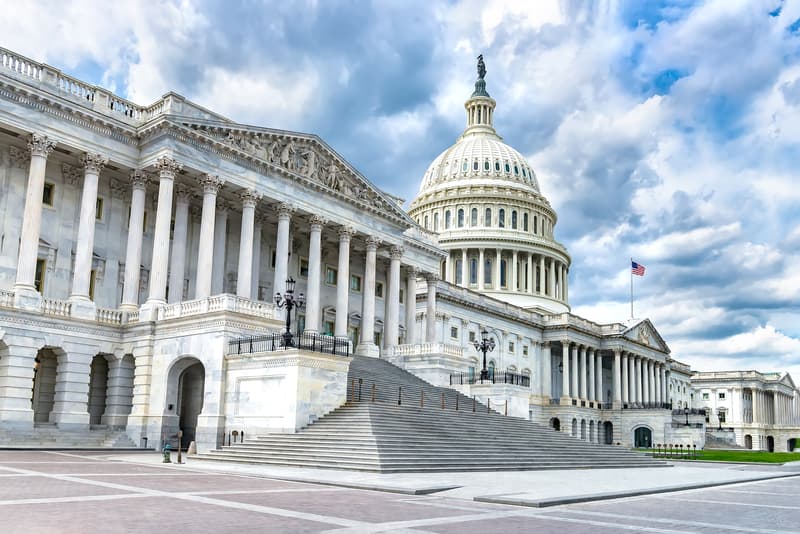
Nancy Kassebaum Baker died Friday, August 21, 2026, in hospice care in Manhattan, Kansas. She was 94. Her son Bill Kassebaum said she died of natural causes.
She was the first woman elected to a full term in the U.S. Senate without a husband having served in Congress first, and the first woman ever to represent Kansas in that chamber. She won in 1978 and served three terms before leaving office in 1997.
When she was sworn in on December 23, 1978, she was the only woman in the Senate. She stayed the only one until Florida Republican Paula Hawkins arrived in early 1981.
She spent less than $12,000 and won anyway
Pundits estimated a competitive Kansas Senate race would cost around $1 million, an enormous sum for the state back then. In the first quarter of 1978, she spent less than $12,000. She won the Republican nomination with under 31 percent of the vote in a crowded field, then beat former Democratic congressman Bill Roy in the general election with nearly 54 percent.
She figured her difference was a selling point. A woman with a background unlike the usual candidate, she thought, might appeal to people who were tired of the same old politics. Kansans agreed, and then some. She was reelected in 1984 with 76 percent of the vote and again in 1990 with 74 percent.
Part of the appeal was that she never seemed to care about the trappings of the job. She once said she would rather "cuddle up and do needlepoint all day." That plainspoken streak kept her popular in a way most moderates could not manage. She simply never polarized Kansas conservatives the way other Republicans in the party's middle did.
Her name is still on a law you have used
Kassebaum's biggest mark on federal law came in 1996, when she paired up with Massachusetts Democrat Edward M. Kennedy on the Health Insurance Portability and Accountability Act, the law most people call HIPAA. It capped how long a group health plan could exclude a pre-existing condition, and credited workers for coverage they already had. President Bill Clinton signed it.
The team was an odd match. A moderate Kansas Republican and a liberal from Massachusetts, working out a deal across a wide gap. She led the Senate Labor and Human Resources Committee at the time, taking the gavel in 1995. She was the second woman to chair a standing Senate committee, after Hattie Caraway, and the first to lead a major one.
Arms control, apartheid, and the deficit
Her record ran well past that one law. She worked on cutting the federal budget deficit, on international arms control, and on sanctions against apartheid-era South Africa, according to the Senate Historical Office. She pushed to reform liability rules for general aviation, a live issue in a state built around the airplane factories of Wichita.
She earned a reputation for settling fights inside committee rooms. Colleagues saw her as a bridge-builder, the member you wanted at the table when a coalition needed someone willing to talk to the other side. When she announced her retirement she was one of eight women in the Senate, and the only one running a committee. By the time she left there were nine.
She fought her own party more than once
Kassebaum backed an assault weapons ban that Clinton pushed, and she later said it produced the angriest mail of her Senate career. She voted for it anyway. She also supported international family planning funding and abortion rights at home, which drew hard criticism from conservative Christian Republicans in her state.
She was no reliable liberal, though. She opposed raising the minimum wage and opposed forcing businesses to offer unpaid family and medical leave, saying she thought it was wrong to mandate benefits. After the 1994 Republican wave, she helped strike welfare provisions from the "Contract With America" that would have cut off benefits to unmarried teenage mothers. Her son Bill described her as a Republican "willing to stand up for what she thought was right, even if that meant going against the party."
A political family that reached back to 1936
She was born Nancy Josephine Landon on July 29, 1932, in Topeka. Her father was Alf Landon, governor of Kansas from 1933 to 1937 and the Republican nominee for president in 1936, the year Franklin Roosevelt beat him in a landslide. The family shared a moderate, independent brand of Republican politics that she carried her whole life.
She graduated from the University of Kansas in 1954 and earned a master's degree in diplomatic history from the University of Michigan in 1956. Before the Senate, she was an executive at a family radio company, served on the school board in Maize, a suburb of Wichita, and spent a year on the staff of Kansas Senator James Pearson.
She had four children with her first husband, Phil Kassebaum, before that marriage ended in divorce in 1979. Bill went on to serve a term in the Kansas House. Her son Richard, a documentary filmmaker, died of a brain tumor in 2008 at 48. Her daughter Linda died in 2020 at 61.
The marriage that made Senate history
In December 1996, Kassebaum married Howard Baker, the former Republican Senate leader from Tennessee who later served as White House chief of staff and ambassador to Japan. It was the first time a man and a woman who had both served in the Senate married each other. Baker died in 2014.
She had announced in November 1995 that she would not seek a fourth term. She said she wanted time for other things, "including the challenge of being a grandmother." She did not, in the end, disappear from public life, and kept taking on service roles for years afterward.
She broke with the GOP at the end
Late in life, her ties to the Republican Party frayed as it moved right under Donald Trump. She called for Trump's impeachment after the January 6, 2021, attack on the Capitol. She endorsed several Democrats, including Kansas Governor Laura Kelly and Kamala Harris for president. She had already crossed party lines to back Democratic candidates for governor as the party shifted around her.
Tributes from both sides
Kelly, a Democrat, said "Kansas lost part of its soul" when Kassebaum died. "No one worked harder, or smarter, to make our world a better place," she said.
Republican Senator Jerry Moran called her "one of a kind" and said she "embodied the institution of the U.S. Senate at its best." Senator Roger Marshall called her "a true Kansan." Congressman Derek Schmidt, who worked for her for five years, called her a mentor who introduced "this kid from a small Southeast Kansas town to opportunities for public service I had not known possible."
One of her last honors
On January 2, 2025, President Joe Biden awarded Kassebaum the Presidential Citizens Medal, one of twenty given that day. The citation praised her for standing up for what she believed in "even if it meant standing alone," naming abortion rights and health care. She did not attend.
Her family asked for donations to the Kansas 4-H Foundation or the Capper Foundation in place of flowers. A private, family-only service will be held at a later date.
Most read
This week

World
Yorkshire Wildlife Park Reopens Tiger Area to Thin Crowds
World
Police Clear Crowd Blocking Harry and Meghan's Car in Nottingham

Crime
Police Arrest Four in Shooting of 49ers' Keion White
Crime
Armed Bystander Kills Teen Gunman After 4 Die at Oregon School
Crime
Jammed Rifle Stopped Aurora Temple Attack, Prosecutors Say