Netflix Actor Dies at 44
She hid it from everyone on set for 13 years. Her agency explained why.
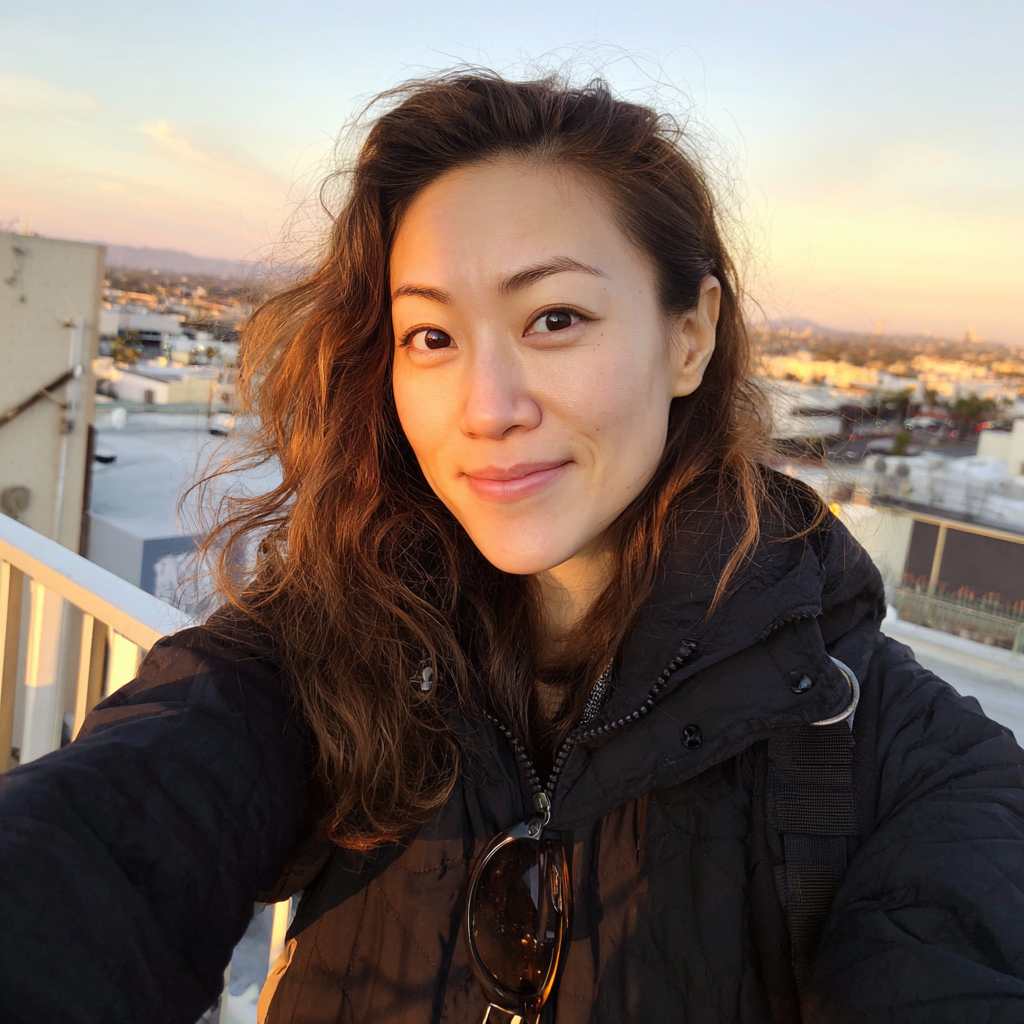

Yuri Nakamura, the Japanese-Korean actor who played the psychologist Irene in Netflix's "Romantics Anonymous," died on Sept. 1 of rectal cancer. She was 44.
Her management company, Alpha Agency, confirmed the death on Sept. 14, nearly two weeks later. "We express our deepest gratitude for the kindness shown to her during her lifetime and respectfully announce her passing," the agency said in its statement.
That statement also revealed something almost nobody in the Japanese film industry knew. Nakamura had been diagnosed with cancer 13 years earlier and decided, along with the agency's president, not to tell the people she worked with. "We should not tell people at work the name of the disease, as it would cause them unnecessary worry," the agency said of the agreement they reached at the time.
She went into remission and kept acting, never missing a scheduled medical screening. In January 2025, the cancer was found again. Surgery was performed successfully, but doctors discovered afterward that the disease had spread. With a complete cure off the table, her treatment shifted toward managing the illness and, as the agency put it, aiming "to live a longer, more vibrant life." Her doctor told her to keep working. She did.
In August 2026 she suffered another bowel obstruction and was told she had very little time left. According to Alpha Agency, she took the news calmly, "maintaining a beautiful and gentle smile throughout her final moments with her family and loved ones."
The Netflix show that introduced her to Americans
Most viewers outside Asia met Nakamura in one role. "Romantics Anonymous" premiered globally on Netflix in October 2025, an eight-episode romantic comedy about Sosuke, a man who cannot stand being touched, and Hana, a gifted chocolatier terrified of eye contact. They collide at a small chocolate shop. Nakamura played Irene, a psychologist. Netflix lists her among the principal cast alongside Oguri and Han. Japanese singer and actor Jin Akanishi also appeared.
The series was a Japanese remake of the 2010 French-Belgian film "Les émotifs Anonymes," produced with a Korean production team. It topped Netflix's Japanese series chart after its debut. Nakamura shot it while managing the disease that had come back that January.
A private funeral and a request to photographers
By the time the news went public, her funeral had already happened. Alpha Agency said the service was private, attended by close relatives, agency staff and fellow actors from the same company. The agency closed its statement by asking the media to leave her family alone and to refrain from filming around her residence.
"We express our heartfelt gratitude once again to all the fans who have warmly supported her, the staff who have helped her, and her fellow performers," the agency said. It described her 30s and 40s as "often marked by battles with illness," but also full of "wonderful encounters, happiness, and fulfilling moments."
She got her start on a TV singing audition
Acting was not the original plan. In 1996 she passed a singing audition on the TV Tokyo talent search program "Asayan," which led to the pop duo Yurimari with Mari Izawa. The pair debuted in 1998 and split up in 1999.
She then spent roughly three years out of the business before starting an acting career in 2003, taking film and television work steadily through the 2000s. It is a strange path for someone who ended up on the festival circuit: pop idol audition at 14, disbanded group at 17, second act as a dramatic actor.
The 2007 role that won her two awards
Her breakout was "Pacchigi! Love & Peace" in 2007, Izutsu Kazuyuki's sequel to his 2005 film "Pacchigi!" and a family drama about a Zainichi Korean family who move to Tokyo in 1974. Nakamura starred as Kyonja, an aspiring actor trying to build a life as a Korean resident of Japan.
The performance won her the Zenkoku Eiren Award for best actress and the Newcomer Award at the 3rd Osaka Cinema Festival. Her Korean-language press coverage described the character as someone who refused to bow to social barriers despite facing discrimination as a Zainichi Korean, and the film as the production that turned her into a star.
Two decades of credits, most of them not in English
If you go looking for her filmography, it stretches across genres and directors. She appeared in Kore-eda Hirokazu's "After the Storm" (2016), the Fukushima nuclear plant drama "Fukushima 50" (2020) and Ishikawa Kei's science-fiction film "Arc" (2021). Earlier credits include "Love Letter From Heaven" (2007), "Like Father, Like Son" (2013) and "Ju-On: Black Ghost" (2009).
American subscribers may have seen her more than once without realizing it. She was in the Netflix drama "Beyond Goodbye" (2024) and the 2017 film "The 8-Year Engagement". On television in Japan she worked on dramas including "Kurosagi" and "Moon Lovers." She also appeared in director Kim Seong-soo's 2014 Japanese-South Korean co-production "The Anonymous."
Stage work ran alongside the screen work. She performed in the production "1945" in October 2008, directed by Robert Allan Ackerman, and returned to theater repeatedly over the years. The Tokyo International Film Festival paid tribute after her death, pointing to her appearances at the festival and her films "By the Window" and "Ichiko."
The job she had to give up
Nakamura withdrew from an NHK drama series titled "Dangerous," scheduled to air in January 2027, publicly citing a bowel obstruction. It was the only visible crack in a career she had spent 13 years protecting from her diagnosis, and even then the public explanation stopped short of naming the disease.
She was trying to recover and get back to work in August when the next obstruction hit. Her agency said she was preparing a return when doctors told her how little time was left. She spent her final days with family and people close to her.
What her co-stars said
Actor Jun Kaname, who worked with her in 2025, wrote that he resented the cruelty of the illness. "She had her whole life ahead of her," he said.
Actor Ryohei Suzuki, who had known her for about two decades, said they first met at an acting school. "I met Yuri Nakamura 20 years ago at an acting school, and we went on to work together many times over the years," Suzuki said. "She was strong yet gentle, dignified and beautiful. Truly a person who was like a lily. It's heartbreaking."
Born Yuri Sei in Neyagawa, Osaka
Her legal name at birth was Yuri Sei, and she was born in Neyagawa, in Osaka prefecture, in 1982. Her father was a third-generation Zainichi Korean, the term for ethnic Koreans living in Japan. Her mother held citizenship in both South Korea and Japan. Nakamura herself held South Korean citizenship, which gave her a following in both countries.
She was direct about that background when she talked to reporters. Visiting the Busan International Film Festival in 2007, she described being angry during the 2002 Korea-Japan World Cup whenever people around her said they hoped South Korea would lose, adding that she was now glad she could proudly identify herself as Zainichi.
That pride showed up in the work too. Her breakout role, the one that won her the awards, was a young woman navigating exactly the life she had been born into, in a film about a Zainichi Korean family moving to Tokyo. Nineteen years later, the last thing international audiences saw her do was play a calm, watchful therapist in a Netflix rom-com about a chocolate shop, filmed while she was privately managing a disease that had already spread. Most of the people standing next to her on that set did not know.
Most read
This week