Teen Rescued Alive After 3 Days Adrift at Sea
A tangled fishing line, three nights on an overturned hull, and a line of flares across the water.
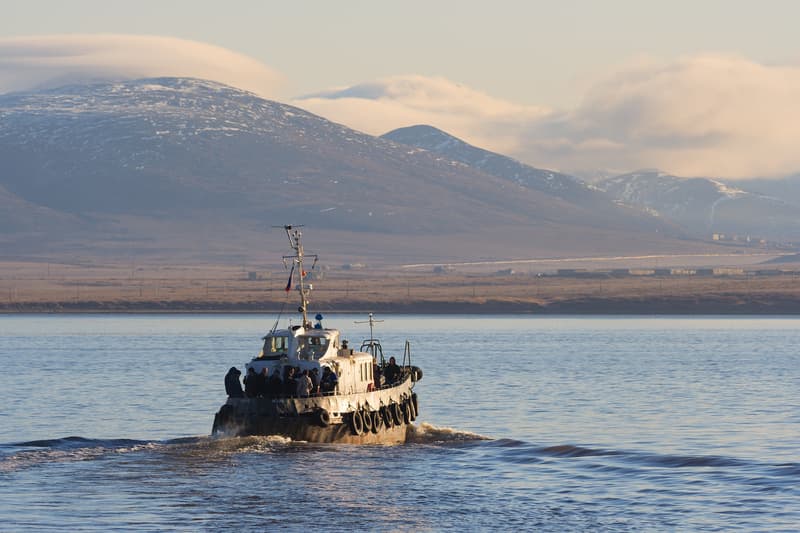
A 15-year-old boy was pulled from the water beside an overturned 18-foot skiff in the Bering Sea on Monday, the only survivor of a halibut trip that killed his older brother and his cousin, the U.S. Coast Guard said.
An HC-130 Hercules aircrew out of Coast Guard Air Station Kodiak spotted him at about 10:30 a.m., roughly 4 miles east of St. Lawrence Island, kneeling on top of the capsized boat. The crew dropped a life raft and survival equipment. The plane was low on fuel and had to leave the scene.
Before it went, the aircrew laid a line of flares across the water to steer a nearby fishing vessel, the Northwest Explorer, toward the skiff. That ship's crew got the teenager aboard, then recovered the bodies of the two men. All three arrived in Nome early Tuesday.
The Coast Guard has not released the names of the survivor or the two men who died. A family spokesperson, Darren Toolie-Noongwook, asked that only first names be used: the survivor is Parker, and his older brother who died is Sidney. The family asked that the cousin's name not be used without permission from his relatives.
A fishing line caught in the motor
The three left the village of Savoonga on Friday night in the 18-foot skiff to fish for halibut. They were expected back by about 3 a.m. Sunday.
Toolie-Noongwook said the family works in commercial fishing, which keeps them on the water for days at a time, and that the crew was already worn out when a fishing line got wrapped in the boat's motor. He was recounting what Parker told the family.
"Once the motor got caught in the fishing line, they tried to untangle it, but they couldn't because of how bad it was tangled," he said. "So they were just sitting, and then later on at the end of the night, the weather got bad and the boat flipped."
Sidney was running a life jacket over to Parker when he got tangled in the lines and the skiff went over, according to Toolie-Noongwook. Parker and the cousin climbed onto the upturned hull. Sidney was the first to die.
"The boat flipped Friday around 8:03 p.m. That was when my brother passed, our older one. That was when he drowned around 8:03 p.m.," Toolie-Noongwook said over Zoom from Savoonga.
The cousin swam five or six feet
Parker and his cousin stayed on the hull together through the first night. The next night, his cousin panicked.
"He started freaking out, and he jumped ship," Toolie-Noongwook said. "And he only swam five to six feet, and he sadly had drowned."
After that Parker was by himself on the boat. His brother said the teenager felt his older brother was watching over him.
"He was sitting on his knees, just praying the whole time," Toolie-Noongwook said. "He said he believed he was going to make it. He believed that he was gonna be found and he was gonna be safe, and it happened."
The pilot who found him called it miraculous
Lt. Cmdr. Jonathon Resch was in the HC-130 that spotted the skiff Monday morning. He described the day as an "emotional roller coaster."
"We are beyond excited and beyond grateful that we found him, and at the same time, we are overwhelmingly remorseful that we didn't find the other two in time," Resch said.
He called the sighting nothing short of miraculous. "People don't survive those scenarios," he said. "People don't flip boats and survive nights. They don't do it in warm water, let alone in water that's, you know, 40 degrees."
Longest four hours ever
The Northwest Explorer is a 162-foot fishing vessel that was running a NOAA surface trawl survey when the Coast Guard sent an urgent message with coordinates. Captain Adam White turned for the skiff immediately. "Longest 4 hours ever," White wrote in a message Tuesday after docking in Nome.
Six regular crew members and seven scientists were on board, and all of them watched the water. The overturned boat turned up less than half a mile off the starboard bow, and the crew picked out the teenager waving through binoculars. They blasted the ship's horn to let him know help was coming.
Parker had drifted about 8 miles from his last known position and could not get to the rafts floating near him, White said. Video of the rescue shows him kneeling on the hull as the ship closes in. A crew member yells, "Stay on your boat!" The teen gives a thumbs-up.
The crew threw a heaving line. "He was able to grab a hold of a heaving line that we threw to him," White said. "And he was able to hold on while we sort of reeled him in. And I just, like, can't believe how tough this kid is."
"When he finally came into view, it was elation from everybody," White said. "Everybody cheered."
Parker was moderately hypothermic when they got him on deck. The crew put him on a mattress under warm blankets that they kept cycling through the ship's dryers, added a few warming packs, and White kept a log showing the boy's temperature slowly climbing. Then they recovered the brother, and later the cousin with help from the Coast Guard.
"That is one remarkably tough kid, is all I can say," White said.
Six hours passed before the Coast Guard was called
Alaska State Troopers were notified around 2:30 p.m. Sunday that the boat was overdue, spokesman Austin McDaniel said. A local search and rescue effort out of Savoonga was already going at that point.
Once Savoonga officials told troopers they could not respond because of the weather, the agency activated the Alaska Air National Guard's Rescue Coordination Center and the Coast Guard "to mobilize higher level search and rescue resources," McDaniel said. That activation happened at 8:30 p.m. Sunday, six hours after troopers were first told.
On-scene weather and poor visibility kept the HC-130 at Kodiak on the ground overnight. It launched Monday morning. Savoonga search and rescue volunteers kept looking from shore in the meantime.
Almost everything had to come from Kodiak
Two HC-130s and two MH-60 Jayhawk helicopters from Air Station Kodiak were launched, along with an HC-130 from the Alaska Air National Guard's 211th Rescue Squadron carrying pararescuemen from the 212th Rescue Squadron. Both squadrons belong to the 176th Wing at Joint Base Elmendorf-Richardson. Troopers and local authorities in Savoonga joined in.
Criticism of the response time has dominated social media discussion in the region, along with calls for a permanent Coast Guard presence closer than Kodiak. Refueling and crew requirements stretch the clock every time assets have to come that far.
The Alaska Army National Guard Black Hawk normally stationed in Nome did not fly. Dana Rosso, chief of operations for Alaska National Guard public affairs, said that aircraft is supporting out-of-state training and a replacement is expected in Nome within the coming weeks. "Additionally, Alaska Army National Guard Black Hawks are not equipped for over-water rescue missions," Rosso wrote.
Seven villages fired guns into the ocean
In Savoonga, Gambell, Nome, Shishmaref, Teller, Wales and Nunam Iqua, people fired guns into the ocean at 8:03 p.m. to honor the two who died, the same minute the family says the skiff flipped.
"I'm so mad at the ocean," a woman says through tears in video from the tribute.
Savoonga is a Siberian Yupik village of about 800 people on the northern coast of St. Lawrence Island, just over 160 miles west of Nome and within about 40 miles of Russia. An aunt of one of the men who died wrote in an online fundraising request that the village is mourning, and said her nephew tried to hold onto the others as long as he could. Relatives have started GoFundMe campaigns for both families.
Counselors are being brought in. The Bering Strait School District planned to send a counselor from Gambell to Savoonga and is working with Norton Sound Health Corporation's Liitfik Behavioral Health Services team. Two behavioral health aides and one clinical associate were already on site, spokesperson Reba Lean said, with more staff traveling from Nome when the weather allows.
No investigation into what caused the capsize
Asked what made the skiff go over, a Coast Guard spokesman declined to give specifics. "At this time, there is no active Coast Guard investigation, and we cannot speculate on the cause or the exact time of the incident," Petty Officer Nathan Bishop said in an email.
The agency also corrected its own account of the rescue. Early information put the sighting at about 3 p.m. Monday; the corrected version has the aircrew finding him sitting on top of the skiff at approximately 10:30 a.m., hours before the Northwest Explorer could reach him.
Rear Adm. Bob Little, commander of the Coast Guard Arctic District, said in a statement that hearts go out to the families, friends and communities affected. "We are grateful for the incredible efforts of the motor vessel Northwest Explorer, Federal, State, Village first responders and mission partners who assisted in the effort that resulted in a life saved," Little said.
Parker got medical attention in Nome, was released, and flew home to Savoonga on a regularly scheduled Bering Air flight. White met the family afterward. "We gave each other a really long hug, and they just, they had a lot of joy," he said.
Toolie-Noongwook said the family is grieving together and spoiling the hell out of Parker. "It's going to be a long, long process because of how, how painful this was," he said. "We're so happy that he [Parker] survived, but the trauma that comes with it, it hurts us. We're all in pain for him."
Parker had gone out on the boat for a simple reason. He wanted to earn money to get his hair permed. "He was like, 'I'm excited to get my perm now, mom,'" his brother said.
Most read
This week