TSA Suddenly Scraps a Rule at U.S. Airports
Something vanished from airports after 9/11. It's back at 13 of them now.

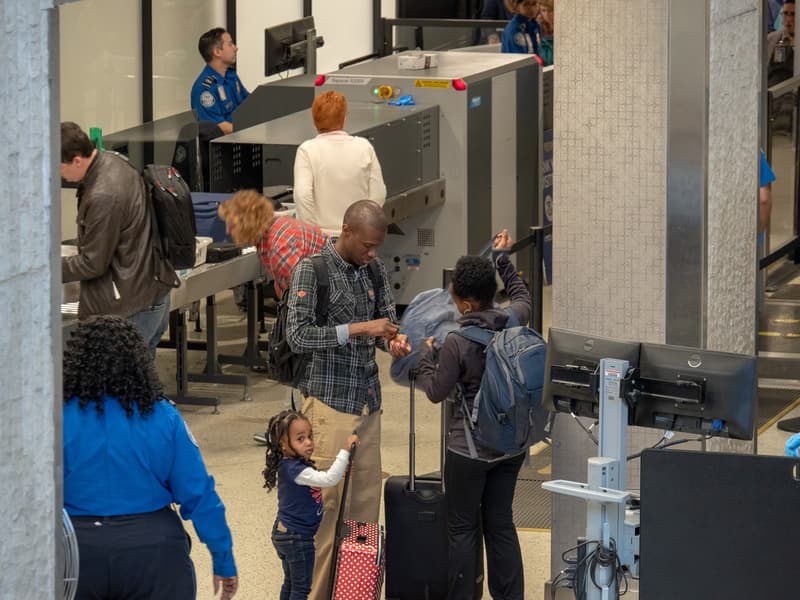
For the first time since the September 11 attacks changed how Americans fly, some people without a plane ticket can walk a friend or relative all the way to the departure gate. The Transportation Security Administration has started a pilot program called Gateside by TSA PreCheck, and it lets approved, non-ticketed visitors clear security and spend time in the secure part of the terminal at 13 U.S. airports.
You still get screened. You still need an ID. And you have to apply days before you show up. But if you clear all that, you can meet someone at their gate, grab a meal past the checkpoint, or see a traveler off the way people did before 2001. This is not the security screening going away. It is one specific rule loosening, the one that has kept non-flyers stuck on the wrong side of the checkpoint for more than two decades.
Where the program is running
The pilot went live at 13 airports on September 2, spread across the country, and your home airport probably is not on the list yet. TSA has said it plans to add more in a phased rollout over the coming months, but for now these are the only spots where it works, according to the agency:
- Mesa Gateway Airport (AZA) in Mesa, Arizona
- John Glenn Columbus International Airport (CMH) in Columbus, Ohio
- Dallas Fort Worth International Airport (DFW) in Texas
- Detroit Metropolitan Wayne County Airport (DTW) in Michigan
- Wichita Dwight D. Eisenhower National Airport (ICT) in Kansas
- Indianapolis International Airport (IND) in Indiana
- Harry Reid International Airport (LAS) in Las Vegas, Nevada
- Los Angeles International Airport (LAX) in California
- Bill and Hillary Clinton National Airport (LIT) in Little Rock, Arkansas
- Will Rogers World Airport (OKC) in Oklahoma City, Oklahoma
- Eppley Airfield (OMA) in Omaha, Nebraska
- San Diego International Airport (SAN) in California
- Salt Lake City International Airport (SLC) in Utah
You need TSA PreCheck or a Known Traveler Number
This is not an open door for anyone who wants to wander past security. Gateside is tied to TSA PreCheck. To qualify, you need to be a PreCheck member or hold a Known Traveler Number. Certain federal employees can qualify too. The key thing people get wrong: you have to be eligible yourself. Having a spouse or a buddy with PreCheck does not get you in. Everyone at the checkpoint needs to be covered.
Kids can come along, but there is a step for that. Children have to be added to the approved adult's reservation using the "add visitor" option before you get to the airport, TSA says. If a child shows up at the checkpoint and is not on the registration, you have a problem.
How to sign up before you go
You cannot just roll up to the security line and ask for a Gateside pass. You apply online through TSA first, and there is a window: at least one day before your planned visit and no more than three days ahead. You log in through login.gov, enter your details and your Known Traveler Number, pick a participating airport, and choose the date you want to come. Then you wait for approval.
Approval is not a sure thing. Airports can cap how many visitors they let in each day, and slots can dry up during busy travel stretches. Once you are approved, the pass is good for the calendar day you picked, and you can come and go during it. At the airport, you show a TSA officer an acceptable ID. If you have children on your reservation, you need to pull up your live approval status in the online portal on your phone. A screenshot or a printout will not cut it, TSA warns, so check your status is still valid before you hand over your ID.
What the pass lets you do, and what it doesn't
Once you are through, you can walk a passenger to their gate, meet someone getting off a flight, kill time with a friend during a long layover, or eat and shop at the places that sit beyond the checkpoint. The program is aimed squarely at families, caregivers, and anyone who wants a few extra minutes with a traveler.
What it does not do is put you on a plane. The Gateside pass is not a boarding pass and it will not let you board an aircraft. You go through the TSA PreCheck lane, but you cannot use the PreCheck Touchless ID lanes. An officer can also send you to a different screening lane depending on how the airport is running that day. And you still play by all the usual rules: the liquid limits, the prohibited items, the whole code of conduct that ticketed passengers follow. Break the rules and your pass can be pulled, or worse.
It costs nothing extra
There is no separate charge for a Gateside pass. It comes bundled with your TSA PreCheck membership, which you already pay for. So if you have PreCheck, this is a benefit you can use without spending another dime, the agency says. If you do not have PreCheck, you would need to buy into that first, since the paid membership is what makes you eligible in the first place.
How this beats the old gate pass
Airlines already hand out gate passes, but only in narrow situations, like an adult accompanying a minor, someone with a disability, or a military member. And here is the difference that matters: people with those airline passes have to go through the standard screening lanes, no matter whether they have PreCheck or not. Gateside opens the faster PreCheck lane and opens it for a lot more reasons, from meeting a business contact to grabbing dinner with a friend stuck on a layover.
Some airports have run their own visitor programs too, mostly in Southern California. San Diego International, for example, has a SAN Pass that lets approved visitors into the secure areas of Terminals 1 and 2, but those visitors use the general screening line and cannot tap PreCheck or CLEAR. Ontario International, John Wayne, and Palm Springs International have their own versions as well. Gateside is the federal one, run by TSA and plugged into the trusted traveler system, and it is the only way a non-flyer gets to use the PreCheck lane.
What the airports are saying
The airports that made the first cut are leaning into the sentimental angle. Brian O'Neill, executive director and CEO of the Mesa Gateway Airport Authority, said in a written statement that whether it is having lunch with a loved one and walking them to their gate, or meeting them when they come home, the program makes the trip feel better, the airport announced.
Ryan Smith, communications director at Mesa Gateway Airport, pointed to families as the big winners. “We have a lot of people, especially our passengers, that may have elderly parents or younger kids who are traveling,” Smith said. “They want them to have that experience. They want to take them and be with them right to the end of the process, and be there at the gate to see them off.”
Over in Ohio, Daren Griffin, president and CEO of the Columbus Regional Airport Authority, welcomed the change at John Glenn Columbus International. “This innovative program helps bring back special moments that many travelers have missed, welcoming loved ones at the gate, enjoying a meal together before a flight, or simply sharing time in the terminal,” Griffin said. In Salt Lake City, returning missionaries often draw big crowds of family and friends, and under Gateside those relatives could meet them right at the gate instead of waiting out in the public part of the terminal.
The worry about crowding
More people past security means more bodies in spaces that are already packed at peak hours. No official, union or consumer group has objected to Gateside on the record, but travellers responding to the announcement online raised the obvious worry: crowded gate areas and fewer free seats.
TSA's answer is to keep the pilot small and give airports the controls. Each airport can decide how many visitors to allow and can cut availability when things get busy. Officials at Mesa Gateway said their airport's short security wait times made it a good place to test the program in the first place. That is the whole point of starting with 13 airports instead of every one in the country: TSA wants to see how the extra foot traffic hits the checkpoints before deciding how far to take it.
For now, the smart move is to check whether your airport is on the list, and if it is, apply inside that one-to-three-day window and confirm your approval before you leave the house. Show up without it and you are stuck at the checkpoint with everyone else, watching your traveler disappear toward the gate alone.
Most read
This week