UAE Extradites Alleged Crime Boss Daniel Kinahan to Ireland
He lived out in the open for ten years. Then one flight changed it.

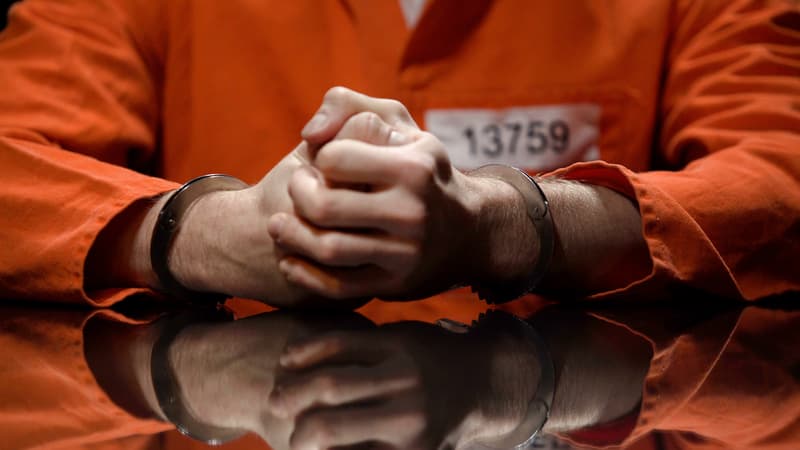
After ten years of living out in the open in Dubai, Daniel Kinahan finally ran out of places to hide. The United Arab Emirates handed the 49-year-old over to Irish authorities on Sunday, ending a manhunt that stretched across three continents and lasted the better part of a decade. He flew home on an Irish government jet, and the second his feet touched the ground, police put him in cuffs.
Irish investigators say Kinahan sat at the top of one of the most feared drug-smuggling operations in the world. He denies all of it. Either way, he is now sitting in a cell outside Dublin, and the way he got there reads like something out of a movie.
Who Daniel Kinahan Actually Is
Kinahan is the alleged leader of the Kinahan Organized Crime Group, an operation Irish police have been chasing for the past decade. Prosecutors say the gang moved tens of millions of dollars worth of cocaine, cannabis, and guns into Ireland, Britain, and Spain, then washed the money through a web of businesses that looked perfectly legal on paper.
He is expected to face a charge of directing an organized crime group. In Ireland, that is a serious accusation, and it lands in a special court set up for exactly these kinds of cases. According to the joint statement from both governments, the extradition was meant to send a message that people accused of serious crime will find no safe place to run.
For the record, Kinahan has always pushed back. A lawyer told the BBC back in 2021 that his client has no criminal record and no convictions, and that calling him a crime boss was simply false. That denial has not changed. What has changed is that he is now in custody.
The $5 Million Reward on His Head
The United States has been after Kinahan for years. In 2022, U.S. authorities named him as one of three leaders of the gang and slapped sanctions on seven members plus three businesses tied to the group. The US State Department and DEA put a price on it too, offering $5 million for information leading to the arrests of the family's top men.
That is not the kind of attention a small-time operator gets. The Treasury put the Kinahan group in the same conversation as some of the most notorious criminal organizations on the planet, comparing it to the Camorra in Italy, Los Zetas in Mexico, and the Yakuza in Japan. The U.S. also said the gang had been locked in a violent feud with a rival group in Ireland and Spain since 2016, a war that left a string of bodies behind, including two innocent bystanders caught in the crossfire.
Ten Years of Living Like a King in Dubai
Here is the part that stuck with a lot of people. Kinahan did not hide in a basement or move from safe house to safe house. He lived openly in Dubai for roughly ten years. He was out and about. He mingled with big names in the boxing world through his management company. For a man wanted by police in multiple countries, he was not exactly keeping a low profile.
That all started to crumble in April, when he was arrested in Dubai on a warrant issued by the Irish courts. From that point on, the clock was ticking. His legal team fought the extradition, but the courts in the UAE refused to block it, and the final ruling came down from Dubai's highest appeals court.
The Government Jet and the Arrest on the Tarmac
The logistics of getting him home were handled with military precision, literally. An Irish government jet flew out of an air base outside Dublin on Saturday, headed for Dubai. According to flight tracking data, the plane left the UAE at 9:20 a.m. Sunday and touched down at a military airport on the edge of Dublin a little after 6:30 p.m. that evening.
Kinahan was arrested on arrival. From there, he was taken straight to the Special Criminal Court in Dublin, where he was expected to appear that same night. That court is a bit different from a regular courtroom. It handles organized crime and terrorism cases, and instead of a jury, the cases are heard by a panel of three judges. Ireland uses it when officials believe a normal jury trial cannot fairly do the job.
A Bombproof Van and Armed Guards
Ireland did not take any chances with security. Reports described a huge operation built around Kinahan's arrival and court appearance. That meant armed police, members of the military, and the prison service all working together. The prison service even recently picked up a bombproof escort van, built specifically to move high-risk prisoners like organized crime figures and terror suspects.
After his court appearance, Kinahan was set to be held at Portlaoise Prison, a high-security facility about 90 miles southwest of Dublin. It is the kind of place reserved for the country's most serious cases. All of that firepower for one man tells you how seriously Irish authorities are treating this.
From Marbella Mansions to Boxing Big Shots
Before Dubai, Kinahan spent years on the Costa del Sol in southern Spain, where he lived large. He owned property worth serious money, including a reported 10 million euro home in Estepona, and he became a familiar face in the world of professional boxing through his management outfit.
That life was not without danger. In 2014, former European boxing champion Jamie Moore was shot outside Kinahan's Spanish residence while training there. Police called it a case of mistaken identity, and Moore survived. Two years later, dawn raids hit six properties on the Costa del Sol linked to the group. Officers seized cash, weapons, a yacht sitting in the marina at Puerto Banus, and luxury cars including a Bentley and a Mercedes.
Kinahan himself nearly died in 2016. Gunmen dressed as police stormed a boxing weigh-in at Dublin's Regency Hotel in an attack widely blamed on a rival gang. He got out and fled back to Spain, then eventually resurfaced in Dubai. His boxing management company, MTK Global, shut down for good after the 2022 U.S. sanctions named him directly. Promoters cut ties with him almost overnight.
Why This Extradition Is a Big Deal
Kinahan is the first person ever extradited from the UAE to the Republic of Ireland under a new, permanent treaty that came into force last year. For years, Dubai had a reputation as a place where wanted men could set up shop and stay out of reach. That reputation just took a hit.
He is not the first person connected to the group to be sent back, either. His close associate Sean McGovern was handed over from the UAE last year under a one-off arrangement before the permanent treaty existed. A judge described McGovern as a senior lieutenant in the organization, and he has since been sentenced to 24 years for directing the cartel's crimes.
Ireland's police commissioner, Justin Kelly, said the arrest showed the determination of Irish police and their international partners, including Dubai Police, to go after cross-border crime groups. Government ministers on both sides spent a long time building the diplomatic relationship that made the treaty possible. As the Garda statement put it, Kinahan was arrested in the UAE on the strength of a warrant issued by Irish courts.
What Comes Next
For now, Kinahan faces the charge of directing an organized crime group, and he will make his way through the Special Criminal Court process behind the walls of Portlaoise. He has consistently denied being a crime boss, and that fight will play out in the courtroom, not in headlines.
What is clear is how far the reach of this case goes. Irish police worked with counterparts in Britain, Spain, and the United States to keep the pressure on for ten years. A man who once moved between mansions, marinas, and boxing rings on three continents is now in a cell in the Irish countryside. For the investigators who spent a decade chasing him, that is the whole point.
Most read
This week
Entertainment
Michael Douglas Says He Hid Kathleen Turner Affair for 40 Years

Crime
Nathalie Belizaire Charged After 4 Children Found Alone During Cruise

Crime
Two Oxford Vape Clerks Charged in Ole Miss Kratom Investigation
Crime
Sinema's Ex-Bodyguard Arrested Again Over Knife at Phoenix Gun Shop

Entertainment
Judge Grants Restraining Order Against Halle Berry Over Choking Claim