US Declares Scholar Min Zin Wrongfully Detained by China
Beijing invited him to an academic conference. He was detained inside the airport on arrival.
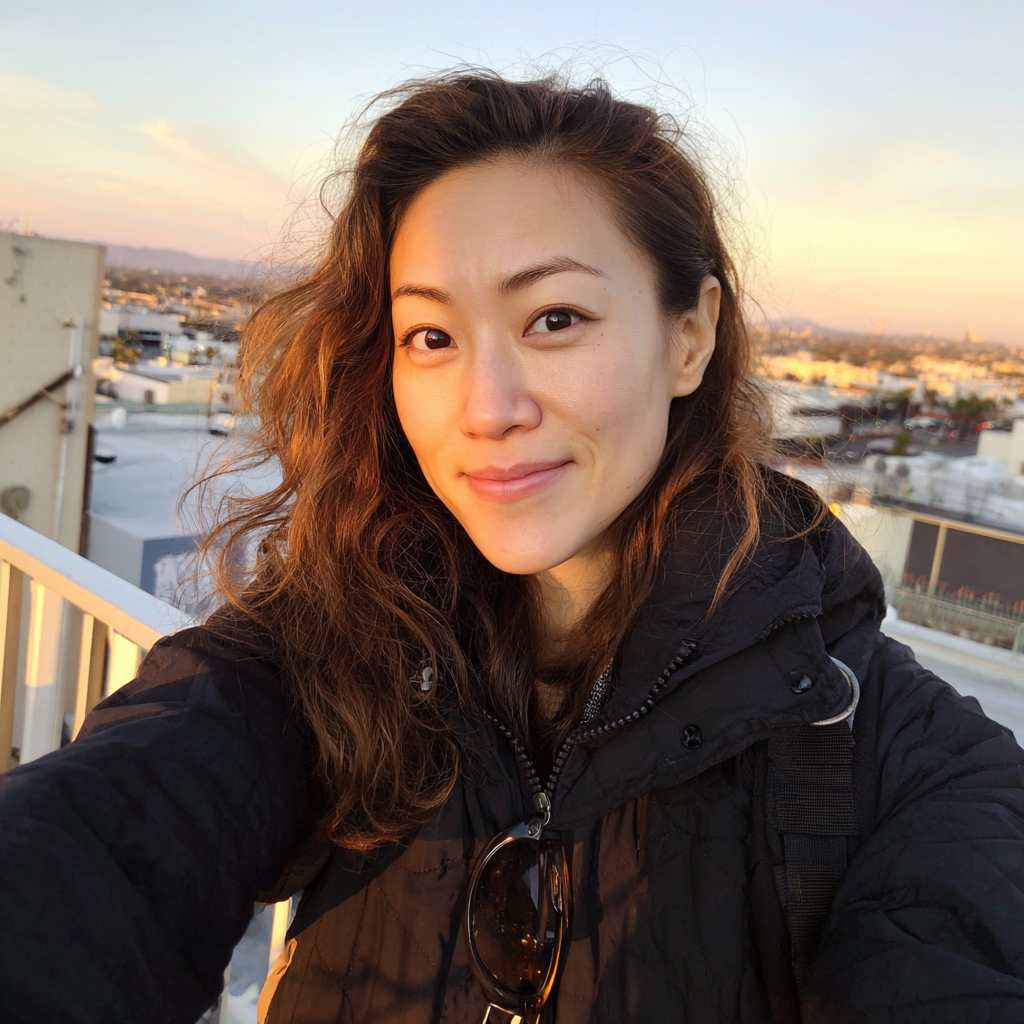
Secretary of State Marco Rubio has formally declared American citizen Min Zin wrongfully detained by China, a legal move that makes freeing him one of the State Department's top priorities. The announcement came August 20, 11 weeks after Chinese security agents took him inside an airport and cut him off from the outside world.
Min Zin is a Myanmar-born scholar and U.S. citizen who runs a think tank focused on his home country. China arrested him June 3 on suspicion of espionage and endangering national security. Beijing has offered no evidence, no public charges, and no timeline. A senior State Department official said the secretary of state made the call after "careful review" of the case.
He Vanished Inside a Chinese Airport
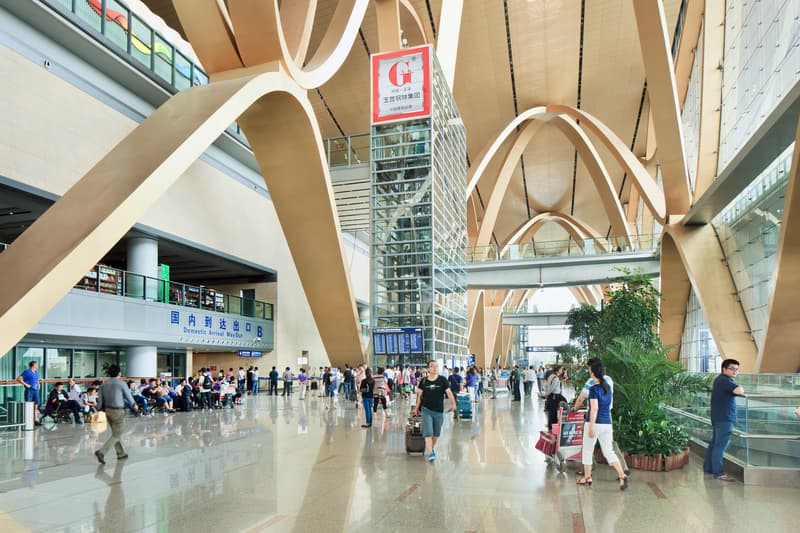
Min Zin flew into Yunnan province in southwestern China on June 3 after what the State Department describes as an invitation from the Chinese government to an academic conference in the city of Kunming. He held a valid Chinese visa, one he had used before to attend conferences there. He never made it past the terminal. A senior State Department official said he was detained inside the airport, according to the account given to Reuters.
His family and colleagues had been in touch with him about his arrival, trading updates on his plans. Then the contact stopped. "One minute his colleagues and family were engaging with him on the phone," the State Department official said, "... and the next minute communication was lost. For 48 hours, his loved ones did not know where he had gone, if he was alive, or who could have taken him."
In the 11 weeks since, he has been subjected to repeated interrogations, isolation and detention conditions, the official said.
From Myanmar's Streets to Berkeley
Min Zin got his start as a student activist in Myanmar's 1988 democracy movement, the mass uprising against military rule that shaped a generation of the country's dissidents. He later moved to the U.S. and studied political science at the University of California, Berkeley, where he is a Ph.D. candidate in the Travers Department of Political Science.
He founded and runs the Institute for Strategy and Policy - Myanmar, or ISP-Myanmar, a research group that tracks the country's politics. The institute started inside Myanmar but moved abroad after the 2021 military coup that overthrew the elected government led by Nobel Peace Prize winner Aung San Suu Kyi, its state counsellor.
Before his arrest, Min Zin lived in Thailand and spent time in the U.S. and Myanmar. His work put him in a difficult spot with Beijing. China has publicly backed Myanmar's new administration, which took power after a widely criticized vote that shut out Suu Kyi's party and other major opposition groups.
Beijing Calls It Espionage
China's foreign ministry confirmed the arrest in June. Spokesman Lin Jian said Min Zin was suspected "of engaging in espionage and endangering China's national security," and left it there. No specifics followed.
A Chinese Embassy spokesperson, Liu Pengyu, told CBS News in June that Min Zin's "legitimate rights have been fully guaranteed." Beijing's standard line is that it handles every case according to law and that wrongful detention does not happen inside China. Washington plainly does not buy it, and the designation says so in official terms.
A Warning Other Scholars Heard Loud and Clear
The way this arrest happened rattled academics who study China and the wider region. Min Zin was invited by the Chinese government, carried a valid visa, and was seized the moment he arrived. That sequence is exactly what makes researchers nervous about accepting the same kind of invitation.
The State Department official flagged that chilling effect directly. Min Zin's case "has raised grave concerns among other scholars about whether they could be subject to entrapment and detention by China," the official said. For people who make a living going to conferences abroad, that is a heavy thing to weigh before booking a flight.
He's the Second Academic on the List
Min Zin is the second American scholar in recent months to get the wrongful detention label. The first is Dr. Youlin Chen, a Chinese-born American seismologist from Boston, held on charges the U.S. calls baseless.
Chen's wife, Dr. Yufang Rong, welcomed the new designation. "It meant a great deal to me when my husband, Youlin Chen, was designated because it means that his freedom is a priority for the Trump Administration," she said. "I hope it gives the same comfort to Min Zin and his family."
Weeks Before Xi Comes to the White House
The timing is impossible to ignore. President Trump is set to welcome Chinese President Xi Jinping to the White House, with the visit expected September 24. Min Zin was arrested only weeks after Trump attended a summit in Beijing with Xi and called it an "incredible visit."
Rights groups pushed the administration to press China on Min Zin's release before Xi arrives. The formal designation is the clearest signal yet that his case will be part of the conversation. It also raises the political cost for both sides if he is still sitting in a Chinese cell when the two leaders shake hands. Dylan Johnson, assistant secretary of state for global public affairs, used the announcement to call on Beijing to "release all U.S. citizens arbitrarily detained or exit banned in China."
Hundreds More May Be Stuck There
China holds more wrongfully detained Americans than any country in the world, according to the Foley Foundation. As of September 2024 it counted eleven. The foundation said the true figure is hard to fix, partly because China does not recognise dual nationality.
The real number is likely much higher. The Dui Hua Foundation estimated in September 2024 that as many as 200 Americans face coercive measures in China, and that more than 30 are barred from leaving under exit bans. Many families never go public. They stay quiet, hoping private diplomacy works faster than headlines, which makes the true count hard to pin down.
There is a recent case that shows these standoffs can end. In November 2024, three Americans held for years, Mark Swidan, Kai Li and John Leung, were released in a prisoner swap brokered by the Biden administration. A White House spokesperson said at the time that all the wrongfully detained Americans in China had been brought home. That claim did not hold for long.
What the Designation Actually Does
A wrongful detention designation from the secretary of state is not a magic key. It does not open the cell door on its own. What it does is pull the case out of routine consular handling and hand it to the Office of the Special Presidential Envoy for Hostage Affairs, which specializes in bringing detained Americans home, giving it staff and attention it did not have before.
For now, Min Zin remains in Chinese custody on charges the U.S. rejects. His case is now a stated priority for the administration. Whether that turns into a plane ticket home may depend on what happens when the two leaders meet.
Most read
This week
Entertainment
Jim Bakker, Televangelist Who Went to Prison for Fraud, Dies at 86
Crime
Marine Devin Ballard Arrested in Okinawa Hotel Killing of Anna Yagi
Politics
Dennis Hastert, House Speaker Who Went to Prison, Dies at 84

World
Coast Guard Suspends Search for 6 on Air Ambulance Off Nantucket
Crime
Sky Whatley Charged With Simple Battery Over Onstage Slap