Coast Guard Suspends Search for 6 on Air Ambulance Off Nantucket
Controllers kept asking the pilot to repeat himself. Then the radar went empty.

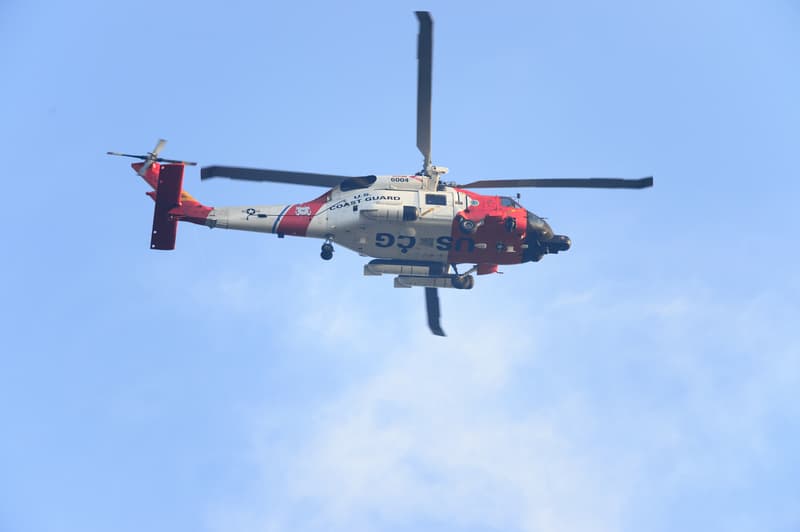
The U.S. Coast Guard suspended its search Sunday for six people aboard a medical transport jet that vanished off Nantucket, Massachusetts, after about 66 hours and 4,445 miles of searching.
Crews found a debris field roughly 20 miles off the Nantucket coast. The six people were not among it.
"Suspending a search is not an easy decision," said Rear Adm. Matthew Lake, commander of the Coast Guard's Northeast District. "We express our deepest condolences to the families and loved ones affected by the tragedy and our gratitude for our partner agencies who helped support search efforts."
Four Canadian nationals and two Bermudian nationals were on the plane: two pilots, two medical workers, a patient and the patient's companion. Their names have not been released. Next of kin have been notified.
Latitude Air Ambulance, the Canadian company that operated the flight, said in a statement: "Given the information shared by authorities and the conclusion of the search and rescue phase, we must now face the heartbreaking reality that the four members of our Latitude team, our patient and the patient's family escort, who were aboard Heartbeat 104, are presumed to have died."
A two-hour run that should have ended at Logan
The Gulfstream G100 lifted off from L.F. Wade International Airport in Bermuda at 11:41 p.m. Eastern on Friday, which was 12:41 a.m. Saturday in Bermuda, one hour ahead of Eastern Daylight Time. Airport spokesperson Ciara Eve put the departure at 11:41 p.m. for the 800-mile flight to Boston.
Skyport, the company that manages the Bermuda airport, said the Canadian-registered air ambulance left "with six souls on board, including four crew members and two passengers."
Latitude said the trip was supposed to take about two hours. The jet was due at Boston Logan International Airport around 1:30 a.m. local time. The Massachusetts Port Authority, which runs Logan, confirmed the plane never arrived. "Our thoughts are with those on board and their loved ones as the search continues," the agency said.
Are you declaring an emergency, or no
Controllers in New York and at the Boston air traffic control center in Nashua, New Hampshire, struggled to hear the crew as the jet came down toward the water.
"Roger, you said you're coming in blind. Is that what you said?" a controller asked. "Are you declaring an emergency, or no?" The pilot's answer was not audible on a recording captured by LiveATC.net. "You're coming in a little weak so I didn't hear what your response was, if you were declaring an emergency or not," the New York controller said. He later confirmed the pilot had declared an emergency, then could not get him back.
As the jet approached Nantucket, the pilot reported electrical failures, according to radio transmissions.
The controller turned to other traffic for help. A nearby Ethiopian Airlines jet was asked to raise the air ambulance by radio and got nothing back, according to air traffic audio obtained by ABC News. Another aircraft was asked whether the Gulfstream showed up on its anti-collision system, but it picked up no sign of the jet.
"I believe we may have lost an aircraft," a Boston Center controller said on another recording. "We lost everything on him ... like a long time ago."
13,000 feet in three minutes
For most of the flight the jet held about 24,000 feet. At roughly 1:04 a.m., FlightAware data show it dropped 13,000 feet in about three minutes, down to 11,000. Within minutes it was gone from radar entirely.
Officials believe the plane rapidly descended 7,500 feet before hitting the water, a person with knowledge of the investigation told ABC News.
Fire crews waited on the runway
At 1:06 a.m., with the plane about 80 miles south of Nantucket, a dispatcher at Logan told crews to stage on the runway. She said the aircraft was due in 15 minutes and had lost "radio and radar," according to radio traffic captured by Broadcastify. Emergency crews rolled into position and waited.
At 1:20 a.m., the Federal Aviation Administration issued a Search and Rescue Alert Notice.
About 16 minutes later, the Massport Fire Rescue commander keyed his radio. "I don't know if you monitored the tower radio, but the tower lost radar contact with this aircraft," he said. "Received, I do have it. I was listening," the dispatcher answered. The crews were sent back to headquarters. At 2 a.m., the FAA notified the Coast Guard.
On Nantucket, police checked the island's airport in case the jet had put down there and found nothing, said Lieutenant Angus MacVicar. At sunrise, officers and the harbormaster rode ATVs along the island's southern shoreline looking for anything that had washed in.
What the Coast Guard put in the water and the air
The search used an HC-144 Ocean Sentry airplane, an HC-130 Hercules airplane, an MH-60 Jayhawk helicopter, a 47-foot Motor Lifeboat and the FRC William Sparling, a Sentinel-class fast response cutter. By Sunday's news conference, crews had covered about 2,840 square miles over 53 hours. The final tally was 4,445 miles over roughly 66 hours.
The water where the debris field sits is about 80 to 90 feet deep, Lake said, and the weather had been in the searchers' favor. No black box has been recovered.
Lt. Commander Kastriot Kastrati, the search and rescue mission coordinator, said crews could not yet say what the recovered pieces were. "It's very difficult at this point to identify exactly what those components are," he said. "The debris that we have recovered, we've safeguarded and kept for future investigative efforts."
A 1996 business jet turned flying ICU
The aircraft was registered in Canada as C-GRJP and was manufactured in Israel in 1996.
Latitude Air Ambulance, based in Hamilton, Ontario, runs a fleet of ten aircraft, four of them Gulfstream G100s. The company moves patients home from around the world when they need specialized care.
Clarence Togeretz, Latitude's director of flight operations, confirmed Saturday that the aircraft was missing.
Ten to 20 seconds to react
Until the black box is found, nobody can say for certain what happened in the cockpit, said Mike Slack, a pilot and aviation lawyer who is managing partner of Slack Davis, a personal injury firm in Texas. The tracking data still tells him something.
"Clearly, an aircraft descending at over 4,000 feet a minute from 24,000 feet to 11,000 is out of control," Slack said. "No pilot would do that if they were in control of the aircraft."
A G100 is a high-performance jet that gets hard to handle once control is lost, Slack said, especially at night over the ocean. Pilots in that situation typically have 10 to 20 seconds to react. At that rate of descent, the forces on the airframe would have made it extremely difficult for crew members to do anything, assuming they were still conscious. He said the plane could also have suffered a "catastrophic structural failure" on the way down.
Mary Schiavo, a former U.S. Department of Transportation inspector general, said in analysis shared with Fox News Digital that the jet faced two problems at once: "This aircraft was dealt a dire one-two punch: a critical safety in-flight problem, followed almost immediately by a perilous weather event and an 11,000-foot plunge."
The National Transportation Safety Board said it was gathering information and monitoring the situation. The Coast Guard said any investigation into the cause will be coordinated by the "appropriate investigative authorities."
Bermuda, Ottawa and Beacon Hill
Bermuda Premier David Burt said his government had contacted the family and U.S. search and rescue authorities. "My thoughts are with the six people aboard the missing air ambulance traveling from Bermuda to Boston, and their families," he said while the search was still active. "We are praying that everyone will be found safe."
Canada's foreign affairs department said it was "deeply concerned by the disappearance" and confirmed Canadians were aboard. "Our thoughts are with everyone on board and their loved ones," the department said, thanking the Coast Guard and everyone involved in the search.
Steve MacKinnon, Canada's minister of transport, said his thoughts were with everyone on board, their families, loved ones and colleagues. Canadian officials declined to identify the people on the flight.
Massachusetts Governor Maura Healey, speaking Saturday at a labor rally in Dorchester, said her thoughts and prayers go out to all on board and all involved. "We'll do whatever we can as a state to support efforts there and work with the Coast Guard," she said.
Water that has swallowed planes before
The hunt played out in the same stretch of ocean south of Massachusetts where John F. Kennedy Jr. crashed his single-engine plane west of Martha's Vineyard 27 years ago. His wife, Carolyn Bessette-Kennedy, and his sister-in-law, Lauren Bessette, were aboard. After five days, the U.S. Navy helped recover all three bodies from 116 feet of water.
Latitude, in the same statement acknowledging its crew is presumed dead, said its thoughts are first and foremost with the families, loved ones, friends and colleagues of the six people aboard Heartbeat 104.
Most read
This week

Health
Pennsylvania Measles Cases Top 1,000, Largest Outbreak in 30 Years
Crime
Andrew Tanaka Charged With Four Counts of Attempted Murder on I-35

Crime
FBI Arrests 18-Year-Old in ISIS Plot to Attack Mall of America

Crime
Christa Pike Awake and Speaking After Tennessee Execution Fails

Politics
Seven Senate-Confirmed Treasury Officials Exit Amid Bessent Outbursts