US Indicts Raúl Castro, 94, in 1996 Shootdown That Killed Four
After three decades of waiting, the families finally heard the words.
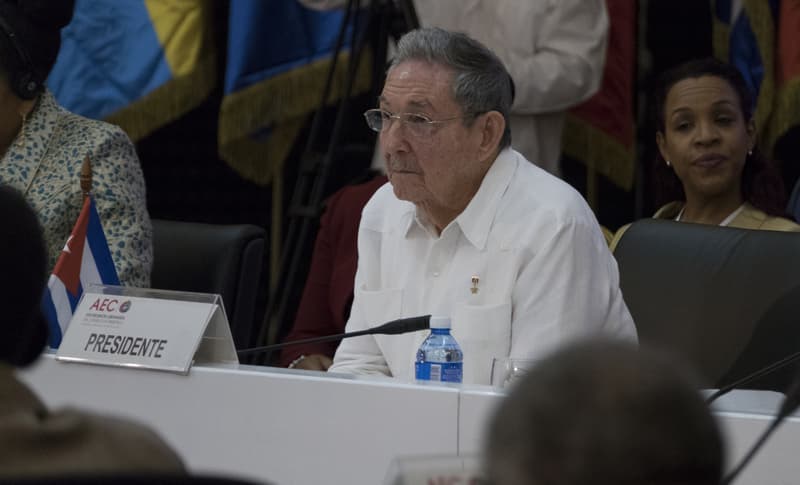
Thirty years after Cuban fighter jets blew two small civilian planes out of the sky, killing four men over international waters, the United States government has finally come for the man it says gave the order. On May 20, 2026, federal prosecutors in Miami unsealed an indictment charging 94-year-old Raúl Castro, the former president of Cuba, with conspiracy to kill U.S. nationals, four counts of murder, and two counts of destruction of aircraft.
The timing was impossible to miss. The indictment dropped on May 20, Cuban independence day. Acting Attorney General Todd Blanche declined to say whether that was intentional, but nobody in Miami's Freedom Tower, where the announcement took place, thought it was a coincidence.
What Happened on February 24, 1996
Brothers to the Rescue was a Miami-based organization founded by Cuban exile José Basulto. The group flew small Cessna aircraft over the Florida Straits looking for Cuban refugees on makeshift rafts and boats, dropping supplies and alerting the U.S. Coast Guard. By its own count, the group helped save more than 4,000 people trying to escape Cuba during a period of severe economic crisis following the collapse of the Soviet Union.
But Brothers to the Rescue also did something that infuriated Havana. On multiple occasions, the group's pilots flew into Cuban airspace and dropped leaflets containing excerpts from the United Nations' Universal Declaration of Human Rights. In July 1995, two planes dropped anti-Castro leaflets and bumper stickers directly over Havana. In January 1996, pilots released clouds of leaflets north of the island.
Cuba was furious. On February 24, 1996, three Brothers to the Rescue Cessnas took off from Opa-locka Airport near Miami. A Cuban MiG-29 and a MiG-23 scrambled from a Cuban Air Force base, and the MiG-29 fired heat-seeking missiles at two of the unarmed planes. Both were destroyed. Four men were killed: Carlos Costa, Armando Alejandre Jr., Mario de la Peña, and Pablo Morales. Three were American citizens. One was a permanent resident. The third plane, carrying Basulto himself, narrowly escaped.
The International Civil Aviation Organization and the Inter-American Commission on Human Rights both concluded the planes were shot down in international airspace, not over Cuban territory as Havana claimed.
The Indictment and Its Charges
The superseding indictment, originally returned on April 23, charges Castro and five co-defendants. In addition to Castro, the indictment names fighter pilot Lorenzo Alberto Perez-Perez (who was previously indicted back in 2003), along with Emilio José Palacio Blanco, José Fidel Gual Barzaga, Raul Simanca Cardenas, and Luis Raul Gonzalez-Pardo Rodriguez. All are alleged to have played direct roles in planning or executing the shootdown.
Prosecutors allege that Castro, who was Cuba's defense minister at the time and effectively second in command behind his brother Fidel, met with military leaders in January 1996 and authorized them to use "decisive and deadly action" against Brothers to the Rescue aircraft. "All orders to kill by the Cuban military traveled through the armed forces' chain of command with Castro and Fidel Castro as the final decision makers," the indictment states.
This is, as Blanche put it, "the first time in nearly 70 years" that senior Cuban leadership has been charged in the United States for acts of violence resulting in American deaths.
Operation Scorpion and the Spy Ring
The indictment also lays out details of what prosecutors call a Cuban intelligence operation designed to infiltrate Brothers to the Rescue from the inside. Cuban spies embedded in South Florida fed detailed information about the group's flight plans back to Havana. That intelligence was allegedly used to plan the February 1996 attack.
One key figure was Juan Pablo Roque, who defected to the United States in the early 1990s but turned out to be a double agent. According to prosecutors, Roque falsely told the FBI that Brothers to the Rescue would not be flying on the weekend of February 24. He returned to Cuba just one day before the shootdown happened. Roque died last year, having always denied he was a Cuban spy.
The spy ring, sometimes called the "Cuban 5," was eventually broken up in 1998. Its alleged leader, Gerardo Hernandez, was convicted of murder conspiracy for providing intelligence that helped facilitate the shootdown and was sentenced to two life terms plus 15 years. He was sent back to Cuba in a 2014 prisoner swap during the Obama administration's warming of relations with Havana.
Why This Took 30 Years
This wasn't for lack of trying by some people. Federal prosecutors in Miami had actually prepared a potential indictment targeting both Fidel and Raúl Castro years ago. But it was never approved. Former U.S. Attorney Guy Lewis told reporters there was real resistance within the federal government. "Many in the intelligence community and the State Department and elsewhere frankly were very concerned about how strong our response was," Lewis said.
The Clinton administration chose not to move forward with charges against the Castro brothers. Subsequent administrations, including Obama's, which pursued diplomatic normalization with Cuba, had even less appetite for pursuing murder charges against Cuba's leadership. The families waited. And waited.
Marlene Alejandre, the daughter of victim Armando Alejandre Jr., attended the announcement in Miami. She was 18 when her father was killed. "I hope it's justice for my dad and for the other three men. We have waited 30 years to the day," she said.
The Families React
A survivor who was supposed to be on one of those flights, and who was close friends with two of the victims, shouted "Finally!" when the indictment was announced. Miriam de la Peña, mother of 24-year-old victim Mario de la Peña, had a pointed response when asked whether Castro's age (94) should factor into anything. "It doesn't matter. He can be brought in a stretcher," she said.
Brothers to the Rescue founder José Basulto, who nearly died that day himself, was blunt. "It was about time. It's 30 years. U.S. citizens flying U.S. planes were shot down by the Cuban government on the orders of Raúl Castro, and to this day justice has been delayed, therefore justice has been denied."
South Florida politicians lined up to praise the indictment. Rep. Mario Díaz-Balart called the shootdown "a deliberate act of murder." Rep. Carlos Giménez said "the Cuban dictatorship must finally answer for its crimes." Miami-Dade County Mayor Daniella Levine Cava noted that Miami is home to one of the largest Cuban exile communities in the world and that the victims "died while carrying out an act of profound humanity."
So What Happens Now?
That is the question everyone is asking. An arrest warrant has been issued for Castro. Cuba does not extradite its citizens to the United States. When pressed on this obvious problem, Blanche offered a line that landed somewhere between diplomacy and threat: "We expect he will show up here, either by his own will, or another way, and go to prison."
The "another way" part is what has people paying close attention. The Trump administration used a federal drug trafficking indictment against Venezuela's Nicolás Maduro as justification for the January 3 military raid on Caracas that captured Maduro and brought him to New York. Administration officials have already cited that operation when discussing Castro's case.
But Cuba is not Venezuela. Analysts point out that Maduro's military mounted a weak defense. Cuba's armed forces, by contrast, are reportedly preparing for the possibility of American action. Cuban President Miguel Díaz-Canel has vowed "a blood bath" awaits any invading force and called the indictment "a political manoeuvre, devoid of any legal basis." In a statement read on state TV, Cuba's government condemned the charges as "a despicable and infamous act of political provocation" and claimed the U.S. "distorted facts."
The indictment also comes at a strange moment in U.S.-Cuba relations. Just six days before it was unsealed, CIA Director John Ratcliffe met with Cuban officials, including Castro's grandson, during a visit to the island. There appeared to be a window for dialogue between the two nations. Whether that window just slammed shut remains to be seen.
Freedom Tower
There was one more detail from the announcement that stuck with people. U.S. Attorney Jason Reding Quiñones noted that the press conference was held inside Miami's Freedom Tower. The building served as the main processing center for Cuban refugees who fled the island, often compared to Ellis Island for Cuban Americans. Announcing murder charges against Raúl Castro in a building where thousands of people were processed after escaping his government was the kind of symbolism that doesn't need a press release to explain itself.
"This passage of time does not erase murder," Quiñones said. "It does not diminish the value of these lives. And it does not weaken our commitment to the rule of law."
Whether the 94-year-old former leader of Cuba ever sees the inside of an American courtroom is genuinely uncertain. But for the families of Carlos Costa, Armando Alejandre Jr., Mario de la Peña, and Pablo Morales, hearing the charges read aloud in Freedom Tower was something they had spent three decades fighting for. Whatever comes next, that part is already done.
Most read
This week
Crime
Christa Pike Awake and Speaking After Tennessee Execution Fails
Politics
Seven Senate-Confirmed Treasury Officials Exit Amid Bessent Outbursts
Entertainment
Jim Bakker, Televangelist Who Went to Prison for Fraud, Dies at 86
Crime
Marine Devin Ballard Arrested in Okinawa Hotel Killing of Anna Yagi
Politics
Dennis Hastert, House Speaker Who Went to Prison, Dies at 84