California Extreme Heat Warning Forecasts 115 Degrees Through Tuesday
Officials are telling millions to stay put, and it's not just the daytime heat.

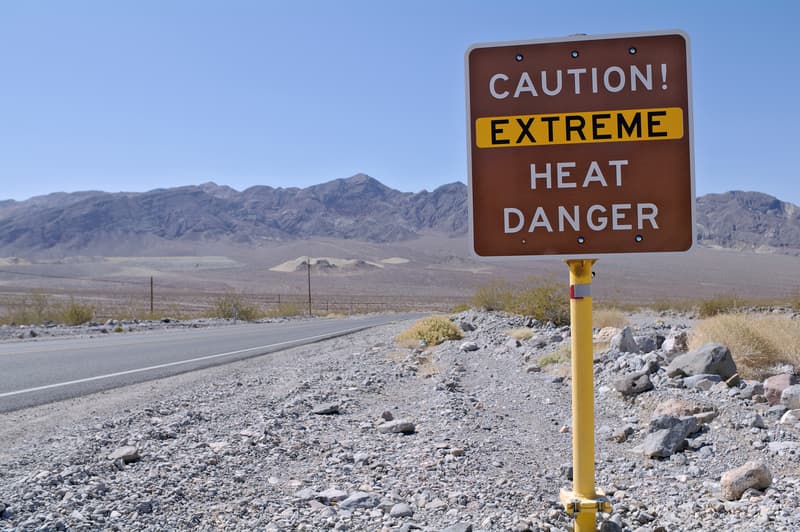
Walking outside in parts of Northern California this week feels like opening a hot oven and leaning in. And for once, the people in charge are flat-out telling folks to stay home. The National Weather Service has issued its most serious heat alert across a big stretch of the state, and millions of people are being told to stay inside and out of the sun. This isn't your usual "it's a hot one today" summer grumble. The numbers behind it are rough, and the overnight situation is what has forecasters really paying attention.
Here's the short version: an Extreme Heat Warning is in effect for a wide swath of Northern California through Tuesday evening, with inland temperatures climbing toward 115 degrees in the hottest spots. Let's break down what's actually going on, where it's worst, and what people are being told to do.
This Is the Most Serious Heat Alert the Weather Service Issues
You hear about heat advisories all the time in the summer, and most people scroll right past them. This is different. NWS Sacramento bumped the earlier advisory up to a full Extreme Heat Warning, which sits a step above a regular advisory and is the strongest heat-related alert the agency hands out. It signals widespread, life-threatening conditions, not just an uncomfortable afternoon.
The warning covers the Sacramento Valley, the northern San Joaquin Valley, the Shasta Cascade region, and the surrounding foothills. According to forecasters in the region, this stretch of heat is expected to be worse than the one that rolled through just last week. When the most severe alert on the books gets pulled out in June, that tells you something.
How Hot? Up to 115 Degrees in the Canyons
Temperatures are forecast to hit 110 to 115 degrees in the hottest areas. Some specific spots are looking even gnarlier. The Trinity River Canyon is forecast to reach 112 degrees, which ranks among the hottest readings ever recorded at any California location in the month of June. The Scott and Salmon river canyons of western Siskiyou County are looking at 100 to 110 degrees too.
For context, that 112-degree canyon forecast is the kind of number you'd expect from Death Valley in August, not a river canyon in June. The whole event is being described as one of the most extreme June heat episodes on record for Northern California, with records possibly falling at several locations around the state.
Redding Could Be Hotter Than Phoenix
If you want one detail that really drives home how upside-down this week is, here it is. Meteorologist Anthony Duarte pointed out on June 15 that Redding could end up hotter than Phoenix, Arizona on the same day. Think about that. Phoenix is the city people use as shorthand for brutal desert heat, the place where folks fry eggs on the sidewalk for fun. And a city in Northern California, surrounded by mountains and rivers, might out-bake it.
That flip happens when a heat dome parks itself over the interior West and Phoenix catches a little break while the California valleys cook. It doesn't happen often, and when it does, it's a sign the heat is the headline, not a footnote.
The Nights Are the Part Everyone Keeps Talking About
People who live in inland California are used to triple-digit afternoons. You close the blinds, you wait it out, and around sundown the temperature drops and you can finally crack a window. That's the normal rhythm. This week breaks it.
Overnight lows are only expected to fall into the mid-70s and low 80s. That means there's almost no cool-down after dark, which is exactly what has officials concerned. The California Office of Environmental Health Hazard Assessment noted that long stretches of high temperatures get especially rough when nights stay warm, because the body never really gets a chance to reset overnight. The NWS even labeled it a "Major Heat Risk," which is their way of saying even healthy adults can run into trouble if they're outside too long without a way to cool off.
Where the Alerts Stretch
The most severe Extreme Heat Warning runs through 11 p.m. Tuesday and covers a big chunk of Shasta, Tehama, and Butte counties. But the heat doesn't stop at those county lines. Heat Advisories stretch all the way from the Oregon border down to the San Joaquin Valley.
Down in Central California, cities like Fresno, Bakersfield, Visalia, Merced, Hanford, Porterville, Delano, and Tulare are looking at temperatures up to 102 degrees, flagged as a moderate risk for heat trouble. Up north, Siskiyou County towns including Yreka, Mount Shasta City, Weed, Dunsmuir, Happy Camp, Etna, and Seiad Valley face 94 to 104 degrees through the central county. Even across the state line, the Klamath Basin around Klamath Falls, Oregon is under a Heat Advisory with highs in the 90s. The same heat wave is hitting parts of Oregon and Washington too, where highs are expected to land between 95 and 100 degrees.
What People Are Being Told to Do
The advice from officials is pretty straightforward, and it's the kind of stuff that's easy to ignore right up until it isn't. Stay in air-conditioned or cool indoor spaces during the peak afternoon hours. If you don't have air conditioning, run fans and keep moving air through the house. Drink plenty of water, and ease off the alcohol and the heavy caffeine.
A few practical tips that actually help: keep your blinds closed during the day so the sun isn't roasting your living room, and open things up overnight if and when the air outside finally drops below the temperature inside. Officials are also repeating the one that bears repeating every single summer, never leave anyone in a parked car, including pets, because the inside of a vehicle can turn into a furnace in minutes. And they're asking people to check on neighbors, especially older folks living alone who might not have working AC.
One more thing that catches people off guard: officials are warning about cold-water shock. When you're overheated and you jump straight into a cold river or lake to cool down, the sudden temperature change can hit your system hard. So even the obvious move of grabbing relief in the water comes with a catch this week.
This Comes Right After the First 100-Degree Days of the Year
What makes this stretch extra punishing is the timing. The valley just got its first triple-digit readings of 2026 last week, the first 100-degree days of the year. That earlier heat wave did more than just make people sweat. It prompted PG&E power shutoffs and lined up with a Red Flag Warning that cranked up fire danger across the area.
So people are walking into this new round already worn down from the last one, and the new round is forecast to be hotter and to last longer. The jump from a Heat Advisory to a full Extreme Heat Warning reflects that. The temperatures are expected to be more severe and more sustained than the event that just passed through.
Where to Go If Your AC Can't Keep Up
Not everyone has central air, and old window units have a way of giving up exactly when you need them most. For anyone in that boat, the California Department of Public Health says cooling centers are being opened up across the affected areas. These are usually public spots you already know, like libraries and community buildings, where you can sit in the air conditioning for a few hours and get out of the worst of it.
If you're not sure where the nearest one is, your county or city website usually keeps an updated list during heat events like this. It's worth knowing before Sunday and Monday, since the peak of the heat is expected to land right on those two days before a slight cooling trend starts creeping in Tuesday.
The Takeaway
The message from officials across Northern and Central California this week is about as direct as it gets: stay inside, stay cool, and skip the strenuous outdoor stuff until this thing passes Tuesday. With readings pushing 115 degrees in the hottest canyons, a forecast that has Redding possibly topping Phoenix, and nights that refuse to cool down, this is a stretch of weather worth taking seriously. The afternoons will get the headlines, but the warm nights are the part to keep an eye on. Close the blinds, fill up the water bottle, and check on the people nearby who might need a hand.
Most read
This week
Crime
Police Find Missing Newlywed Dominick Bianchi Dead in Wooded Area

World
Brianna Cronin, 29, Dies in Cliff Fall at Bali's Kelingking Beach

Business
TV Legend Drops Shocker About Her Future

Business
Dolly Parton's First Song Since Her Death Just Dropped

Business
Paramedic Suspected of Murdering Six Patients