Chris Bosh Says January Pulmonary Embolism Nearly Killed Him
He thought he had beaten it for good. Then January happened.

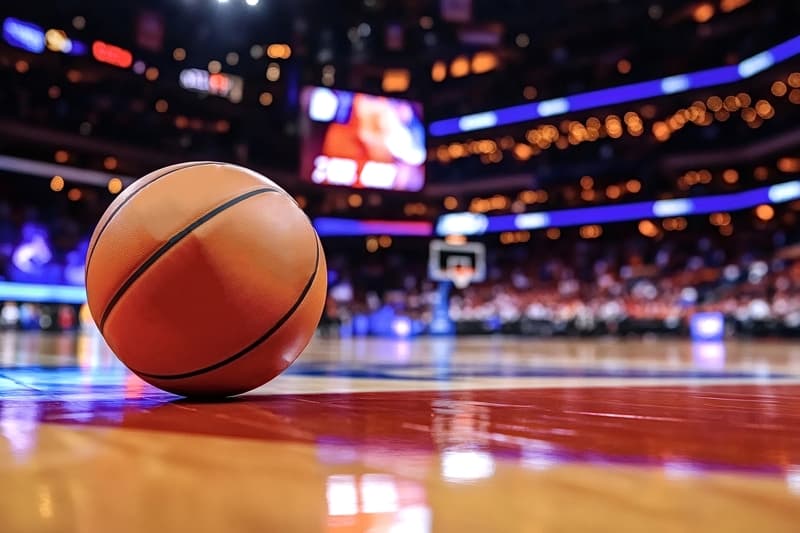
Chris Bosh spent a summer weekend in Ladera Ranch, California, coaching a charity 3x3 tournament for USA Basketball. Kids running around, low stakes, good vibes all weekend. Then a reporter asked how he was doing lately. His answer had nothing to do with basketball, and it stopped the conversation cold.
"I almost dropped dead pretty much and came back to life. I'm not joking," Bosh said in the interview. "Yeah. I had another pulmonary embolism. It was in January. I was in the hospital for a week." The 42-year-old was talking about something that happened six months earlier, and he described it the way most guys recount a fender bender. Casual voice, small shrug, no drama. Except the thing he survived does not usually let people walk away and joke about it later.
A Week In The Hospital After He Collapsed At Home
The January episode was far worse than the calm delivery let on. Bosh was getting ready for a date night with his wife when a numbing feeling shot down his leg. He passed out in the bathroom. When he came to, he was lying in a pool of his own blood and couldn't move his body. His wife was already on the phone with 911, and that call is the reason he is still here.
First responders got him to a hospital, where he spent the next seven days in a bed. A pulmonary embolism is a clot that breaks loose and travels to the lung, and it is exactly as serious as it sounds. Bosh had hinted at a scare back in February, posting that he woke up covered in his own blood, but he never spelled out what actually happened. This summer he finally connected the dots in public and put a name on it.
The Blood Clots That Ended His Career At 31
Bosh has been fighting this since he was a superstar in his prime. In February 2015, a clot formed in his leg and moved to his lung. He was hospitalized, then came back the following season and played 53 games. It looked like he had beaten it. Then in February 2016, doctors found a second clot in his calf, and Miami's medical staff told him his basketball career was "probably over." He was still one of the best big men in the league at the time.
He did not go quietly. Bosh spent years pushing for a protocol that would let him keep playing. The trouble is the treatment itself. His condition calls for blood-thinning medication, and taking a hard NBA foul or a knee to the leg while your blood is thin is a bad mix. He failed a physical with the Heat before the 2016-17 season, got waived in 2017, floated a comeback in 2018, and officially retired in 2019. He was 31 when the game got taken from him.
Two Rings, 11 All-Star Games And Two Hall Of Fame Nods
Before any of that, Bosh built one of the more underrated resumes of his generation. He won two championships with the Miami Heat next to LeBron James and Dwyane Wade. He made 11 All-Star teams. He was the third guy on those Heat teams, the one who agreed to slide over to center and stretch the floor before big men shooting threes was normal. That role does not get the highlight love, but it is a big reason those teams worked.
The honors kept coming after he stopped playing. He got into the Basketball Hall of Fame in 2021 for his own career, then went in again in 2025 as a member of the 2008 Redeem Team, the Olympic squad that put USA Basketball back on top of the world. Two enshrinements is rare company, the kind of thing reserved for legends. Bosh earned every bit of it, and he did most of it while quietly carrying a condition that would follow him into retirement.
A Warning Aimed Straight At Victor Wembanyama
Bosh did not just talk about himself. He had a message for Victor Wembanyama, the Spurs' 7-foot-4 phenom whose 2024-25 season ended early because of deep vein thrombosis, a clot in his right shoulder. Wembanyama got cleared to return in July 2025, then played 64 games, won Defensive Player of the Year, finished as an MVP finalist, and dragged San Antonio to the Finals. It was one of the best individual seasons in the league. Bosh watched all of it, and he knows the exact trap a young player can fall into.
"Take your medicine," Bosh said when asked what advice he would give. "Make sure that he's staying on top of his regimen to make sure that doesn't happen again because it only takes one more time. It happened one more time for me, it happened twice, and I couldn't play anymore." His message to Wemby came from a man who lost his career to the exact same thing, which gives it a weight no doctor's speech could match.
Why He Waited Six Months To Tell The Full Story
Bosh has never hidden this part of his life, but he does pick his moments. Back in 2016 he made a documentary called "Rebuilt" that laid out the whole ordeal, right down to the Heat doctors telling him the career was probably done. He has always been open, just on his own timeline. So when the January collapse happened, he let February pass with only a vague social media post about waking up in blood, and then he sat on the details.
Six months later, coaching kids at a charity event, he finally said what it actually was. Maybe distance made it easier to talk about. Maybe the Wembanyama question opened the door. Either way, the timing tells you something. Bosh is a private guy about his health right up until he decides a story might help somebody else. The full picture makes clear that even after years of retirement, this condition never actually left his side.
The Scariest Part Was There Was No Warning
What rattled Bosh most was that nothing tipped him off. "No symptoms came either," he said. He thought he had this beat. He had years of distance from the clots that ended his career, a daily routine, a normal life with his family. Then his body reminded him who was actually in charge. "You just got to deal with it for the rest of your life," he said. "I thought I was past it. I am not."
He is back on his medication every single day now, and he is blunt about why he told the story at all. Bosh treated the near-miss as a hard reset and wants other people, especially athletes who feel bulletproof, to understand that this thing does not clock out just because you feel fine. His account circled back to one point again and again: he got comfortable, and it nearly cost him everything.
Bosh made it. His wife's phone call, the ambulance, and a week of hospital care got him back on his feet, back to coaching kids and cracking jokes about a week he barely survived. He is one of the great forwards of his era and a two-time Hall of Famer, but the message he wanted to send this summer was a lot simpler than any of that. Take your medicine. Do not assume you are past it. He learned that lesson the hard way, and now he has learned it twice.
Most read
This week
Entertainment
Michael Douglas Says He Hid Kathleen Turner Affair for 40 Years
Crime
Nathalie Belizaire Charged After 4 Children Found Alone During Cruise
Crime
Two Oxford Vape Clerks Charged in Ole Miss Kratom Investigation
Crime
Sinema's Ex-Bodyguard Arrested Again Over Knife at Phoenix Gun Shop
Entertainment
Judge Grants Restraining Order Against Halle Berry Over Choking Claim