Mike Tyson Recounts Repeated Overdoses in New Netflix Docuseries
One night was worse than all the others, and he finally explained why.
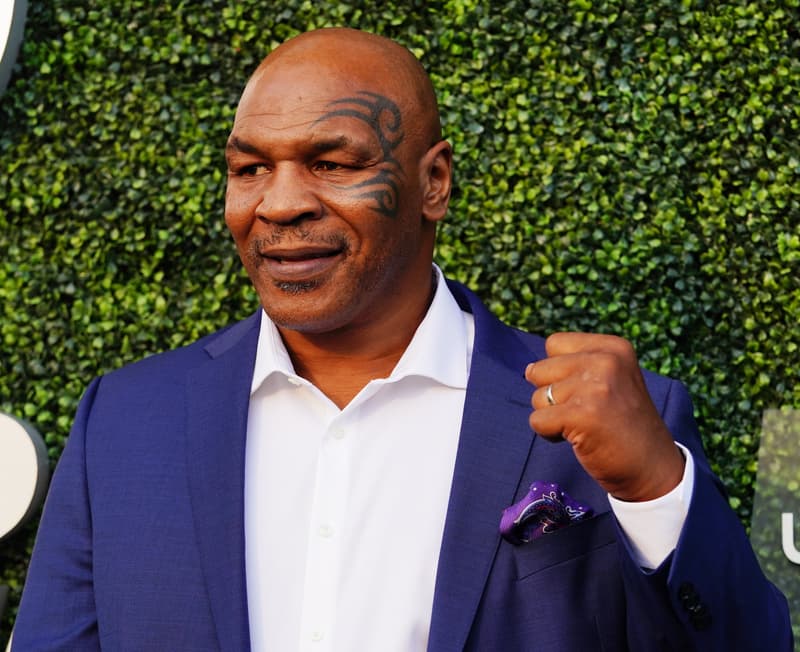
Mike Tyson says he overdosed more than once, and that one of those nights is the lowest point of his entire life. The former heavyweight champion, now 60, tells the story in Tyson, the four-part Netflix docuseries that started streaming on Tuesday, Oct. 13.
Tyson described the scene in plain terms. His nose was bleeding. He was sweating. He was out of his mind with fear. And he said it had happened before, just never like that.
The series was directed by Floyd Russ and runs across four episodes that cover his childhood in Brooklyn, his rise to the heavyweight title at 20, his criminal conviction, his prison sentence, and the years after boxing.
The Night He Calls The Bottom
Asked to name a low point, Tyson went straight to an overdose. "I'm bleeding out, my nose is bleeding and I'm hysterical. I'm sweating," he says in the series, according to The Sun.
He did not treat it as a one-off. "I OD'd, I've done it plenty of times but this one was a little more extreme than others," he added.
That is the version of Tyson the documentary keeps returning to: the man outside the ring, after the money, after the belts, with nobody in the room to stop him.
A Dare, And A Toad
The other thing Tyson talks about is toad venom. He has said he first smoked it because somebody dared him to. "I did it as a dare," he told the New York Post in 2021. "I was doing heavy drugs like cocaine, so why not? It's another dimension."
He put the experience up against his own self-image. "Before I did the toad, I was a wreck. The toughest opponent I ever faced was myself. I had low self-esteem. People with big egos often have low self-esteem. We use our ego to subsidize that. The toad strips the ego," he said in the same interview.
In the series, he says he has smoked it more than 100 times and has not used cocaine or alcohol since.
His Wife Explains How It Started
The substance has a name in the documentary: 5-MeO-DMT, a potent psychedelic. Tyson's wife, Lakiha "Kiki" Spicer, is the one who walks through how he was introduced to it.
Tyson told People in October 2026 that he has been free of alcohol and cocaine for 10 years. He credits the experience with making him rethink his habits, though that is his telling of his own life and not a finding from any study.
It is also the image the series ends on, which is a choice a lot of viewers are going to argue about.
Power, Greed, Trust, Human
The four episodes are titled Power, Greed, Trust and Human, and each one takes a chunk of his life. Power covers Brooklyn, poverty, bullying and repeated arrests as a kid. Greed covers the championship years, the money and the people who circled it.
Trust handles the criminal conviction. Human covers the Evander Holyfield rematch, retirement, his family and the addiction material, according to a breakdown of all four episodes.
Interviews in the series include Tyson himself, relatives and longtime associates from his career.
December 2006
Tyson's drug use has shown up in police records, not just interviews. In December 2006 he was arrested for drug possession and driving under the influence.
That arrest came well after his peak in the sport, during the stretch of his life the documentary spends its last episode on.
Bobby Stewart, Cus D'Amato And A Kid Nobody Wanted
Tyson met boxing through Bobby Stewart while he was being held at a juvenile facility. Stewart saw something in him and introduced him to trainer Cus D'Amato.
D'Amato became his mentor and his legal guardian, and told him he could be heavyweight champion of the world. He did not live to see it. D'Amato died in 1985.
Tyson beat Trevor Berbick in November 1986 to become champion at 20. He unified the major heavyweight titles in 1987 and ran the division until Buster Douglas beat him in 1990. One review of the series calls the D'Amato material among the most compelling parts of the series, because it explains where the intensity came from without reducing his entire life to a diagnosis.
The 1992 Conviction
Episode 3 deals with the case that split his life in two. In 1992, Tyson was convicted of raping Desiree Washington, an 18-year-old Miss Black America contestant, and was sentenced to prison. He served approximately three years and was released in 1995.
He has continued to deny committing the assault, and that denial is the position he takes on camera. The series revisits the case through his own recollections and through commentary from people who know his career, including Donald Trump, who defends him.
That balance is where the documentary has drawn its sharpest criticism. The series leans on Tyson's supporters and gives the conviction itself relatively little scrutiny. His denial does not change the verdict, and a four-part film built mostly from friendly voices has a hard time pretending otherwise.
Robin Givens Is Not In It
Episode 2 revisits his marriage to actress Robin Givens, along with his association with promoter Don King and the spending that went with his fame. Givens did not take part in the documentary.
Tyson earned millions during his career and later ran into serious money trouble. The series covers the collapse, mostly through people inside his own circle.
The Ear, And What His Son Says
The 1997 rematch with Evander Holyfield produced the moment most casual fans still remember first. Tyson bit Holyfield's ears during the fight and was disqualified. Speaking to People before the series premiered, Tyson said he is still embarrassed by it.
Episode 4 also covers his retirement, his family and the death of his four-year-old daughter Exodus in 2009.
The toughest stretch of the episode does not involve boxing at all. His children talk on camera about the good and the bad of having him as a father, which cuts against the softer portrait Tyson paints of himself in the same hour of television.
How The Series Ends
The final episode closes with Tyson taking the psychedelic on camera. He becomes visibly distressed, then invites director Floyd Russ to join him.
Reviewers have landed in roughly the same place on all of it. Tyson's life is almost unfair material for a documentary, with the rise, the money, the prison term, the ear and the reinvention all in one person. Having that subject and making a sharp film about him are not the same job.
What the series does have is a 60-year-old man who is willing to sit still and describe his worst nights out loud, including the ones with no opponent in them.
Where To Watch It
All four episodes of Tyson are streaming on Netflix now. The series dropped in full on Oct. 13.
Tyson finished his career with 44 knockouts. He stepped back into a ring in his late 50s, facing Jake Paul at AT&T Stadium in Arlington, Texas, on Nov. 15, 2024.
The documentary does not try to explain that fight away, and Tyson does not seem interested in explaining much of anything away at this point. He describes the bleeding, the sweating, the dare, the toad, the decade without cocaine, and leaves the viewer to sort out what to do with it.
If you or someone you know is struggling with substance use, the SAMHSA National Helpline is free, confidential and open around the clock at 1-800-662-4357.
Most read
This week
World
Nearly 12-Foot Alligator Kills Fisherman at Winter Garden Park

Business
Trader Joe's Sued Over Chicken Wrap E. Coli Outbreak
World
Yorkshire Wildlife Park Reopens Tiger Area to Thin Crowds

World
Police Clear Crowd Blocking Harry and Meghan's Car in Nottingham
Crime
Police Arrest Four in Shooting of 49ers' Keion White