Girl, 17, Charged in Fatal Mosque Attack
She never fired a shot. A grand jury indicted her for murder anyway.
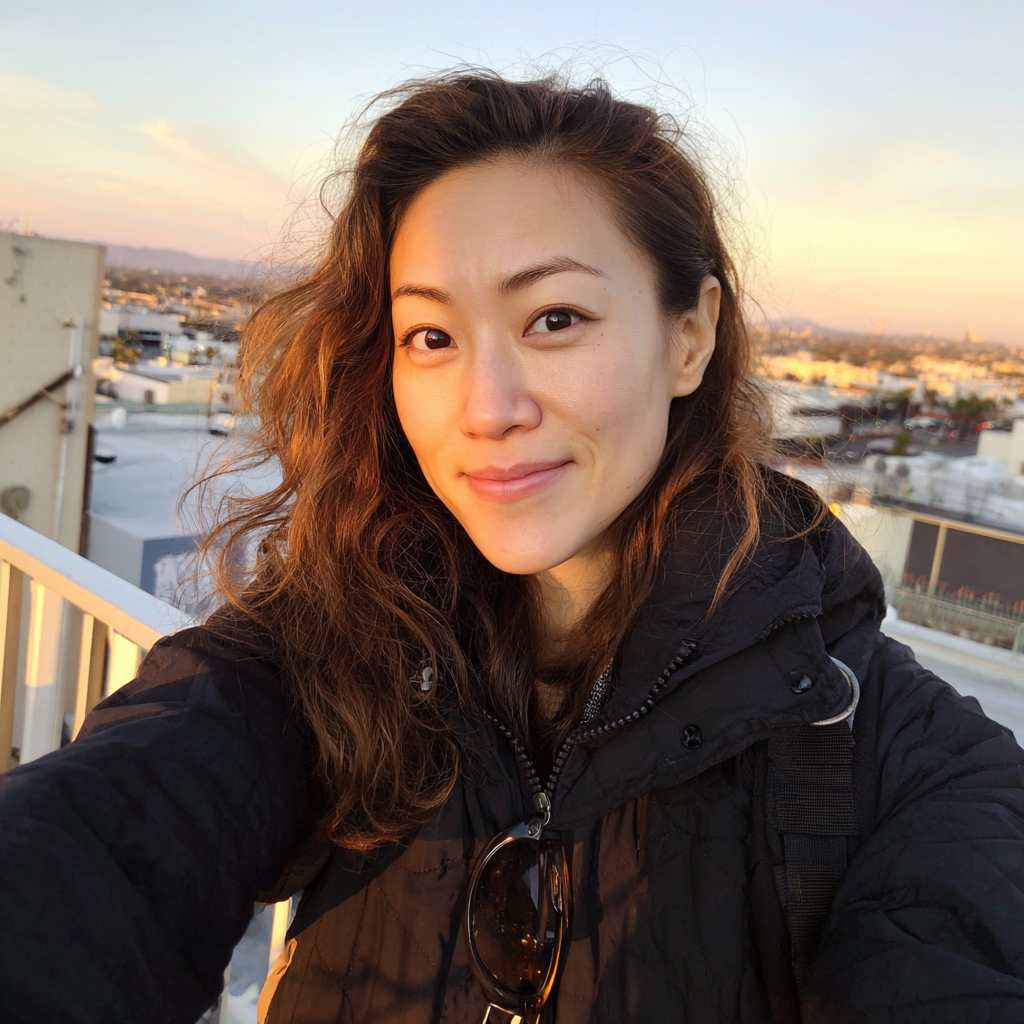

Sarah Lindsey Santiago, 17, of Winston-Salem, North Carolina, has been charged with three counts of first-degree murder and one count of conspiracy for her alleged role in the shooting at the Islamic Center of San Diego, even though she was on the opposite side of the country when three men were killed there on May 18.
A Forsyth County grand jury returned the indictment Monday. Prosecutors say Santiago, a Winston-Salem student, agreed before the gunmen ever walked into the mosque to record their livestream, share the video afterward, and publish the manifesto they wrote to justify the attack.
She is being held without bond, is charged as an adult, and has a hearing set for Sept. 21.
A murder charge without setting foot in California
Forsyth County District Attorney Jim O'Neill announced the charges at a news conference in Winston-Salem. Under North Carolina law, aiding and abetting a crime carries the same penalties as committing it, which means Santiago faces the same murder counts as the two teenagers who fired the shots.
O'Neill said a person can be guilty of aiding and abetting if they share the same criminal intent as the attacker and fail to help during the crime, even when they are nowhere near it. "She didn't have to be in California, she's in our jurisdiction," he said. "And today, a grand jury indicted her and held her responsible for her actions leading up to that disastrous day in May."
Mark Remily, the FBI special agent in charge of the San Diego Field Office, framed the case as a warning to anyone who thinks a screen keeps them safe. "Physical distance from an attack does not place someone beyond accountability for the role they allegedly played in making it happen," he said in a statement.
What prosecutors say she agreed to do
According to the indictment, Santiago agreed ahead of time to record the livestream as the gunmen filmed it, distribute the recording, and release a document the attackers had written. Investigators say she carried out all three tasks.
She is also accused of buying a patch bearing a Sonnenrad, or Black Sun, a symbol tied to white supremacy that the Nazis invented in the 1930s. Prosecutors say she mailed it to Caleb Vazquez, who wore it during the attack.
"The individual here, locally, was the person who was recording the livestream," O'Neill said. "She disseminated that information and she published their manifesto."
The defense and the North Carolina strategy
Santiago's attorney, Alan Doorasamy Sr., rejected the charges. "Suffice it to say, this matter is sub judice and at this time I can confirm that my client is innocent of all these charges," he wrote in an email. He said he had not received any evidence from law enforcement and did not describe any link between Santiago and the two attackers.
O'Neill said his office brought state charges instead of leaving the matter to federal prosecutors because North Carolina law lets a 17-year-old accused of this conduct be tried as an adult. The choice matters. If convicted in North Carolina, Santiago could be sentenced to life in prison without parole.
Investigators arrested Santiago on Aug. 27 in Winston-Salem, days before the grand jury acted. O'Neill said they moved when they did in part because the school year was about to start. "The thought of her going back to school ... we didn't know what she was capable of," he said.
Reid Davis, the FBI special agent in charge in Charlotte, said Santiago had chances to speak up. "When someone has credible knowledge that a crime is going to be planned or going to be committed, particularly an act of violence, the law requires you to come forward," Davis said. Failing to do so, he said, carries consequences.
The morning of the attack
The shooting came together fast. At 9:42 a.m. on May 18, San Diego police took a call from Cain Clark's mother reporting her son missing along with one of her firearms; the department logged it as a runaway juvenile and it made no mention of suicidal or violent behavior. She called again at 10:41 a.m. to report a suicide note, hate-filled writings and more missing weapons. She said he was with a companion, both dressed in camouflage.
Officers were still trying to find the pair when the first calls came in about a shooting at the mosque, in the Clairemont Mesa area, at about 11:42 a.m. Clark, 17, and Caleb Vazquez, 18, parked in the lot, ran past security, and opened fire.
Amin Abdullah, the 51-year-old security guard, exchanged gunfire with them and wounded Clark. He also triggered a lockdown that helped protect 140 children in the mosque's school just steps away. He died of his injuries and has been called a hero.
The gunmen went into the building, then left through a back door into the parking lot, where they came upon Mansour Kaziha, 78, and Nadir Awad, 57. They shot and killed both men. Awad was the husband of a teacher at the center.
The two fled and fired at a landscaper, who was struck on his helmet and suffered minor injuries, before killing themselves in their car a few blocks away. Police found writings inside the vehicle describing hatred toward various religions and races.
The mosque was only the first target
The mosque was not the only place the attackers meant to strike. O'Neill said Clark and Vazquez planned to follow the shooting with attacks on what the indictment calls a Jewish temple, named in court documents as Kehilat Ariel Messianic Synagogue, a Messianic Jewish congregation, and on Black students at a public high school that has not been named.
Their writings cited a range of far-right ideas, including the claim that white people are being replaced by other populations. They aimed hate at Jewish people, Muslims and Islam, the LGBTQ+ community, Black people, women, and the political left and right, and pointed to the gunman who killed 51 people at two mosques in Christchurch, New Zealand, in 2019 as a model.
O'Neill described the shooters as part of a hidden online world that feeds people toward violence. "Cain and Vasquez, by what is contained in their manifesto, seemed to hate everyone, regardless of skin color, politics, religion or ethnicity," he said.
Vazquez wrote that he had some mental health issues and had been rejected by women. In a written statement, his family said Caleb Vazquez was on the autism spectrum and had grown to resent parts of his identity. They said that, along with hateful rhetoric he found online, contributed to his radicalization.
How three viewers led investigators to her
Investigators say three people watched the initial livestream. At first they knew only that one viewer was a woman in the Eastern time zone. They later identified her as Santiago. O'Neill declined to say whether the other two viewers had been identified or would face charges, and the indictment did not name the platforms used to record or share the video.
The wider investigation has been large. Officials said they conducted more than 100 interviews, executed more than 30 search warrants, and reviewed more than 4 million messages. Searches of homes tied to the shooters turned up more than 30 guns and a crossbow, including rifles, along with ammunition, tactical gear and electronics. The FBI Joint Terrorism Task Force in San Diego, the Winston-Salem Police Department, the San Diego Police Department and the Forsyth County Sheriff's Office all took part.
San Diego Police Chief Scott Wahl called the arrest "a meaningful step toward justice for the three irreplaceable lives that were lost that day." He said detectives would leave no stone unturned in the case.
Tazheen Nizam, executive director of the San Diego office of the Council on American-Islamic Relations, said everyone involved in the attack should be held accountable. "We as a community need to invest in dismantling anti-Muslim hate," she said.
If you or someone you know is struggling, the 988 Suicide and Crisis Lifeline is available 24 hours a day by call or text.
Most read
This week

World
Yorkshire Wildlife Park Reopens Tiger Area to Thin Crowds
World
Police Clear Crowd Blocking Harry and Meghan's Car in Nottingham
Crime
Police Arrest Four in Shooting of 49ers' Keion White
Crime
Armed Bystander Kills Teen Gunman After 4 Die at Oregon School
Crime
Jammed Rifle Stopped Aurora Temple Attack, Prosecutors Say