Grammy-Winning Jazz Icon Dies at 70
She had every reason to chase the charts and refused every time.
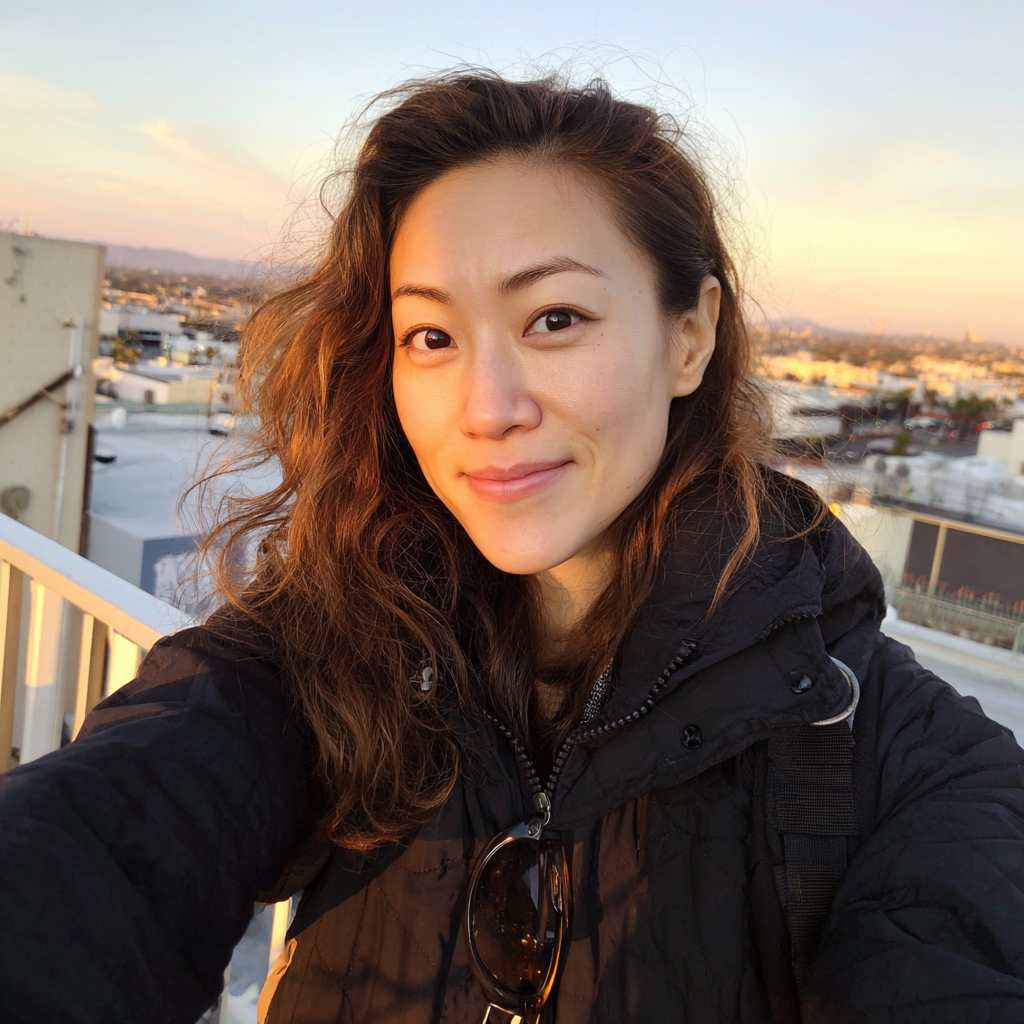
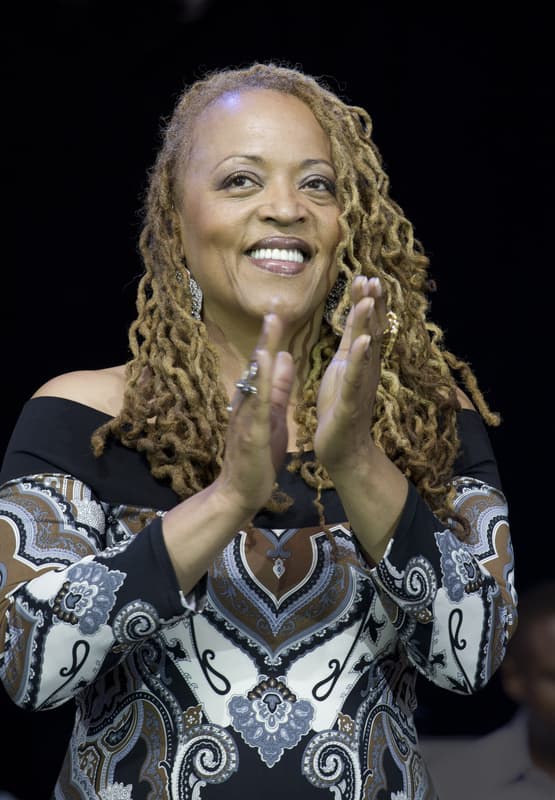
Cassandra Wilson, the two-time Grammy-winning jazz singer whose deep, dark contralto made her one of the most recognizable voices in American music, died Wednesday, Sept. 2, at her home in Jackson, Mississippi. She was 70.
Her longtime manager announced the death in a statement and did not give a cause. Hinds County Coroner Jeramiah Howard confirmed she died in Jackson, the same city where she was born and raised.
The manager's statement said Wilson "transitioned peacefully at home, surrounded by family, close friends, and her manager." Her family asked for privacy as they grieved.
The voice Time called America's best
In 2001, Time magazine put a title on her that stuck: "America's Best Singer." It was a big claim for an artist who never chased the pop charts, but anyone who heard her sing understood the argument. Her voice sat low and smoky, and critics reached for odd comparisons to describe it, everything from woodsmoke to wildflower honey.
The honors piled up over the decades. The National Endowment for the Arts named her a Jazz Master in 2022, the highest recognition the country gives to the music. She also won the Django d'Or and the Edison Music Award, and she earned her own marker on the Mississippi Blues Trail, a nod to the home state she carried into everything she recorded.
Two Grammys and a piece of a Pulitzer
Wilson earned four Grammy nominations and won twice. The first came for New Moon Daughter, the 1995 album that became her calling card, and the second for Loverly, a set of standards that took Best Jazz Vocal Album in 2009.
She also had a hand in one of jazz's rare brushes with the Pulitzer. Wilson sang the role of Leona in Wynton Marsalis's oratorio Blood on the Fields, which in 1997 became the first jazz composition to win the Pulitzer Prize for Music.
Born into a house full of jazz records
She was born Cassandra Fowlkes in Jackson on December 4, 1955. Both her parents were educators. Her mother, Dr. Mary Fowlkes, taught school, and her father, Herman B. Fowlkes, taught too and worked as a musician, mostly on bass and guitar. He kept a huge jazz collection at home, and that was the soundtrack of her early childhood.
She started piano lessons at 6. The guitar came later, and it came because of her father's archtop Gibson. She used to pull at its dangling strings as a child. "They would, of course, resonate with what we call harmonics," she recalled in a 2022 interview with the National Endowment for the Arts. "And the harmonics sounded angelic to me. It sounded like heavenly music." After seven years of piano, she asked her father if she could switch to guitar. She was 12.
A long way from a TV station in New Orleans
Her road to a music career was not a straight line. She played clarinet in marching bands as a kid and sang in coffeehouses and cover bands while studying at Millsaps College and Jackson State University, where she earned a degree in mass communications. On the side she studied jazz with drummer Alvin Fielder. In the early 1980s she moved to New Orleans and took a job as assistant public affairs director for a local television station. She married a radio DJ named Anthony Wilson and kept his name for the rest of her career.
New York changed everything. She and Wilson moved north, and she fell in with a circle of young improvisers built around alto saxophonist Steve Coleman and his M-Base Collective, which she helped co-found after arriving in 1982. Coleman rewired how she heard music. She told Time in 2001 that from him she "learned to tear a piece of music apart" and get away from standard approaches, picking up cycles of rhythm and the layering of rhythms she had never studied before.
The neighbor who changed her sound
Her debut solo album, Point of View, came out in 1986. Her real turn came a few years later through a lucky bit of proximity. A young, largely untested producer named Craig Street moved into her Manhattan apartment building, and the two hit it off. Blue Note Records liked the tracks they made together and hired Street to produce Blue Light 'til Dawn, the sparse, blues-soaked 1993 album that became her breakthrough.
What followed was a run of records that refused to stay in one lane. New Moon Daughter mixed her own songs with covers of Neil Young, U2, Hank Williams, Son House, and even "Last Train to Clarksville" by the Monkees. She never apologized for pulling from pop. "I think people tend to forget what jazz was like in the beginning," she once told The New York Times. "It's not a form of music that came out canonized and etched in stone. It comes from people absorbing what they live."
She walked away from an easy hit
Wilson had a habit of turning away from success when it came too easily. Her 1988 album Blue Skies, a straight-ahead set of standards, got named jazz album of the year by Billboard. Instead of leaning into that acclaim, she recoiled from it and followed up with Jumpworld, a futuristic funk record whose opening track carried the title "Woman on the Edge." She kept making that swerve for decades.
For her 2002 album Belly of the Sun, she went home to record, setting up in a converted train station in Clarksdale, Mississippi. Three years earlier she had paid tribute to Miles Davis, whom she once opened for, on an album called Traveling Miles that folded in a version of Cyndi Lauper's "Time After Time." Her taste was hard to predict, which was the whole point. "I continue to choose the path I take musically," she told The New York Times back in 1994. "And it's not motivated by becoming famous or having a lot money, or any other pop motivation."
From the Roots to John Legend
Wilson's guest list ran across genres. She turned up on the Roots' second album and sang on their tracks "Silent Treatment" and "One Shine." Her 2010 album Silver Pony brought in John Legend, Jon Batiste, and saxophonist Ravi Coltrane. Over the years she also recorded with Luther Vandross, Angelique Kidjo, Terence Blanchard, Olu Dara, Charlie Haden, Elvis Costello, and Meshell Ndegeocello.
Batiste remembered her after her death, saying her music sounded like "the South." He credited her tone and her knack for weaving folk, R&B, and diaspora music into experimental and popular styles as a major influence on his own playing.
A last album for Billie Holiday
Her final solo record, Coming Forth by Day, came out in 2015 as a tribute to Billie Holiday, one of the singers she treated as a spiritual guide. It landed on what would have been Holiday's 100th birthday, and that same year Wilson played a concert at the Apollo Theater marking the centennial. The album brought back "Strange Fruit," the harrowing anti-lynching song that had opened New Moon Daughter two decades earlier, in a slower, more haunted arrangement.
Wilson is survived by her son, Jeris. She dedicated a song to him, "Out Loud (Jeris' Blues)," on her 1991 album She Who Weeps.
Jackson mourns its native daughter
In her hometown, Mayor John Horhn called Wilson an "extraordinary native daughter" and said the city had lost a singular musical voice. It was a fitting send-off for an artist who spent her whole career pointing back toward Mississippi, even after New York made her famous.
Critic Ben Ratliff once tried to map her method in The New York Times, describing music that fed the history of American popular song, "white and black, rural and urban," through a filter of prewar Southern roots reimagined by New York jazz musicians. "What a complicated routing system!" he wrote. "But it worked, and it didn't sound like anything else."
Most read
This week

World
Yorkshire Wildlife Park Reopens Tiger Area to Thin Crowds

World
Police Clear Crowd Blocking Harry and Meghan's Car in Nottingham
Crime
Police Arrest Four in Shooting of 49ers' Keion White
Crime
Armed Bystander Kills Teen Gunman After 4 Die at Oregon School

Crime
Jammed Rifle Stopped Aurora Temple Attack, Prosecutors Say