Jordan Devey, Patriots Super Bowl Champion, Dies at 38
He blocked for Brady, Mahomes, and Allen. Only one player ever did.

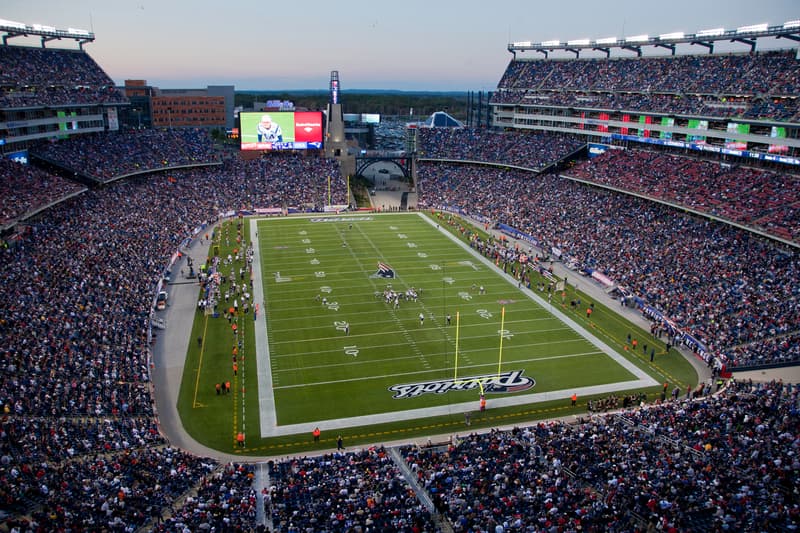
Here's a stat that stops you cold. In the entire history of the NFL, exactly one offensive lineman ever blocked for Tom Brady, Patrick Mahomes, and Josh Allen. That guy was Jordan Devey. Three of the best quarterbacks the sport has ever produced, and one big man from small-town Utah stood in front of all of them at different points in his career.
On July 25, 2026, Devey's family shared that he had died at the age of 38. They said he died by suicide. He left behind his wife, Linsey, and their four children. He was a Super Bowl champion, a high school football coach in Idaho, and by every account from the people who knew him, the kind of dad who showed up. His story is one of those that sticks with you, partly because of how it ended and partly because of how unlikely the whole ride was in the first place.
The one lineman who protected three franchise quarterbacks
Devey wasn't a household name. He was a role player, a guy who moved around the league and did his job without a lot of noise. But look at the resume and it's wild. He was on the New England Patriots when Tom Brady was in his prime. He spent three seasons with the Kansas City Chiefs (2016 through 2018), overlapping with a young Patrick Mahomes. And he finished his career with the Buffalo Bills in 2020, alongside Josh Allen.
Across eight NFL seasons he suited up for five teams: the Baltimore Ravens, Patriots, San Francisco 49ers, Chiefs, Oakland/Las Vegas Raiders, and Bills. In all, he appeared in 44 regular-season games with 21 starts. His busiest year came in San Francisco in 2015, where he played the most of his career, getting into 15 games with nine starts at guard. Not a star, but a pro's pro. The kind of teammate everybody in the locker room wanted around.
A tuba player who somehow won a ring
Here's the part that makes his career feel almost made up. Jordan Devey didn't play high school football. At all. He grew up in American Fork, Utah, and a knee condition that causes pain and inflammation in kids and teens pushed him away from sports after junior high. So instead of lining up on Friday nights, he played tuba in the marching band.
He served a two-year mission for The Church of Jesus Christ of Latter-day Saints in Costa Rica, and somewhere in there he decided he wanted to actually play the game. He enrolled at Snow College in Ephraim, Utah, where his knee had settled down enough to let him play. Two years there, then a transfer to Memphis. He went undrafted in 2013 and signed with the Ravens. The Patriots grabbed the 6-foot-7 lineman for their practice squad that September, then promoted him to the active roster in 2014, the same season New England beat the Seattle Seahawks in Super Bowl XLIX. A kid who gave up sports for the band ended up with a championship ring. You can't script that.
"We'll talk soon"
The detail from his wife that gutted a lot of people: Linsey announced his death on what would have been their 15th wedding anniversary. She posted a photo of Jordan in his hospital bed and wrote a tribute that reads like a letter to someone she wasn't ready to say goodbye to.
"We brought 4 beautiful children into this world that have your eyes, freckles, and compassion," she wrote. "You were our hero and our hearts ache in your absence." She said his last words to her were a simple promise: "We'll talk soon." Four kids, a 15-year marriage, and a house in Idaho where he was, in his own family's words, the ultimate family dad. His father, Kerry, put it plainly: "When he came home, that was his priority. He was all in as a family man. He took care of every single one of them."
The question the family can't get answered
His parents, Kerry and Leslie Devey, spoke openly after his death, and they raised the possibility that CTE played a role. That's chronic traumatic encephalopathy, the brain condition tied to repeated head trauma that has shadowed a generation of football players. Leslie said the family believes he "possibly suffered from CTE," pointing to signs and symptoms they noticed.
The frustrating part is that they'll never know for sure. CTE can only be confirmed after death by examining the brain, and because of the circumstances, that testing wasn't possible. Leslie explained that Jordan had registered as an organ donor, so life-saving measures and the process that followed meant his brain couldn't be preserved for testing. "We believe the possibility of that was very true, simply because he had signs and symptoms," she said. His mom described a battle nobody around him could see. His parents said he'd been quietly dealing with depression and anxiety, and that they're only starting to grasp how much he kept hidden.
His NFL brothers refuse to stay quiet
Word spread fast through the football community. Former NFL defensive tackle Breiden Fehoko shared a tribute and a link to the family's fundraiser, and he didn't sugarcoat anything. "Another NFL brother lost to the mental health battle. Rest in peace Jordan Devey," he wrote. "I promise this is very real. It's dark, it's lonely, it's cold, and this affects every part of your life."
This wasn't a one-time comment from Fehoko either. Back in February, he'd written a long post on X calling out the NFL and its stakeholders for what he saw as a lack of care for players' mental health. The GoFundMe set up for Linsey and the four kids had a $200,000 goal to help cover mounting medical and living expenses. By that Saturday morning, it had already pulled in more than $92,000. The Las Vegas Raiders, one of his old teams, put out a statement on July 25.
Two states are mourning the same man
Devey belonged to two places. Utah, where it started, and Idaho, where it ended. In American Fork, he's remembered as the local kid who did something impossible. His journey from a Utah town to the top of pro football inspired plenty of people who watched him climb.
After retiring in 2021, Jordan and Linsey settled in Eagle, Idaho, and raised their kids there. He poured himself into coaching. He volunteered with his own children's sports teams and coached football at Eagle High School, where players saw him as a mentor and a friend, not just a coach. His dad said he'd been a pillar in every community he touched, from junior college all the way through the NFL. "We're getting so many wonderful comments about him," Kerry said. When a guy is loved in that many places at once, it tells you something about how he treated people.
What his family is asking people to do
The Deveys aren't staying silent, and that choice matters. Instead of keeping his cause of death private, they've turned their grief into a message. Leslie's call was direct: "We want people to understand that it's OK to reach out. That help is there, and there's nothing wrong with you for reaching out." Kerry admitted the family never saw it coming. "You think you're strong until something like this happens, and it brings you to your knees."
If any of this hits close to home for you or someone you love, there are people ready to talk right now. You can call or text 988, the national suicide and crisis line, any hour of the day. Salt Lake City coverage of Devey's death also pointed readers to the National Alliance on Mental Illness Utah chapter for anyone who needs support.
Jordan Devey did things almost nobody gets to do. He blocked for Brady, Mahomes, and Allen. He won a ring the year he made the roster. He went from marching band to Super Bowl XLIX, which is a path so strange it almost sounds fake. But the people closest to him keep circling back to the same thing when they talk about him: not the football, the man. A husband on his anniversary. A dad of four. A coach who made a bunch of teenagers in Idaho feel seen. He was 38.
Most read
This week