Radio Caroline Glitch Falsely Announces King Charles III Has Died
A computer glitch triggered something no one was supposed to hear yet.

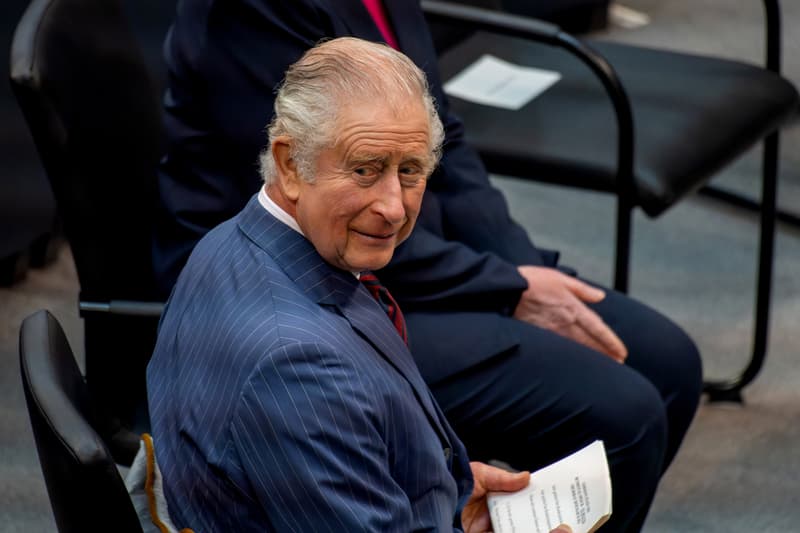
On Tuesday afternoon, May 19, 2026, listeners tuned into Radio Caroline heard something that made their stomachs drop. A solemn voice interrupted regular programming to declare that King Charles III had died. The national anthem played. Then the station went completely silent.
There was just one small problem. King Charles was very much alive. At that exact moment, the 77-year-old monarch was in Belfast, Northern Ireland, watching traditional Irish dancers, trying out bodhran drums, and learning about whiskey making alongside Queen Camilla. He wasn't dead. He wasn't even feeling poorly. He was having what appeared to be a perfectly pleasant Tuesday.
But for about 15 terrifying minutes, nobody listening to Radio Caroline knew that.
What Exactly Happened at Radio Caroline
Here's the sequence of events. Shortly after 2 p.m. local time on May 19, a computer error at Radio Caroline's main studio in Maldon, Essex triggered a pre-loaded protocol that every UK broadcaster keeps on file. It's called the "Death of a Monarch" procedure, and it exists for a very specific reason: when a British monarch actually dies, stations need to respond instantly and uniformly. The protocol is designed so there's no fumbling, no awkward gaps, no DJ accidentally playing Lizzo while the nation mourns.
The system worked exactly as designed. That was the problem. It activated automatically, broadcast a prepared statement announcing that Radio Caroline was "suspending normal programmes as a mark of formal respect following the passing of His Majesty King Charles III," played "God Save the King," and then went dark. The whole thing ran so smoothly and so fast that nobody at the station could stop it before the damage was done.
Ironically, it was the silence itself that tipped off station staff that something had gone wrong. When a station suddenly goes quiet in the middle of the day, engineers notice. They scrambled to figure out what happened, restored normal programming, and issued an on-air apology. The whole episode lasted roughly 15 minutes from start to finish.
Fifteen minutes doesn't sound like much. But in the age of social media, 15 minutes is an eternity.
How the Panic Spread Globally in Minutes
Audio of the accidental announcement hit social media almost immediately. Someone captured the exact moment Radio Caroline declared the King dead and posted it. News aggregator accounts, including NEXTA_TV on Twitter/X, shared the clip. Within minutes, people across the UK, the U.S., and the rest of the world were watching a seemingly legitimate death announcement from a real British radio station.
And here's the thing. If you don't know the backstory, if you're just scrolling your phone and you see a clip of a British broadcaster formally announcing the death of the King and playing the national anthem, why wouldn't you believe it? It didn't look like a prank. It didn't sound like a mistake. It sounded like a carefully prepared, official statement. Because it was one. It just wasn't supposed to air.
The confusion spread internationally before the palace, other news outlets, and the King's own very public schedule in Belfast could confirm he was alive and well. For a window of time, people genuinely didn't know what was true. The reaction online ranged from genuine alarm to dark humor, with many people expressing frustration that they couldn't immediately tell whether the broadcast was real.
What Was King Charles Actually Doing That Day
While Radio Caroline was telling the world he was dead, King Charles was having a full day of royal engagements in Northern Ireland with Queen Camilla. The visit was unannounced, which Buckingham Palace confirmed that same day.
The couple started at Thompson Dock in Belfast. If you're not familiar, that's the dry ground where the Titanic stood before its first and only voyage in 1912. The ship was built at the Harland & Wolff shipyard in the city. It's now one of Belfast's biggest tourist attractions.
Charles and Camilla braved rain and unseasonably cold spring temperatures to watch a performance of traditional Irish music and dance. They met organizers and performers preparing for Fleadh Cheoil na hEireann, the world's largest traditional Irish music festival, which Belfast is set to host for the first time in August 2026. They tried out instruments. They visited Titanic Distillers and learned about whiskey making. Charles also visited a local charity focused on digital career skills. Later, the royal couple met with Northern Ireland's First Minister and deputy First Minister at Hillsborough Castle.
In other words, this was not a man lying low. He was out in public, shaking hands, watching performances, and sampling whiskey. The contrast between reality and what Radio Caroline was broadcasting could not have been more absurd.
The Station Manager's Apology
By Wednesday, May 20, station manager Peter Moore had posted a public apology on Facebook. He explained the incident was caused by "a computer error at our main studio" that triggered the Death of a Monarch procedure, which he described as something "all UK stations hold in readiness while hoping not to require."
Moore also referenced the station's long tradition of broadcasting the monarch's Christmas message, writing that "Caroline has been pleased to broadcast Her Majesty the Queen's, and now the King's, Christmas Message and we hope to do so for many years to come." His statement concluded: "We apologise to HM the King and to our listeners for any distress caused."
Meanwhile, the station's website removed playback of its Tuesday broadcast between 1:58 p.m. and 5:00 p.m. local time. If you tried to go back and listen to the moment it happened through official channels, you were out of luck. The internet, of course, had already preserved it.
The Wild History of Radio Caroline
For Americans who have never heard of Radio Caroline, the station has one of the most interesting backstories in broadcasting. It was founded in 1964 by Irishman Ronan O'Rahilly and Allan Crawford specifically to challenge the BBC's monopoly on the UK airwaves. Their solution? Broadcast from ships anchored in international waters off the English coast, where British licensing laws didn't apply.
The station became a sensation almost overnight, pumping out pop music to an audience starved for something the BBC wasn't providing. Canadian-born disc jockey Simon Dee was among the early voices on the station, broadcasting from those ships moored off the Essex coast starting in April 1964. The British government eventually cracked down on pirate radio operators with legislation in 1967, which forced many stations to shut down. Radio Caroline kept going intermittently before finally ending offshore broadcasts in 1990.
If any of this sounds vaguely familiar, you might be thinking of the 2009 comedy film "The Boat That Rocked" (released as "Pirate Radio" in the U.S.), starring Bill Nighy and Philip Seymour Hoffman. That movie was directly inspired by Radio Caroline and similar pirate stations. It's about a group of eccentric DJs living and working together on a ship at sea, broadcasting illegally. If you haven't seen it, it's a fun watch, and it gives you a sense of just how beloved and rebellious this station was.
Today, Radio Caroline operates legally and has a dedicated following for its eclectic music and independent spirit. It's a weird little station with a huge legacy. Which is probably why this story went as viral as it did. This isn't some anonymous internet radio stream. It's Radio Caroline.
What This Tells Us About the UK's Royal Death Protocols
One of the most interesting things about this incident is what it accidentally revealed about how British media operates behind the scenes. Every UK broadcaster, not just Radio Caroline, keeps a pre-loaded "Death of a Monarch" procedure ready to go at all times. The idea is that when a monarch actually dies, there needs to be a swift, coordinated, dignified response across all stations. No delays, no scrambling.
These protocols sit loaded in automated systems, waiting to be triggered. What Radio Caroline's mishap demonstrated is that the same readiness designed to ensure a smooth national response can become a liability when the technology fails. The system activated, ran its full sequence, and broadcast a false death announcement before any human being at the station could intervene. The entire procedure ran itself.
That raises an obvious question: how many other automated broadcast systems across the UK are sitting one technical glitch away from doing the exact same thing? Radio Caroline is a relatively small station. Imagine this happening at the BBC or Sky News. The chaos would be on a completely different level.
The Uncomfortable Timing of It All
The accidental announcement landed with extra weight because of the King's ongoing situation. Buckingham Palace first disclosed Charles' cancer diagnosis in February 2024. By December 2025, there were positive updates, with the King indicating his treatment schedule would be reduced. He has maintained a full schedule of official duties throughout, and his appearance in Belfast on the day of the false announcement showed him in good form.
But when people are already aware that a public figure is dealing with something serious, a false death announcement doesn't just register as a mistake. It hits differently. People's first instinct isn't "that's probably a glitch." It's to believe it. And that's exactly what happened for those 15 minutes before reality caught up.
We live in a time when misinformation travels faster than corrections. Deepfakes exist. AI-generated content is everywhere. And on May 19, 2026, it wasn't any of those things that fooled people. It was a single computer error at a small radio station in Essex, running a protocol that was designed to be believed. And believed it was, if only for a quarter of an hour that felt much, much longer.
The King, for his part, continued his schedule in Belfast without interruption. Radio Caroline went back to playing music. And somewhere in Maldon, Essex, someone in IT probably had a very long conversation with their boss about what exactly went wrong with that computer.
Most read
This week
Crime
Christa Pike Awake and Speaking After Tennessee Execution Fails
Politics
Seven Senate-Confirmed Treasury Officials Exit Amid Bessent Outbursts
Entertainment
Jim Bakker, Televangelist Who Went to Prison for Fraud, Dies at 86

Crime
Marine Devin Ballard Arrested in Okinawa Hotel Killing of Anna Yagi

Politics
Dennis Hastert, House Speaker Who Went to Prison, Dies at 84