Man Found Dead With Bear Bite Marks on Japan Mountain
The marks on the body told one story, and the timing tells another.

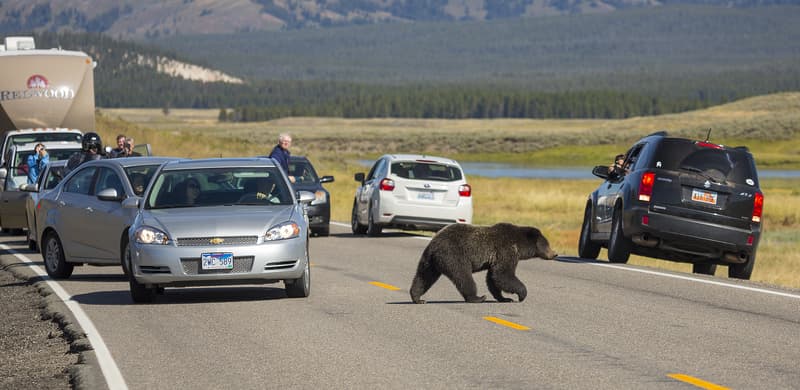
A man's body turned up on a mountain in northern Japan this week, and the marks on it pointed straight at a bear. Police in Aomori prefecture said Monday that bite wounds were found on the body, though they're still working out the exact cause of death. A local official confirmed the bite marks to AFP. If that holds up, it adds another name to a grim run of deadly encounters that has Japan on edge and outdoor crowds in the United States looking over their shoulders too.
Here's the thing that makes this story bigger than one tragedy on one mountain. Bears are showing up in places they have no business being, and the people who track them say this isn't a fluke. It's a pattern, and 2026 is shaping up to be one of the busiest years on record for human-bear run-ins on two different continents.
Japan's death toll jumped fivefold in three months
The Aomori case is not happening in a vacuum. Fatal bear maulings in Japan over the last three months have jumped fivefold compared to the same stretch last year, according to government figures. Five people have died from bear attacks since April 2026, per Japan's environment ministry. That might not sound like a huge number until you learn that this is the first April-to-June window with more than two deaths in the entire dataset, which goes back to fiscal year 2018.
And these aren't quiet incidents in the deep woods. Earlier in June, dozens of police officers, hunters, and city officials were sent into Utsunomiya, a city north of Tokyo, to corner a bear that wandered the streets for three straight days. Schools shut down. Around the same time, a bear in the Fukushima region attacked four people across two factories and a residential neighborhood, then slipped away from the hunters chasing it. Bears have been spotted on airport runways, strolling across golf courses, hanging around schools, and causing scenes in supermarkets and hot spring resorts almost daily.
The country logged more than 50,000 bear sightings nationwide in a recent stretch, more than double the previous record set just two years earlier. Last year was already a brutal one, with Japan recording 13 bear-related deaths in 2025, the highest figure in its history.
Colorado's first attack of 2026 lasted half an hour
Now flip over to the American side. On Sunday, June 21, a black bear attacked a hiker in Apex Park, a wilderness area in the foothills near Golden, Colorado. What stood out to wildlife officials wasn't just the attack. It was how long it went on. The bear stalked the hiker for roughly 30 minutes.
"This encounter lasted a really long time. It was about 30 minutes," Kara Van Hoose of Colorado Parks and Wildlife told reporters. "Normally, bear conflicts don't last that long." The hiker apparently did everything right. She wasn't even carrying food, which usually triggers this kind of behavior. The bear just wouldn't leave, and that scared the experts more than the attack itself.
"We think it's possible this bear had gotten into trash or been rewarded before with unnatural food," Van Hoose said. "It's used to human presence, and now its food drive has overtaken anything else that would have caused it to run away." That's the nightmare scenario for wildlife managers. A bear that has stopped being afraid of people is a bear that keeps coming back. Authorities shut down the entire 700-acre park and went looking for it, weighing whether to relocate the animal or put it down. You can read the full account of the Colorado encounter and how officials responded.
The numbers behind the boom
Colorado is home to somewhere between 17,000 and 20,000 black bears, and the state has already logged more than 1,500 bear reports in 2026. At the same point last year, the count sat around 1,000. That's a 50 percent jump in reports, year over year, and we're not even through summer.
Part of the explanation is weather. Colorado came out of an unusually warm winter with historically low snowpack, and officials flat out predicted trouble. "We're expecting this to be a higher conflict year with bears because we have a historically low snowpack," Van Hoose said. Less snow means hungrier bears moving sooner and ranging wider in search of something to eat.
The bigger story is just how many bears there are now. Take Wisconsin. The state's black bear population climbed from about 9,000 in 1989 to an estimated 23,000 to 24,000 in 2026, according to the state's natural resources department. That's not a slow drift upward. That's the population nearly tripling in one human lifetime. More bears plus more people spreading into bear country equals more chances for the two to cross paths at the worst possible moment.
Glacier and Yellowstone had a rough spring too
The headlines stacked up fast this year. In April 2026, hikers on two popular Great Smoky Mountains trails ran into bold black bears. On the Ramsey Cascades Trail, a bear walked up to two groups and stole their backpacks while another charged a visitor. The weekend before, three groups along the Abrams Falls Trail had run-ins with pushy bears, and one hiker who wandered into a closed part of the park got bitten.
In May, two hikers were hurt in Yellowstone's first grizzly attack of the year, which forced the park to close a big chunk of trails. Then Glacier National Park recorded its first fatal bear attack in nearly 30 years when Anthony Pollio was found dead. Less than a month later, another hiker in Glacier walked into a grizzly and was seriously hurt. The pattern across these parks is hard to ignore, and one wildlife biologist broke down what's actually changing on the trails.
Pollio's death is its own marker. Every other fatal bear incident in Glacier's recorded history happened between 1967 and 1998. The park went 27 years without one, drawing more than 3 million visitors a year the whole time. Then 2026 broke the streak.
What the odds really look like
Before you cancel your camping trip, take a breath. The raw odds of getting attacked by a bear are tiny. Globally, there are about 40 bear attacks a year, with roughly 11 of those in North America. Your chance of being attacked by a bear sits around 0.02 percent, and your chance of being killed by one is about 1 in 2.1 million. Out in the backcountry, the odds of an attack work out to about 1 in 232,613 individual travel days.
The 750,000 black bears across North America kill less than one person per year on average. Grizzlies in the Lower 48 kill either one person or zero in a typical year. Chris Servheen, the former grizzly recovery coordinator for the U.S. Fish and Wildlife Service, made the point plainly: attacks are still extremely rare. But stretch the view across 10 or 20 years and the trend lines tick up. People and bears are running into each other more often, and multiple studies back that up.
Yellowstone averages about five bear incidents inside park boundaries each year, counting food raids, property damage, injuries, and deaths. Against 4 to 5 million annual visitors, that's a rounding error. The full breakdown of global attack data shows the same split everywhere: the danger is real but small, and it's slowly growing as habitats overlap.
The one tool experts keep pushing
If there's a single takeaway from a year like this, it's carry bear spray and know how to use it. Researchers consistently rank it as the most effective way to stop a bear attack, beating out firearms in real-world results. It's the tool wildlife pros recommend over almost anything else, and it works on both black bears and grizzlies.
The other piece is reading bear behavior. Bears don't usually hunt people. They'll only treat a human as prey under severe starvation, but when they do, it's deadly. In roughly 88 percent of fatal attacks, the bear was treating the person as prey rather than just defending cubs or food. Male brown bears are more likely to attack than females, per the National Park Service. The Colorado bear that stalked a hiker for half an hour wasn't behaving like a normal wild animal, and that's exactly why officials reacted the way they did.
The common thread tying Japan to Colorado to Montana is food and people in the same shrinking space. Warming weather is stretching the seasons bears stay active and feeding. Rural areas in Japan are emptying out, leaving towns half wild. American parks are packed tighter than ever. None of it makes a bear attack likely on your next hike. It just means the bears are out there, hungrier and bolder, and a little respect goes a long way.
Most read
This week

Politics
Dennis Hastert, House Speaker Who Went to Prison, Dies at 84
World
Coast Guard Suspends Search for 6 on Air Ambulance Off Nantucket

Crime
Sky Whatley Charged With Simple Battery Over Onstage Slap

Entertainment
Michael Douglas Says He Hid Kathleen Turner Affair for 40 Years

Crime
Nathalie Belizaire Charged After 4 Children Found Alone During Cruise