Trader Joe's Sued Over Chicken Wrap E. Coli Outbreak
Fifty people are sick, two are suing, and federal regulators still have not named a brand.

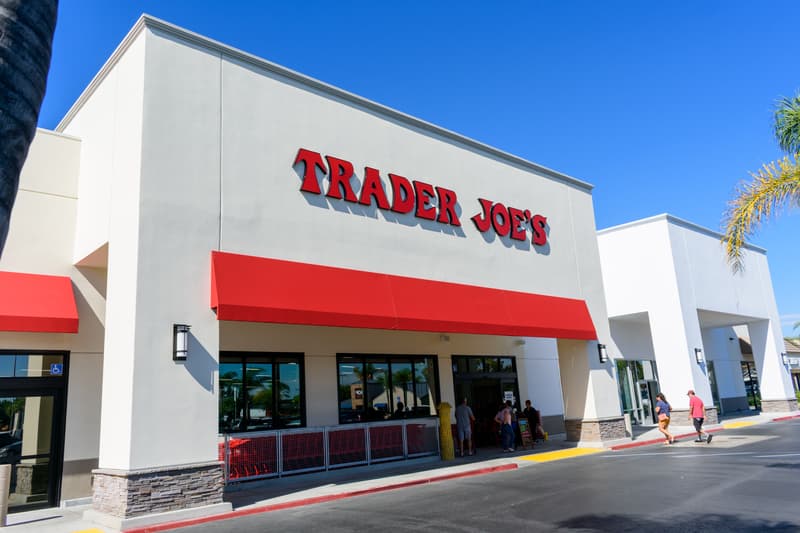
Two women who say they were hospitalized after eating Trader Joe's tarragon chicken salad wraps have sued the grocery chain in federal court, putting a brand name on an E. coli outbreak that federal regulators have been tracking for three weeks without naming anybody.
The Food and Drug Administration now counts 50 people sick with E. coli O157:H7 in that outbreak, up from 38. The agency posted the new number on Oct. 15 on its table of active investigations, where the food is still described only as a multi-ingredient wrap with chicken, flagged as a suspect rather than a confirmed source.
There has been no recall. There has been no public health alert. Neither the FDA nor the U.S. Department of Agriculture has released the manufacturer, the brand, the retailer, or a single state where somebody got sick.
The first lawsuit names a brand
Gayle Gottlieb of Pembroke, North Carolina, and Meaghan Egan Bright of Somerville, Massachusetts, filed suit against Trader Joe's Company in the U.S. District Court for the Central District of California. The case is docketed as Gottlieb and Bright v. Trader Joe's Company, No. 2:26-cv-12017. The complaint pleads strict product liability, negligence, negligence per se and breach of implied warranty under California law.
Both women say their local health departments told them they are part of a multistate E. coli outbreak. Both say they bought tarragon chicken salad wraps in late August, a day apart, roughly 900 miles from each other. The suit alleges that Monrovia-based Trader Joe's knows who made the wraps, what went into them and which stores received them, and has made none of it public. Trader Joe's did not immediately provide a response to the suit.
A lunch in Allston, then a week at Mass General
Bright bought her wrap at a Trader Joe's in Boston's Allston neighborhood on Aug. 24 and ate it that day. She started feeling sick three days later and had bloody diarrhea by Aug. 30. Cambridge Health Alliance sent her home once. An ambulance then took her to Massachusetts General Hospital, where she stayed from Aug. 31 through Sept. 6.
Testing confirmed a Shiga toxin-producing E. coli infection, and her doctors warned her she was at risk of hemolytic uremic syndrome, a complication that can cause kidney failure. Ilana Korchia, an attorney at the food safety firm Marler Clark, said Bright spent that week in severe pain and kept her family's visits short because she was afraid of passing the infection to them. Massachusetts and Somerville public health officials told her her illness was part of the broader outbreak.
Three wraps bought in Myrtle Beach
Gottlieb bought three of the same wraps at a Trader Joe's in Myrtle Beach, South Carolina, on Aug. 23 and ate the first one for lunch four days later. Severe stomach cramps hit on Aug. 29. By Aug. 30 she had bloody diarrhea and was in the emergency department at UNC Southeastern Hospital in Lumberton, North Carolina.
She was discharged the next day, came back with severe dehydration, and was admitted to Scotland Memorial Hospital in Laurinburg on Sept. 2. She tested positive for E. coli, and the North Carolina Department of Health and Human Services classified her as a confirmed case in a multistate outbreak. State health records identified a Trader Joe's wrap as the suspected source of her illness, according to the lawsuit.
The FDA says the wraps are already off shelves
The FDA's explanation for the silence is that the product is gone. The agency says the wraps "were proactively removed from the market before the link to the outbreak was confirmed" and are now past their shelf life. Because nobody called that a recall, the recall column on the outbreak table sits empty, and no list of stores that received the product was ever published.
The agency says it issues a public health advisory only for investigations that produce "specific, actionable steps" for consumers. None has been posted here. For a shopper who ate a packaged wrap in August and got sick, that leaves no practical way to check whether the product in question was the one they bought.
Two federal agencies, one sandwich
Chicken in the filling means the investigation is split. The USDA's Food Safety and Inspection Service regulates poultry. The FDA is responsible for every other ingredient and first posted the outbreak on Sept. 23. The FDA's table says the wrap identified in the investigation is past its shelf life and unavailable for purchase, and that FSIS is working with the FDA to pin down the contaminated ingredient and whether it ended up in anything else.
The FDA says it is now looking at possible ingredient-level contamination. Chicken is rarely the culprit in E. coli outbreaks; produce turns up far more often, and E. coli outbreaks have been traced to lettuce, baby spinach, onions and carrots, any of which can end up in a prepared wrap. No other food has been publicly linked to this outbreak.
Fifty is the floor, not the ceiling
The table listed 38 cases a week before it hit 50 on Oct. 15. The real number is almost certainly higher, because plenty of people with food poisoning never see a doctor and plenty who do are never specifically tested for E. coli. The CDC estimates that for every reported E. coli O157 infection, about 26 go undetected.
As is its practice, the FDA has released nothing about the patients. No ages, no states, no hospitalization count, no tally of hemolytic uremic syndrome cases, no deaths. The investigation is listed as active and the outbreak as ongoing, with traceback, onsite inspection and sample testing all underway. The agency has not said what food is being traced, which facilities are being inspected or what is being tested.
The way the public found out is itself unusual. Outbreaks are typically announced by the FDA or the CDC, often alongside a recall notice. This one surfaced as a line item on the FDA's core outbreak investigation table, which is where it has stayed.
The push to make the government say the name
William Marler, managing partner of Marler Clark, has said the FDA and USDA know the manufacturer, the brand and the stores involved and have not disclosed any of it. His firm has drafted two petitions asking the FDA to release more information about foodborne illness outbreaks.
Korchia, the attorney representing Bright and Gottlieb, said Trader Joe's already knows who made the wrap, what went into it, which stores received it and when it came off the shelves, and that she expects discovery in the lawsuit will eventually make that information public.
Trader Joe's and wraps, before this
The chain has been connected to foodborne illness before. In 2013, a STEC O157:H7 outbreak tied to ready-to-eat salads and wraps sold at Trader Joe's sickened 33 people in four states, with at least two developing hemolytic uremic syndrome. Investigators pointed to two salads made by Glass Onion Catering, and roughly 181,620 pounds of food was pulled that November.
In October 2024, Trader Joe's tarragon chicken salad wraps sold in Idaho, Oregon and Washington were pulled over possible listeria contamination in the BrucePac chicken recall, which also reached products sold at 7-Eleven, Amazon Fresh, Boston Market, Giant Eagle, Kroger, Target's Good & Gather line, Walmart's Great Value brand and Wegmans. Those are separate events, and neither has been linked by regulators to the current outbreak.
Where things stand
Prepared wraps move through a lot of doors. Grocery stores, convenience stores, even vending machines. Without a brand, a manufacturer or a distribution region, a 50-person outbreak spread across an unknown number of states is effectively invisible to the people who bought the product.
The federal case against Trader Joe's is now the only place the words tarragon chicken salad wrap appear in connection with these illnesses. The company has not responded to the allegations. The FDA's table still lists the source as a suspect, the recall column is still blank, and the outbreak is still listed as ongoing.
Most read
This week
World
Nearly 12-Foot Alligator Kills Fisherman at Winter Garden Park

World
Yorkshire Wildlife Park Reopens Tiger Area to Thin Crowds
World
Police Clear Crowd Blocking Harry and Meghan's Car in Nottingham
Crime
Police Arrest Four in Shooting of 49ers' Keion White
Crime
Armed Bystander Kills Teen Gunman After 4 Die at Oregon School