Military GPS Jamming Active When Air Ambulance Crashed, NTSB Says
The crew was warned about it before takeoff. They flew anyway.

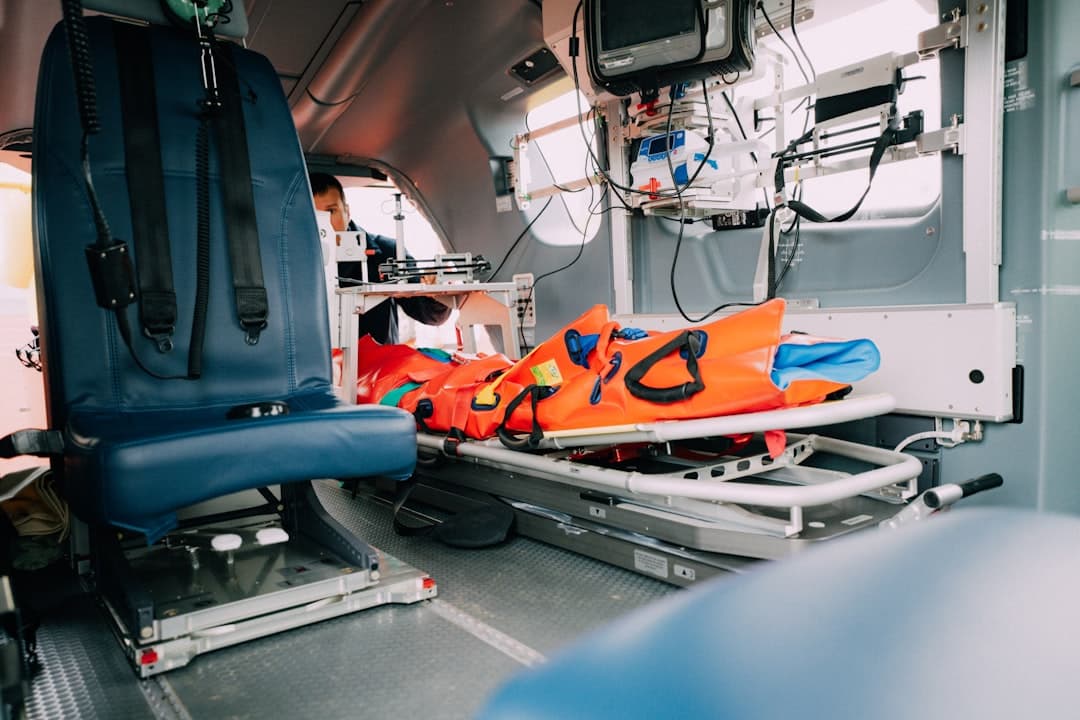
Here's something that should bother anyone who has ever looked out an airplane window and trusted the people up front to know where they are. A small medical plane went down into a mountainside in New Mexico back in May, killing all four people on board. And federal investigators just confirmed that the U.S. military was actively jamming the GPS signal across that exact area, at that exact time.
The crew knew the jamming was coming. They had been warned about it before they ever left the ground. That detail is what makes this whole thing so hard to sit with. This wasn't some surprise. It was scheduled. And the plane still flew straight into a mountain in the dark.
What the investigators actually found
The National Transportation Safety Board put out its preliminary report on June 18, 2026, covering the crash on May 14. The plane was a Beechcraft King Air 90, a twin-engine turboprop used as an air ambulance. The report, filed as case number WPR26FA186, spells out a timeline that reads like a slow-motion problem nobody could stop.
According to the preliminary report, the crew reported losing GPS right around midnight, just minutes after takeoff. They had to call air traffic control for help. The report put it plainly: "GPS jamming activities that encompassed the area around the accident flight were being conducted by the United States military during the time of the flight." The source was White Sands Missile Range, the big military testing site in southern New Mexico.
Who was on the plane
Four people died, and they deserve to be named. The two pilots were Keelan Clark and Ali Kawsara, who worked for a company called Generation Jets. The two flight nurses were Jamie Novick and Sarah Clark, who worked for Trans Aero MedEvac, a company that has run medical flights across southeastern New Mexico and west Texas since 1966.
Here's a part that hits a little differently. There was no patient on board. The flight was a repositioning trip, meaning the crew was flying from Roswell Air Center over to Sierra Blanca Regional Airport near Ruidoso to pick up a patient who needed transport to Albuquerque. They were heading out to help someone. They never made it.
A lot was stacked against them that night
The GPS jamming gets the headline, but the report lays out two other problems that were already in play before the plane even left Roswell. First, there was no moon. The report lists 0% moon illumination, which means pitch black over rugged mountain country. The kind of dark where you can't tell where the ground ends and the sky begins.
Second, and this one is big, the weather reporting system at their destination airport in Ruidoso was already out of service that night. That matters more than it sounds. Without working weather equipment, the crew had no approved instrument-guided way to land at Sierra Blanca from the moment they took off, as the report explains. So they were leaning on options that were thinner than usual before the GPS ever cut out.
The final minutes
After the crew lost GPS, air traffic control stepped in. Controllers called the military installation and got them to pause the jamming for a few minutes at the crew's request. Then ATC tried to guide the plane with radar headings, cleared it for an instrument approach, and switched to a ground-based landing system.
Things looked like they were turning around. The crew radioed that they had the runway in sight and were cleared for a visual approach. That should have been the good news, the part where everything works out. But shortly after they reported seeing the landing strip, the jamming started up again. There were no more transmissions from the aircraft after that.
Flight tracking data shows the plane descended to about 9,400 feet as it came toward the airport, then climbed a few hundred feet. Then it struck a mountainside at 9,950 feet. The point of impact was roughly 230 feet below the Capitan Mountains Summit Radio Facility, per the flight data. Two hundred and thirty feet. They were that close to clearing it.
They weren't the only plane affected
This is the part that should make you raise an eyebrow. The air ambulance wasn't the only aircraft having trouble that night. The NTSB report says three other planes in the same airspace also reported losing GPS. So the jamming wasn't some isolated glitch hitting one unlucky crew. It was blanketing the area and scrambling navigation for multiple aircraft at once.
Jamming, for anyone wondering how it works, basically floods the airwaves with radio noise on the same frequencies GPS satellites use. The signals coming down from space are extremely weak, so it doesn't take much to drown them out. There's a related trick called spoofing, where false data tricks a plane's instruments into showing the wrong position entirely. Both have become a lot more common in recent years, especially near conflict zones and certain international flight paths, according to aviation reporting.
Experts say losing GPS shouldn't crash a plane
Now here's where it gets complicated, and where I'd warn against jumping to easy conclusions. The pilots had been formally warned. The FAA published a Notice to Airmen, called a NOTAM, ahead of time telling anyone flying into the area that the military would be jamming GPS. The crew's preflight briefing included a warning from White Sands that the jamming was scheduled, and that window covered the time and place of their flight.
Aviation safety expert Steve Arroyo said the crew should have been ready to lean on other navigation systems. He also pointed out why pilots love GPS so much in the first place. It's incredibly precise, which is exactly what you want when you're threading through mountains at night with a narrow margin for error.
John Cox, a retired airline pilot who now runs a company called Safety Operating Systems, put it bluntly. "The loss of GPS should not result in the loss of an airplane, so there's got to be more to it than that." In other words, the jamming is a piece of the puzzle, not the whole picture. Pilots are trained to fly using ground-based systems and visual references when GPS goes dark. Something else went wrong in those final minutes, and the investigators haven't said what yet.
The crash started a fire that burned for weeks
The damage didn't stop at the mountainside. The impact sparked a wildfire in the Lincoln National Forest, named the Seven Cabins Fire. It tore through dry, windy terrain and grew to more than 30,000 acres. That's a fire that burned for weeks in the rugged country around Ruidoso, all from a single plane hitting rock in the dark.
For folks in that part of New Mexico, Ruidoso has already had a rough run with fire and flooding in recent years. Mountain terrain like the Capitan Range is a known danger for what pilots call controlled flight into terrain, where a perfectly working plane gets flown into the ground because the crew loses track of where the high stuff is. Pitch dark, no moon, and scrambled navigation is close to the worst possible mix for that.
What happens next
A quick reminder on what this report is and isn't. A preliminary report is the NTSB laying out the facts it has gathered so far. It is not a verdict. The agency has not assigned a probable cause, and it specifically said the document is subject to change. The plane itself, tail number N249CP, was owned by Angels Envy Aviation LLC and operated by Generation Jets.
The full report, the one that will actually name a probable cause, is expected to take somewhere between 12 and 24 months. So we're likely talking about sometime in 2027 before there's an official answer on why this plane went down. That's a long wait for four families, but the agency tends to take its time getting the details right rather than fast.
What we're left with right now is a set of facts that don't sit comfortably together. The military was jamming GPS over an area where civilian planes, including a medical flight, were trying to navigate at night. The crew was warned, but the warning didn't save them. Three other planes hit the same wall of interference and lived to talk about it. And experts agree the jamming alone shouldn't have been enough to kill anyone. For now, that gap between what happened and why is exactly what the investigation still has to fill in.
Most read
This week

Crime
Sky Whatley Charged With Simple Battery Over Onstage Slap

Entertainment
Michael Douglas Says He Hid Kathleen Turner Affair for 40 Years

Crime
Nathalie Belizaire Charged After 4 Children Found Alone During Cruise

Crime
Two Oxford Vape Clerks Charged in Ole Miss Kratom Investigation

Crime
Sinema's Ex-Bodyguard Arrested Again Over Knife at Phoenix Gun Shop