Putin Signs Three Secret Decrees During CIA Chief's Moscow Visit
Withholding a decree is routine in Moscow. The date these three carry is not.

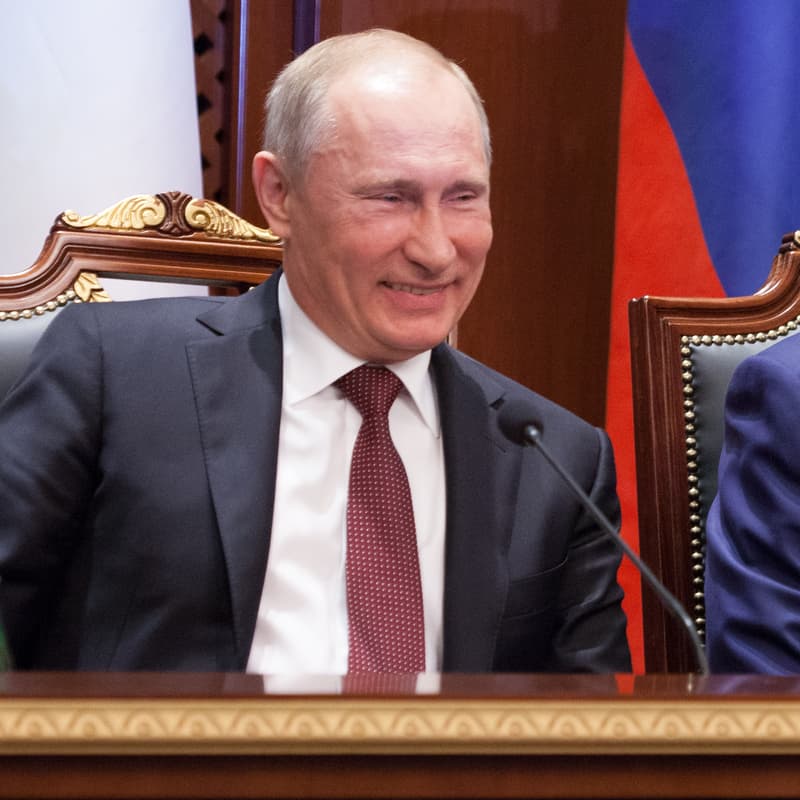
Vladimir Putin signed three decrees on August 25 and told no one what they say. They carry the numbers 605, 606, and 607. He signed them the same day CIA Director John Ratcliffe landed in Moscow, the first time an American spy chief had set foot in the Russian capital since the full-scale invasion of Ukraine began.
The decrees on either side of those three are public. Numbers 608, 609, and 610, also signed on August 25, covered swapping out Russia's ambassador to Iraq and reshuffling government commissions for veterans and people with disabilities. Number 604, signed the day before, is public too. The three in the middle were signed and then kept off Russia's official legal portal, which is how the Kremlin marks something as classified.
The three decrees nobody can read
Russia publishes most of what Putin puts his name to. Appointments, commission changes and small budget orders land on the government's legal information portal within a day or two. The published list jumps from 604 straight to 608, and the numbers in between were signed, not skipped. Withholding a decree is routine, though: at least a dozen other August numbers are missing from the portal, including 600 and the run from 586 to 596. What makes these three worth a look is the date they carry.
The one decree from that stretch you can actually read carries a warning of its own. Number 604, on securing critical infrastructure, lets the government put such a site under "temporary management" if its owner failed to protect it, including against drone attacks. Ukrainian drones are now hitting deep enough inside Russia that the Kremlin wrote a rule about who gets to take over a plant after it burns.
A CIA director in Moscow for the first time in years
Ratcliffe flew in on August 25. Kremlin spokesman Dmitry Peskov said the next day that the visit was about contacts between the two countries' security services, that Ratcliffe had held talks with Russian intelligence officials, and that he had not met Putin, who was briefed on the talks afterwards. The Wall Street Journal and Kremlin pool correspondents reported a meeting. Peskov denied one.
The Kremlin pool correspondent Alexander Yunashev wrote that a large event set for that day had been postponed a couple of days earlier, and that the change could now be read against the CIA chief's arrival. He offered it as a supposition, not a fact. Ratcliffe was not the only foreign visitor in town. Archbishop Paul Richard Gallagher, the Vatican's Secretary for Relations with States, met Foreign Minister Sergey Lavrov the same day and said it was "urgent and necessary to end and to look beyond the conflict."
The warning Ratcliffe reportedly carried
The Wall Street Journal reported that Ratcliffe may have brought a message built on US intelligence: the Kremlin is preparing for a new round of mobilization and a possible provocation against NATO. Michael Weiss, editor-in-chief of the English edition of The Insider, wrote that if he had to wager, the trip was a warning about Russian escalation against Europe.
Weiss tied that to intelligence the United States has been sharing with Poland, the Baltic states and Scandinavia, along with an uptick in suspected sabotage and Russian drone activity. Iuliia Mendel, once Zelensky's press secretary, said Ratcliffe had pressed for a mutual moratorium on strikes on energy infrastructure and ports and for a ceasefire in Kharkiv and Sumy. That account has not been confirmed.
What happened the last time a CIA chief flew to Moscow
The last known visit by a CIA director to the Russian capital was in November 2021, when William Burns met Nikolai Patrushev and warned Putin, by telephone, against attacking Ukraine. Three months later Russian tanks rolled across the border. That is the reason people are watching this trip so closely. A CIA chief in Moscow has, in recent memory, meant a war was about to start.
Beth Sanner, a former US deputy director of national intelligence, framed the visit as a heads-up rather than a negotiation. "The goal could have been to say: we know what you're up to, and you'd better not do it," she told the Wall Street Journal. She added that it could also have been tied to a truce in Iran.
Signs of a new draft
The mobilization talk is not only rumor. In July, Russian officers flew to Kaliningrad to test mobilization readiness, down to accommodation, food and weapons for call-ups, and Western intelligence officials say similar drills have run across the country. The same reporting says the Kremlin has not decided on a call-up and is unlikely to move before the September elections.
Separately, Russian human rights groups told the outlet Verstka that men in at least 17 regions had been detained and pressed into signing army contracts, often those who were ill, elderly or already in trouble with the law. Those are complainants' accounts, not findings, and contract recruitment is not the same thing as a call-up.
A document dated April 2026 and published by hackers, said to come from Sberbank, ran eight scenarios for how the war ends. A frozen conflict with some sanctions lifted came out on top at 32 percent, a halt to fighting without a deal at 22 percent, and another two or three years of war at 15 percent. Its authenticity has not been confirmed, Sberbank has not commented, and Meduza reported that it may have been generated by AI.
Nuclear talk, again
Bloomberg reported on August 26, citing people close to the Kremlin, that a growing number of Russian officials believe Putin could eventually reach for tactical nuclear weapons in Ukraine as a last resort. It also said there is no sign Russia is preparing to use them. It fits a pattern. In February 2022 Putin put Russia's nuclear forces on heightened alert. In November 2024 he rewrote the nuclear doctrine so that an attack by a non-nuclear country backed by a nuclear power could count as a joint attack on Russia. In May 2026 Russia and Belarus ran joint exercises rehearsing the preparation and use of nuclear weapons.
Analysts have a name for the tactic: reflexive control, a Soviet-era method of flooding an opponent with fear until they start making choices that help Moscow. It has drawn a response before. On August 1, 2025, after Dmitry Medvedev, deputy chairman of Russia's Security Council, invoked Moscow's nuclear arsenal, President Trump ordered two US nuclear submarines repositioned. During the August 25 visit, according to the New York Times, Ratcliffe gave FSB chief Alexander Bortnikov a bleak read of Russia's military and economic position and urged serious talks. He made no threats about what would follow if Moscow refused.
Missiles near Japan
While the Moscow meetings played out, Russia was firing live rounds off its far eastern coast. The Pacific Fleet announced antiship and cruise missile launches near the Kuril Islands, which Japan also claims, on August 21. Two Vulkan antiship missiles came off the cruiser Varyag, a salvo of Granit cruise missiles off the nuclear-powered submarine Omsk, and a Bastion coastal system on the islands fired an Oniks. The wider fleet exercise had been running since August 4.
Putin had traveled to Iturup Island on August 13, his first visit to the Kurils and the first by a Russian president since Dmitry Medvedev went in 2010. Japan's Prime Minister Sanae Takaichi said the trip "hurts the feelings of the Japanese people and is absolutely unacceptable." It fell two days before the 81st anniversary of Japan announcing its intent to surrender, timing a former Iturup resident told the Mainichi Shimbun she read as deliberate. The two countries have never signed a formal peace treaty over the islands, seized by Soviet forces in 1945.
A country running low on gas
All of this saber-rattling is happening while ordinary Russians hunt for fuel. Monitoring data reported by the Moscow Times put AI-95 gasoline on sale at 22 percent of filling stations nationwide on August 24, with no region above 50 percent. By mid-July, 13 Russian regions had already put police and Rosgvardia officers on forecourts to police the queues, after fights and at least one shooting. Deploying that kind of muscle to a filling station suggests the authorities expect the shortage, and the fights over it, to last.
Putin has tried to spin the wider picture. On August 19 he put full-year GDP growth at around 1 percent, called the economy modest but positive, and blamed external pressure and attacks on industrial and infrastructure sites. The same day he told the government to draw up a program to restore logistics capacity, without naming Wildberries, whose warehouses Ukrainian drones had been hitting since mid-July. A war that is costing more and delivering less, three sealed decrees, a spy chief in the room, and missiles flying off both coasts. The people who read these signals for a living are not treating any of it as coincidence.
Most read
This week
World
Nearly 12-Foot Alligator Kills Fisherman at Winter Garden Park

Business
Trader Joe's Sued Over Chicken Wrap E. Coli Outbreak
World
Yorkshire Wildlife Park Reopens Tiger Area to Thin Crowds
World
Police Clear Crowd Blocking Harry and Meghan's Car in Nottingham
Crime
Police Arrest Four in Shooting of 49ers' Keion White