Russia Launches Three Days of Nuclear Drills With 64,000 Troops and Submarines
The scale and timing of these exercises are sending a very specific message.

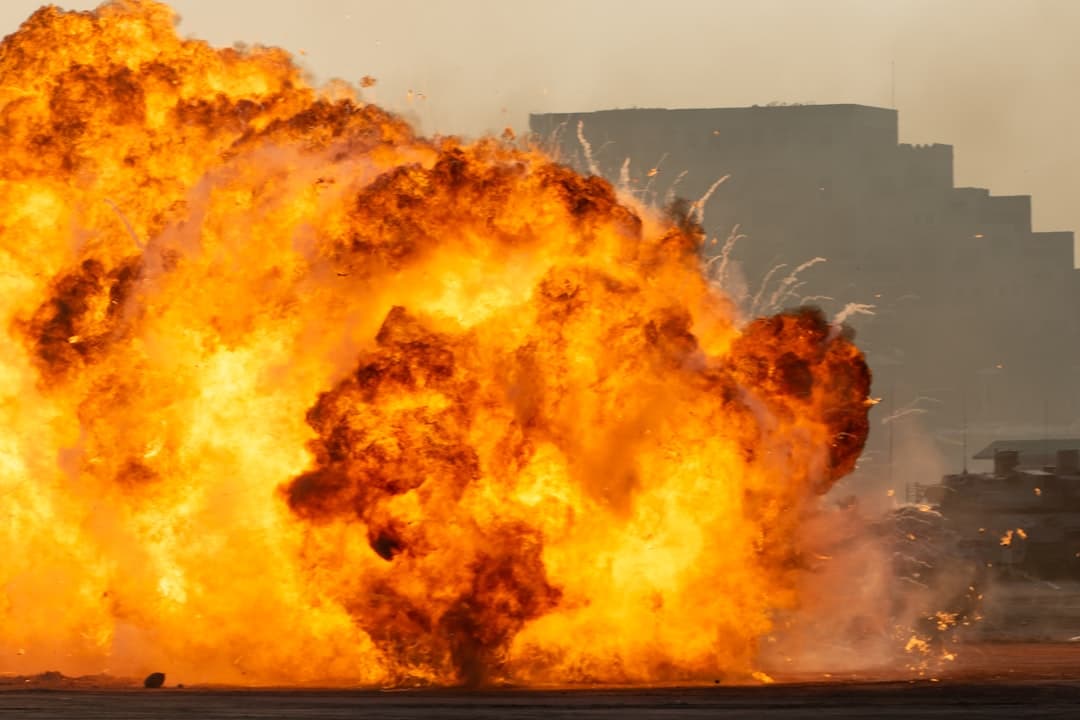
On May 19, 2026, Russia kicked off its largest nuclear weapons exercise in at least two years. The drills run through May 21 and involve a staggering number of military assets: 64,000 troops, more than 200 missile launchers, 140 aircraft, 73 warships, and 13 submarines. Eight of those submarines carry nuclear-tipped intercontinental ballistic missiles. This isn't a routine training day. This is Russia flexing every branch of its nuclear triad at the same time, and the timing is impossible to ignore.
What Exactly Is Happening During These Drills
The Russian Defense Ministry released a formal statement confirming the scope of the exercises: "From May 19 to 21, 2026, the Armed Forces of the Russian Federation are conducting an exercise on the preparation and use of nuclear forces in the event of a threat of aggression." That language is deliberate. It frames the entire exercise around the concept of being threatened, not being the aggressor.
The drills involve Russia's Strategic Missile Forces, the Northern and Pacific Fleets, and the Long-Range Aviation Command. Forces from the Leningrad and Central Military Districts are also participating. Troops will conduct practice launches of both ballistic and cruise missiles at test ranges across Russia. This covers the full spectrum of Russia's nuclear delivery systems: land-based missiles, submarine-launched ICBMs, and bomber-delivered cruise missiles. It is a complete rehearsal of how Russia would prepare, authorize, and execute a nuclear strike.
The inclusion of eight strategic nuclear submarines is particularly notable. These subs are arguably the most survivable part of any country's nuclear arsenal because they can hide deep underwater and launch missiles from nearly anywhere in the ocean. Putting them into a coordinated exercise alongside land and air forces signals that Russia is practicing a full, simultaneous response from every angle.
Belarus Is Now Part of the Picture
These drills are not a solo Russian affair. Belarus is participating as well, and the exercises include training on the "joint preparation and use of nuclear weapons deployed on the territory of the Republic of Belarus." The Belarusian Defense Ministry confirmed the day before, on May 18, that joint Russian-Belarusian drills for units responsible for the combat use and logistical support of nuclear weapons had already begun.
Russia has deployed its nuclear-capable Oreshnik missile system to Belarus. That matters because Belarus shares borders with NATO members Poland, Lithuania, and Latvia. Putting nuclear-capable missiles in Belarus shortens the potential flight time to European capitals considerably. It is a geographic chess move that has not gone unnoticed by Western defense officials.
According to one military analyst, Belarus has "effectively become a full-fledged participant in nuclear deterrence" in 2026, with the testing now covering the entire territory of the Union State (the political framework that binds Russia and Belarus together). That is a shift from 2024, when nuclear exercises were more focused on tactical, non-strategic weapons. This year, the scope is broader and the partnership with Belarus is deeper.
The Ukraine Drone Attacks That Set the Stage
The drills did not happen in a vacuum. Just one day before the exercises began, on May 18, Ukraine launched one of its largest drone barrages of the entire war against Moscow's suburbs. The attack killed three people and damaged several buildings and industrial facilities. That kind of strike hits differently than fighting on a distant front line. It brings the war directly to Russian civilians in the capital region.
As the Washington Post noted, these attacks have made it harder for Kremlin officials to frame the conflict in Ukraine, now in its fifth year, as something so far away that it doesn't affect everyday Russian life. The psychological impact of drones hitting Moscow is real, and it gives the Kremlin both a domestic political problem and a public justification for escalatory moves.
That said, military analysts caution against drawing a straight line between the drone attack and the drills. Exercises of this scale require months of planning and logistical preparation. They were almost certainly scheduled well in advance. But the optics of launching nuclear drills the morning after drones hit Moscow? That is not an accident. Russia is perfectly happy to let those two events sit next to each other in the news cycle.
Putin Went to China at the Same Time
Here is the part that makes this whole situation even more layered. On the same day the drills began, President Putin departed for a two-day state visit to Beijing to meet with Chinese President Xi Jinping. It was Putin's first foreign trip of the year. The visit coincides with the 25th anniversary of the Sino-Russian Treaty of Friendship.
The agenda in Beijing includes trade discussions, the war in Ukraine, and something very specific: Russia wants a deal on gas prices for the planned Power of Siberia 2 pipeline project. Russia is hoping that turmoil in energy markets from the ongoing Iran conflict will push China toward being more flexible in those negotiations. Chinese officials have reportedly expressed interest in speeding up the talks, but nothing concrete has been finalized.
There is also an interesting diplomatic subplot. Reports suggest that during a recent meeting between Xi Jinping and Donald Trump on May 13 to 15, Xi told Trump that Putin may end up "regretting" his decision to invade Ukraine. That is a rare public crack in the China-Russia relationship, even if both sides would probably deny it carries any real weight.
The simultaneous launch of nuclear exercises at home while Putin sits down for diplomatic talks in Beijing is a dual message. Russia is projecting military strength and diplomatic relevance at the same time, on the same day. That is not a coincidence. That is strategy.
The Sarmat Missile Test That Came First
Just one week before the drills, on May 12, Russia conducted a test launch of its Sarmat intercontinental ballistic missile. Western media often refers to this missile as "Satan II." The Sarmat is designed to carry multiple nuclear warheads across intercontinental distances and is meant to replace aging Soviet-era ICBMs that have been in service for decades. Putin publicly praised the successful test.
The test and the drills together form a clear pattern. Russia is not just maintaining its nuclear forces. It is actively modernizing them and making sure the world sees it happening. The 2026 Pentagon National Defense Strategy describes Russia as possessing "the world's largest nuclear arsenal, which it continues to modernize and diversify."
The Nuclear Arms Treaty Is Gone
All of this is playing out in a world where the last remaining nuclear arms treaty between the United States and Russia no longer exists. The New START Treaty expired in February 2026. That treaty had limited both countries to 1,550 deployed warheads on 700 deployed delivery vehicles. With its expiration, there are now zero binding agreements restricting the strategic nuclear arsenals of the world's two largest nuclear powers.
Russia has said it will continue to respect the treaty's central limits as long as the United States does the same. But words without a treaty are just words. According to U.S. Strategic Command testimony from March 2026, Russia has around 2,600 deployed and nondeployed strategic nuclear warheads, plus up to 2,000 warheads for non-strategic (tactical) nuclear weapons. That is a lot of firepower operating with no international oversight framework.
Russia's Revised Nuclear Doctrine Changes the Rules
In 2024, Putin signed a revised nuclear doctrine that shifted the conditions under which Russia might consider using nuclear weapons. The previous doctrine allowed nuclear response only if "the very existence of the state is threatened." The new version expands that in several important ways.
First, it explicitly extends the Russian nuclear umbrella to cover Belarus. Second, it states that any conventional attack on Russia that is supported by a nuclear power (read: the U.S. supporting Ukraine) could be considered a joint attack, potentially warranting a nuclear response. Third, it adds "aerospace attacks" like drones and missiles to the list of threats that could trigger nuclear use. Given that Ukraine has been hitting Russia with drones on a regular basis, that language is clearly targeted at the current conflict.
Western analysts have noted that while Russia's nuclear threats may have slowed Western military support early in the war, they have not stopped it. NATO has expanded. Weapons deliveries to Ukraine have increased. Russia's "red lines" on missile supplies were crossed without direct consequences. But the question that keeps defense officials up at night is whether that pattern holds forever, or whether there is some point where Moscow's warnings stop being bluffs.
What This Means Right Now
U.S. intelligence assessments offer a somewhat mixed picture. A 2025 DIA assessment said Russia is "very unlikely" to use nuclear weapons unless its leadership faces an existential threat. But the 2026 Annual Threat Assessment shifted the language, calling the most dangerous threat from Russia "an escalatory spiral in an ongoing conflict such as Ukraine" that leads to direct hostilities, including nuclear exchanges. That is a meaningful change in how the U.S. intelligence community talks about this risk.
Russian hawks have been pushing the Kremlin to respond to Ukrainian attacks by striking Ukraine's allies in Europe with conventional weapons, arguing that European NATO members would not dare retaliate against the world's largest nuclear power. Last month, Russia's Defense Ministry published a list of European factories it claimed were producing drones for Ukraine. Whether that was a genuine target list or a psychological pressure campaign is something only the people in the Kremlin know for sure.
The drills wrap up on May 21. The missiles will go back to their silos, the submarines will return to their patrol routes, and the world will move on to the next headline. But the underlying situation that produced these exercises, a grinding war in Ukraine, a collapsed arms control framework, a revised nuclear doctrine, and an increasingly close Russia-Belarus military partnership, is not going anywhere. These three days of drills are a snapshot of where things stand. And where things stand is not great.
Most read
This week

Crime
Andrew Tanaka Charged With Four Counts of Attempted Murder on I-35

Crime
FBI Arrests 18-Year-Old in ISIS Plot to Attack Mall of America

Crime
Christa Pike Awake and Speaking After Tennessee Execution Fails

Politics
Seven Senate-Confirmed Treasury Officials Exit Amid Bessent Outbursts

Entertainment
Jim Bakker, Televangelist Who Went to Prison for Fraud, Dies at 86