SpaceX Just Filed for IPO and the Numbers Are Staggering
The S-1 filing reveals a company far bigger than rockets.

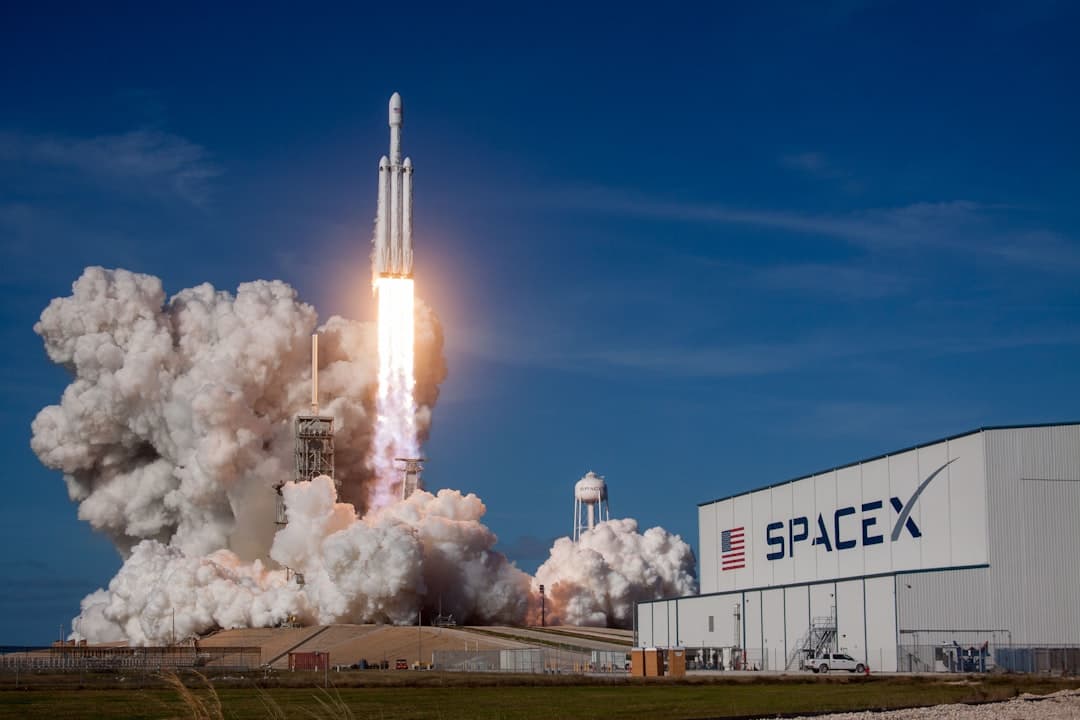
It finally happened. After years of speculation, whispered timelines, and a private market valuation that made public investors drool, SpaceX dropped its S-1 filing with the SEC on Wednesday evening. The company plans to list on the Nasdaq under the ticker SPCX, and if things go according to plan, trading could begin as early as June 12. This isn't just another tech IPO. This is being called the largest initial public offering in stock market history, and the filing is packed with enough wild ambitions, eye-popping losses, and power consolidation to keep Wall Street analysts busy for weeks.
The Biggest IPO Ever, By a Lot
SpaceX is targeting a valuation somewhere between $1.75 trillion and $2 trillion. To put that in perspective, the previous record for the world's largest IPO was Saudi Aramco back in 2019, which debuted at a valuation of $1.7 trillion and raised about $26 billion. SpaceX wants to raise roughly $75 billion to $80 billion. That's not a typo. That number is nearly three times what Aramco pulled in.
If SpaceX hits that $1.75 trillion mark, it would immediately become one of the most valuable publicly traded companies on Earth. It would also be the second company in Elon Musk's empire to crack the trillion-dollar threshold, right behind Tesla. The filing itself is an unusual document. It's full of glossy rocket photos, pull quotes from Musk, and the kind of grand ambitions you'd expect from a company that genuinely wants to colonize Mars.
The Money: Revenue Up, Losses Way Up
The S-1 gives us the first real look at SpaceX's books, and the picture is complicated. Revenue has been climbing fast. The company pulled in $10.4 billion in 2023, $14 billion in 2024, and $18.7 billion in 2025. In Q1 of 2026 alone, revenue hit $4.69 billion.
But the losses are just as dramatic. SpaceX lost $4.9 billion in 2025. And Q1 2026 wasn't pretty either, with an operating loss of $1.94 billion. The net loss in Q1 actually widened by about 710% compared to the same quarter a year ago. Revenue is growing at a healthy clip, but costs are growing faster, and there's a very specific reason for that.
Starlink Is Carrying the Whole Company
If you strip away the rockets, the AI bets, and the social media platform, SpaceX has one real moneymaker right now, and it's Starlink. The satellite internet service generated more than half of the company's total revenue in 2025, bringing in around $11 billion. In Q1 2026, Starlink accounted for $3.26 billion of the $4.69 billion in total revenue, which is about 69%.
More importantly, Starlink is the only segment that's actually profitable. It posted $1.19 billion in operating income last quarter. Starlink's operating income for all of 2025 was $4.42 billion, double what it earned the year before. The service crossed 10 million subscribers in February 2026, doubling year over year, and it's still adding somewhere between 750,000 and 1.5 million new users every month. Its network of roughly 9,600 low-Earth orbit satellites represents about 65 to 75% of all active maneuvering satellites currently orbiting the planet. That's a staggering number. Starlink isn't just a side project. It is the financial engine keeping this entire operation running.
xAI Is a Massive Financial Drag
Here's where things get interesting, and by interesting I mean a little alarming. SpaceX acquired xAI, Musk's AI startup, in an all-stock deal back in February 2026. That deal also brought X (formerly Twitter) under the SpaceX umbrella. So SpaceX now owns a social media platform, an AI chatbot called Grok, and a data center operation.
The problem? xAI is bleeding money. Its operating loss hit $2.5 billion in Q1 2026 alone. Capital expenditure for the AI segment reached $12.7 billion in 2025 and another $7.7 billion in just the first quarter of 2026. Before the xAI merger, earlier reporting had suggested SpaceX was actually making about $8 billion in profit on $15 to $16 billion in revenue. The xAI deal fundamentally changed the financial picture by consolidating all those losses onto SpaceX's balance sheet.
There is one bright spot on the AI side. Anthropic has signed a deal to pay SpaceX $1.25 billion per month through 2029 for compute capacity at xAI's Colossus 1 data center in Memphis. That's real money. But either party can terminate with 90 days' notice, so it's not exactly locked in forever.
Musk's Control Is Almost Total
The S-1 makes one thing crystal clear: Elon Musk will run SpaceX as a public company almost exactly the way he runs it as a private one. Through a dual-class share structure, Musk holds approximately 42% of SpaceX's equity but controls roughly 79% to 85% of its total voting power. His Class B shares carry 10 votes per share compared to the standard single vote that public investors' Class A shares will get.
He's also CEO, CTO, and chairman of the board simultaneously. That level of concentration is unusual even by the standards of founder-led tech companies like Meta and Alphabet, which have similar dual-class structures but typically at lower ratios. Former Fidelity fund manager George Noble called it "the most SHAMELESS structural manipulation of a major index" in a post that got a lot of attention. His argument, in short: retail investors are basically being offered an economic stake with zero ability to influence the company's direction. You buy SPCX, you're along for the ride wherever Musk wants to take it.
Mars Colonies and Space Data Centers
The filing is loaded with big promises. SpaceX says it expects Starship to begin payload delivery to orbit in the second half of 2026. By 2027, it plans to use Starship to launch next-generation Starlink V2 satellites. Starship is designed to carry 100 metric tons to orbit and is also central to Mars exploration plans.
The company spent $3 billion on Starship R&D in 2025 and $930 million more in Q1 2026. And then there are the space data centers. SpaceX is seeking FCC approval to launch up to 1 million satellites and aims to start deploying AI compute satellites as early as 2028, targeting 100 gigawatts of compute capacity in orbit per year. They also want to build something called Terafab, which would be an AI chip manufacturing operation. The S-1 acknowledges that these plans depend on getting access to far more AI chips than are currently available.
Musk's compensation package is tied to some of these goals. His grant of 1 billion performance-based Class B shares has a vesting condition that includes establishing a permanent human colony on Mars with at least one million inhabitants. That's either inspiring or absurd depending on your perspective, and it's right there in a legal SEC filing.
36 Pages of Risk Factors
The S-1 contains 36 pages dedicated to risk factors, and some of them are unusual. SpaceX lists Musk himself as a risk factor, given his simultaneous roles and his tendency to be, well, controversial. The legal battles arising from folding xAI and X into SpaceX are expected to cost $530 million. The company also faces regulatory probes around Grok that could lead to lawsuits, fines, or loss of market access.
There's also the pending acquisition of Cursor, an AI coding platform, for $60 billion in Class A stock. If that deal falls apart, SpaceX would owe Cursor a $1.5 billion termination fee plus an $8.5 billion deferred services fee. That's a $10 billion breakup package. For a coding tool.
What Retail Investors Need to Think About
One interesting wrinkle in this IPO is the retail allocation. SpaceX is reportedly setting aside up to 30% of its shares for everyday investors. That's roughly three times the norm for a deal this size. The company plans to host around 1,500 retail investors following the roadshow launch, which is expected to begin around June 4 to June 8, with pricing on June 11.
But here's the thing about big, hyped tech IPOs. First-day pops on deals like this frequently retrace 20 to 40% within the first 90 days. Buying in on day one is exciting. It's also historically risky. SpaceX won't report its first quarterly earnings as a public company until early November 2026. That means anyone buying in June is doing so without a single quarter of fully public, SEC-audited financials to evaluate.
Prediction markets on Polymarket currently price the June listing at about 65.5% probability, with the leading outcome being a market cap above $2 trillion at 47% odds. The $1.8 to $2 trillion range comes in at 18%.
The Bigger Picture
SpaceX's IPO isn't happening in a vacuum. It's expected to kick off a wave of massive public offerings from AI companies. OpenAI and Anthropic are reportedly waiting in the wings. The appetite for these deals will depend in large part on how SPCX performs in its first few weeks of trading.
What we know for sure is this: SpaceX has a real business with real revenue and a genuine competitive moat in satellite internet and launch services. It also has billions in losses from AI bets that haven't paid off yet, a governance structure that gives public shareholders almost no say, and a CEO whose personal brand is both the company's greatest asset and its biggest liability. Whether that combination is worth $1.75 trillion is the question every investor will have to answer for themselves. The filing is public now. The numbers are on the table. What you do with them is up to you.
Most read
This week
Entertainment
Jim Bakker, Televangelist Who Went to Prison for Fraud, Dies at 86
Crime
Marine Devin Ballard Arrested in Okinawa Hotel Killing of Anna Yagi
Politics
Dennis Hastert, House Speaker Who Went to Prison, Dies at 84

World
Coast Guard Suspends Search for 6 on Air Ambulance Off Nantucket

Crime
Sky Whatley Charged With Simple Battery Over Onstage Slap