Bond Yields Just Hit Their Highest Level Since Before the 2008 Financial Crisis
The bond market is sending a signal most Americans can't afford to ignore.

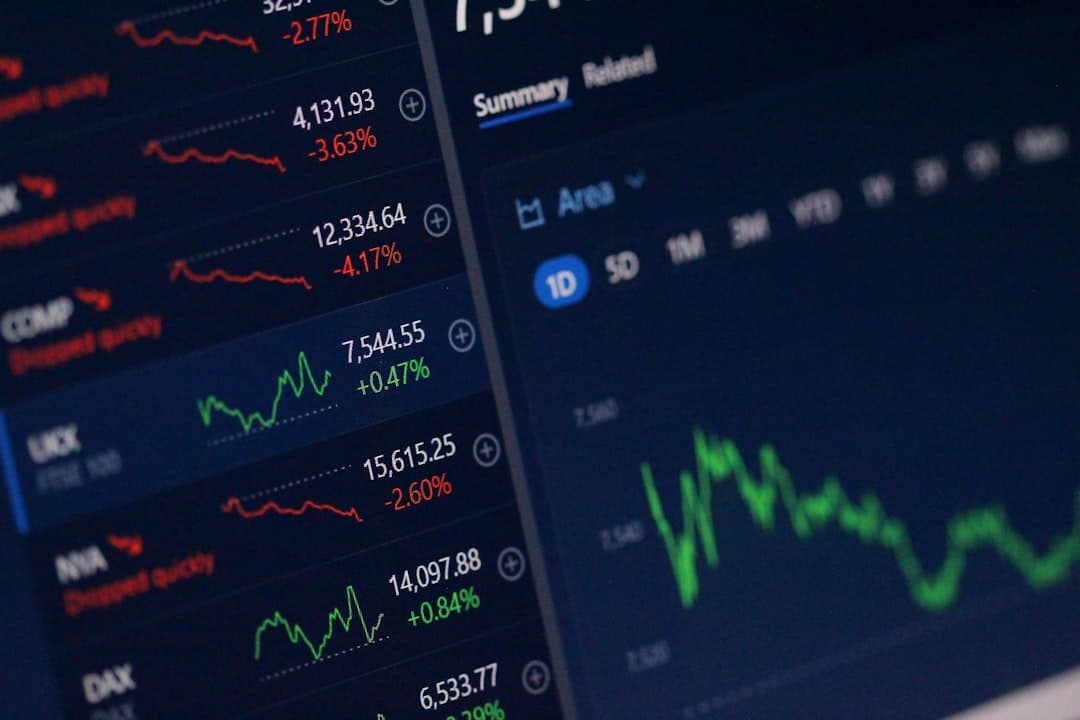
On Tuesday, the 30-year U.S. Treasury yield hit 5.197%. That's the highest it's been since July 2007. If that date rings a bell, it should. That was right before the entire global financial system started coming apart at the seams. We're not in 2007 again, but the bond market is screaming something, and it's worth paying attention to what exactly that is.
Let's be real. Most people don't wake up thinking about bond yields. But bond yields are one of those things that quietly control the price of almost everything you borrow money for. Your mortgage, your car loan, your credit card rate. When yields go up like this, the ripple effects hit everyone, whether you own a single bond or not.
What Actually Happened This Week
The 30-year Treasury yield briefly touched 5.197% during Tuesday's trading session before settling around 5.18%. The 10-year Treasury yield, which is the number that most directly affects what you pay on a fixed-rate mortgage, climbed to 4.687%, its highest point in 16 months. Even the 2-year Treasury yield, which tracks shorter-term expectations about Fed policy, rose to 4.12%.
All three of those numbers moving higher at the same time tells you one thing: investors are dumping bonds across the board. When investors sell bonds, prices drop and yields rise. It's a seesaw. And right now, the seesaw is tilted hard in one direction.
The Iran War Changed Everything
The biggest single driver of this bond selloff is the conflict with Iran that started in late February 2026. The war has effectively closed the Strait of Hormuz, one of the most critical shipping lanes for oil in the world. About a fifth of the world's petroleum passes through that strait on any given day.
With that chokepoint shut down, oil prices have surged past $100 a barrel. Brent crude hit $108.30, while WTI climbed to $104.39. Those are the highest oil prices in four years. And expensive oil doesn't just mean you're paying more at the gas pump. It means higher shipping costs, more expensive plastics, pricier airline tickets, and rising prices on just about every consumer good that needs to move from point A to point B.
The 10-year yield was trading just below 4% before the war started. In roughly 80 days, it's jumped to nearly 4.7%. That is a massive move in the bond world, where changes are usually measured in tiny fractions of a percent.
Inflation Is Back, and It's Not Subtle
The April Consumer Price Index came in at 3.8% year over year. That's the highest annual rate in three years. The Producer Price Index, which measures what businesses are paying for goods before they reach consumers, surged to a 6% annual rate. That was more than double what Wall Street expected.
Gasoline prices alone jumped more than 28% over the same period. When energy gets that expensive, it bleeds into the cost of everything else. Dan Carter, a senior portfolio manager at Fort Washington Investment Advisors, put it bluntly: "The longer energy prices stay high, the risk of core inflation pass-through increases." He said the ingredients are in place for the 30-year yield to stay above 5% for a while.
Some economists are now revising their May CPI expectations upward, with a few projecting the annual rate could climb above 4%. If that happens, the pressure on the Fed to act will be enormous.
The Bond Vigilantes Are Riding Again
There's a term in finance called "bond vigilantes." It was coined by Ed Yardeni back in the 1980s. The idea is simple: when investors think the government is being irresponsible with spending or the central bank isn't doing its job on inflation, they sell government bonds to punish them. The selling drives yields up, which raises borrowing costs for the government and forces their hand.
Yardeni himself weighed in this week. He wrote that the Fed "must catch up to the bond market to avoid losing control of borrowing costs and to appease the Bond Vigilantes." He went further, arguing that the bond vigilantes, not new Fed Chair Kevin Warsh, are the ones actually controlling monetary policy right now.
Last week, the Treasury auctioned off 30-year bonds at a 5% interest rate. You'd think investors would jump at that kind of return. They didn't. Demand was described as "middling." When investors won't even buy government bonds paying 5%, it means they expect things to get worse. They're betting inflation will eat those returns before the 30 years are up.
The Fed Is Stuck in an Impossible Spot
Kevin Warsh, the newly confirmed Fed Chair, came into the job signaling he'd like to lower interest rates from their current range of 3.5% to 3.75%. That aligned with President Trump's well-known preference for cheaper borrowing. But reality has completely overtaken those plans.
Markets have flipped from expecting rate cuts to pricing in a possible rate hike. Data from the CME FedWatch tool shows nearly a 45% probability that the Fed will raise rates by the end of the year. At the start of 2026, markets were expecting two cuts. That's a complete 180.
The Federal Open Market Committee is reportedly the most divided it's been in over 30 years. There's a 98% chance rates stay unchanged at the June 17 meeting, but after that, everything is up in the air. Yardeni's call for a July rate hike is considered an outlier, with current implied probability at just 4.2%. But even a few months ago, the idea of a hike at all would have seemed absurd.
This Is a Global Problem, Not Just an American One
The U.S. isn't alone in this bond selloff. Germany's 10-year bund yield hit its highest level since 2011. The UK's 30-year gilt yield rose to 5.773%, a level not seen since 1998. And Japan's 30-year bond yield hit an all-time record, the highest since the data series began in 1999.
ECB President Christine Lagarde acknowledged bond market volatility as a core concern at the G7 summit. Barclays' global chairman of research, Ajay Rajadhyaksha, warned that "the forces driving the selloff, fiscal deterioration, defense spending, sticky inflation, central bank paralysis, are not resolving." In other words, don't expect a quick bounce back.
Asian markets have been hit too. The MSCI Asia-Pacific index excluding Japan dropped for four straight sessions. The dollar index climbed to a six-week high at 99.47 as money flowed out of international assets and into the perceived safety of the greenback.
What This Means if You're Buying a House (or Anything Else)
Here's where this gets very real, very fast. The 30-year fixed mortgage rate moves roughly in lockstep with the 10-year Treasury yield, typically sitting about 2 percentage points above it. With the 10-year yield near 4.7%, you can do the math.
As of May 14, the average 30-year refinance rate had already climbed to 6.54%, while the standard 30-year mortgage rate touched 6.34%. The Mortgage Bankers Association had been projecting rates between 6.1% and 6.3% for the rest of 2026, but that forecast was made before the latest inflation surprises.
On a $400,000 mortgage at 6.54%, you're looking at roughly $2,540 a month in principal and interest. Total interest over 30 years would come out to around $517,000. Compare that to a year ago, when rates were closer to 6%, and you'd be paying about $200 less per month. Over 30 years, that adds up to tens of thousands of dollars.
The National Debt Angle Nobody Wants to Talk About
The U.S. national debt stands at $38.5 trillion. Every 1% increase in interest rates translates to approximately $3.2 trillion in additional interest payments over ten years. The government is borrowing at higher and higher rates to fund its existing obligations, which means the interest on the debt itself becomes one of the biggest line items in the federal budget.
The "One Big Beautiful Bill Act" currently moving through Congress extends existing tax rates and adds new tax cuts while trimming spending only modestly. The Congressional Budget Office estimates it could add $3.4 trillion to the federal debt by 2034. Treasury Secretary Scott Bessent has said he won't increase auction sizes for longer maturities and will instead issue more short-term bills, but that's a band-aid, not a solution.
The Stock Market Felt It Too
Stocks tumbled on Tuesday. The Dow fell 322 points, the S&P 500 dropped 0.67%, and the Nasdaq sank 0.84%. It was the third straight day of losses. When government bonds are paying north of 5% with virtually no risk, stocks become a harder sell, especially tech stocks with stretched valuations that depend on future earnings looking attractive compared to safer alternatives.
Mohit Kumar, Jefferies' chief European economist, said his firm recommended clients avoid long-duration bonds entirely given the current energy price disruption. That's a major call from a big institution, and it tells you how nervous professional money managers are about where things go from here.
Where Do Things Go From Here
A Bank of America survey published Tuesday showed that 62% of global fund managers expect the 30-year Treasury yield to hit 6%. That would be the highest since late 1999. Only 20% of respondents are targeting a 30-year yield of 4%. The smart money, in other words, is betting on higher yields, not lower.
Eric Leeper, a University of Virginia economics professor, responded with just one word when told the current 30-year yield: "Wow." He added, "It's got to be some serious uncertainty about future inflation."
There was one small glimmer of hope this week. Two Chinese oil tankers successfully navigated through the Strait of Hormuz on Wednesday, providing a brief moment of relief in oil markets. And Chinese President Xi Jinping met with Russian President Vladimir Putin, emphasizing the importance of halting Middle Eastern hostilities. But until that strait is reliably open again and energy prices come back down, the forces pushing yields higher aren't going away anytime soon. The bond market has spoken. Now we all get to live with the consequences.
Most read
This week
Crime
Christa Pike Awake and Speaking After Tennessee Execution Fails
Politics
Seven Senate-Confirmed Treasury Officials Exit Amid Bessent Outbursts
Entertainment
Jim Bakker, Televangelist Who Went to Prison for Fraud, Dies at 86

Crime
Marine Devin Ballard Arrested in Okinawa Hotel Killing of Anna Yagi
Politics
Dennis Hastert, House Speaker Who Went to Prison, Dies at 84