NextEra and Dominion Energy Merge to Create the World's Largest Utility
This $67 billion deal reshapes the entire American power industry.

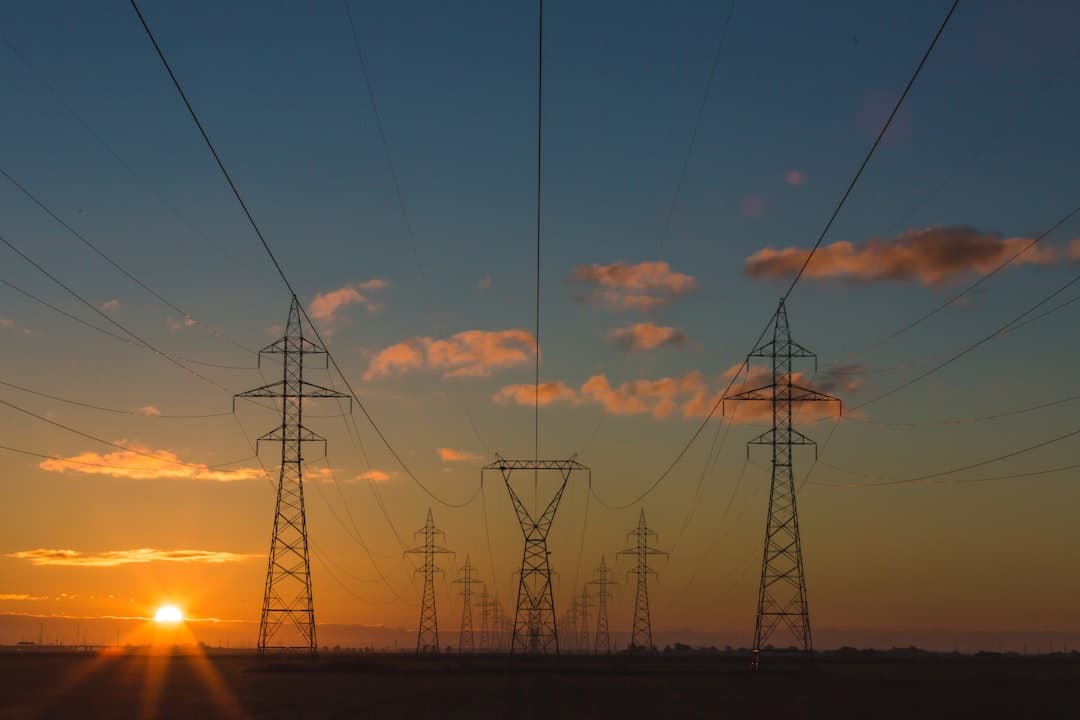
On May 18, 2026, two of the biggest names in American electricity announced they're becoming one. NextEra Energy, the Florida-based clean energy giant, agreed to buy Dominion Energy in an all-stock deal valued at $66.8 billion. When the dust settles, the combined company will be the largest regulated electric utility on the planet by market capitalization, with an enterprise value north of $420 billion.
That's not a typo. Four hundred and twenty billion dollars. To put that in perspective, that's bigger than the next two largest U.S. power companies put together. This is the kind of deal that doesn't just change two companies. It changes an industry.
And the reason it's happening? AI.
The Deal by the Numbers
Let's get into the specifics, because the scale here is genuinely staggering. Under the terms of the agreement, Dominion Energy shareholders will receive 0.8138 shares of NextEra Energy for each share of Dominion they own. That works out to about $75.97 per Dominion share, which is a roughly 23% premium over Dominion's last closing price before the announcement.
Once the deal closes, NextEra shareholders will own about 74.5% of the combined company, with Dominion shareholders holding the remaining 25.5%. The new entity will keep the NextEra Energy name and continue trading on the New York Stock Exchange under the ticker NEE. The combined market cap is expected to land around $249 billion.
The merged company will serve approximately 10 million customer accounts spread across four states: Florida, Virginia, North Carolina, and South Carolina. It will control about 110 gigawatts of generation capacity across wind, solar, natural gas, and nuclear. Both boards of directors voted unanimously to approve the merger.
Why AI Is Driving This Entire Merger
If you've been paying any attention to the energy sector over the last two years, you already know the punchline. Artificial intelligence requires an absurd amount of electricity. Training large language models, running inference at scale, cooling massive server farms. All of it draws power, and lots of it.
NextEra CEO John Ketchum put it bluntly during a stakeholder call, calling the deal a "no-brainer." He said the increase in electricity demand the U.S. is experiencing right now is "unlike anything we've seen in generations."
He's not exaggerating. For roughly two decades, U.S. electricity demand was basically flat. It barely grew. Then AI showed up, and suddenly every major tech company on Earth needed enormous amounts of new power capacity built as fast as possible. Google, Microsoft, Amazon, Meta. They're all racing to build data centers, and every single one of those buildings needs to be plugged into the grid.
PJM Interconnection, the largest power grid operator in the U.S. (it covers 13 states), projects 32 gigawatts of peak load growth between 2024 and 2030. Data centers are responsible for 94% of that growth. That's a jaw-dropping number.
Why Dominion Specifically? Data Center Alley
So why did NextEra pick Dominion, out of all the utilities it could have pursued? The answer is geography.
Dominion operates in Virginia, North Carolina, and South Carolina. Virginia, specifically Northern Virginia, is home to what the industry calls "Data Center Alley." It's the world's largest concentration of data centers, and it's one of the fastest-growing electricity markets anywhere.
Dominion already has about 51 gigawatts of contracted data center capacity in its pipeline. In Virginia, its largest market, the company sold 4% more electricity year over year in just the first quarter of 2026. That kind of growth in the utility business is almost unheard of. Utilities are usually the most boring, slow-growth stocks on the market. Not anymore.
By acquiring Dominion, NextEra gets a direct line into the PJM Interconnection region and positions itself as the go-to power provider for the biggest tech companies building AI infrastructure. The combined company will have a large-load pipeline exceeding 130 gigawatts. That's a massive runway for growth.
NextEra's Clean Energy Angle
NextEra isn't just any utility. It's already the world's largest generator of wind and solar energy. The company has a presence in 49 states and operates seven nuclear units across three states. In Florida, where it's headquartered, NextEra serves about 6 million homes and businesses through its Florida Power & Light subsidiary.
This matters because the tech hyperscalers, your Googles and Microsofts and Amazons, have made public commitments to run on carbon-free electricity. They need clean power sources, and they need them at scale. NextEra is already positioned to deliver that. The company previously struck a deal with Google to revive Iowa's Duane Arnold nuclear plant, which tells you a lot about where the industry is heading.
Combining NextEra's renewable generation expertise with Dominion's position in the hottest electricity market in the country creates something neither company could pull off alone. That's the core logic of the deal.
Who's Running the Show
The leadership structure is already mapped out. John Ketchum, who currently runs NextEra, will serve as chairman and CEO of the combined company. Robert Blue, Dominion's current chairman, president, and CEO, will become president and CEO of NextEra Energy Regulated Utilities. That means Blue will oversee Dominion Energy Virginia, Dominion Energy North Carolina, Dominion Energy South Carolina, and Florida Power & Light.
The combined company's board will have 14 directors: 10 from NextEra and four from Dominion. The company will operate with dual headquarters in Juno Beach, Florida and Richmond, Virginia.
For Dominion's roughly 15,000 employees, there's some reassurance baked into the deal. NextEra has committed to retaining current Dominion employees with their existing compensation and benefits. There's also an 18-month job protection period after the deal closes, meaning no involuntary layoffs (except for cause or performance) during that window.
What This Means for Your Electric Bill
If you're a Dominion customer in Virginia, North Carolina, or South Carolina, here's the part that directly affects you. The companies have announced $2.25 billion in bill credits that will be spread over two years after the deal closes. That's real money going back to customer accounts.
The combined company has also stated it plans to drive long-term affordability by using the scale advantages that come with being the biggest utility in the world. Bigger companies can generally negotiate better prices for equipment, materials, and construction. Whether those savings actually flow through to ratepayers is the kind of thing state regulators will be watching very carefully.
And that brings us to the biggest question mark hanging over this entire deal.
The Regulatory Gauntlet
A merger this large doesn't just happen because two CEOs shake hands. It has to pass through a long list of regulatory approvals, and any one of them could slow things down or force changes to the deal.
The merger needs antitrust clearance under the Hart-Scott-Rodino Act, approval from the Federal Energy Regulatory Commission (FERC), approval from the Nuclear Regulatory Commission, and sign-offs from three state bodies: the Virginia State Corporation Commission, the North Carolina Utilities Commission, and the Public Service Commission of South Carolina.
That's a lot of regulators who all need to say yes. The companies expect the process to take 12 to 18 months. For context, the recent Constellation Energy and Calpine deal faced serious regulatory scrutiny and ultimately required the companies to divest natural gas plants in Pennsylvania and Texas. NextEra and Dominion could face similar demands.
There's also the question of power prices. U.S. electricity prices have climbed roughly 40% over the past five years. Regulators are understandably sensitive about approving any deal that might reduce competition or push rates higher. Capacity prices in the PJM region have gone from $28.92 per megawatt-day for the 2024-2025 delivery year to $329.17 per megawatt-day for 2026-2027. That's more than a tenfold increase, and it's the kind of number that makes public utility commissioners very nervous about consolidation.
What Wall Street Thinks
The general read from analysts is cautiously optimistic. Wall Street is broadly bullish on the idea that the current federal administration's openness to corporate mergers could smooth the path for approval. That said, the state-level approvals are where things could get tricky, since state regulators tend to be more protective of local ratepayers.
As of the announcement, analyst ratings on Dominion were mixed. About 15% recommended buying the stock, 77% suggested holding, and 8% advised selling. Wells Fargo has an "Overweight" rating on the stock, while Mizuho rates it "Neutral" with a $66 price target. The deal was advised by some heavy hitters on the financial side: Kirkland & Ellis served as legal counsel for NextEra, with Lazard as lead financial adviser and Bank of America and Wells Fargo also in advisory roles.
Some analysts have described the deal as a shift back toward a more integrated utility model, where one company handles everything from generation to transmission to retail delivery. That model fell out of favor for years, but the AI-driven demand boom seems to be bringing it back.
The Bigger Picture
The NextEra and Dominion merger is the largest power utility acquisition in American history. It creates a company that will be more than 80% regulated, with a customer base of 10 million accounts, 110 gigawatts of generation, and a 130-plus gigawatt pipeline of large-load projects waiting in the wings.
It also signals something important about where the American economy is heading. For the first time in decades, electricity demand is growing, and growing fast. The companies building AI infrastructure need power, and they need it now. Traditional utilities, the companies most people think of as boring and stable, are suddenly at the center of one of the most significant technology buildouts in a generation.
Whether the merger clears all its regulatory hurdles remains to be seen. But the fact that a deal this large was struck at all tells you everything you need to know about how much the energy business has changed. The companies that keep the lights on are about to become a lot more important, and a lot more powerful, than most Americans realize.
Most read
This week

Crime
FBI Arrests 18-Year-Old in ISIS Plot to Attack Mall of America

Crime
Christa Pike Awake and Speaking After Tennessee Execution Fails

Politics
Seven Senate-Confirmed Treasury Officials Exit Amid Bessent Outbursts
Entertainment
Jim Bakker, Televangelist Who Went to Prison for Fraud, Dies at 86

Crime
Marine Devin Ballard Arrested in Okinawa Hotel Killing of Anna Yagi