Trump Claims Canada Wants to Be a State
The tariffs landed Saturday. The insult followed at one in the morning on Sunday.

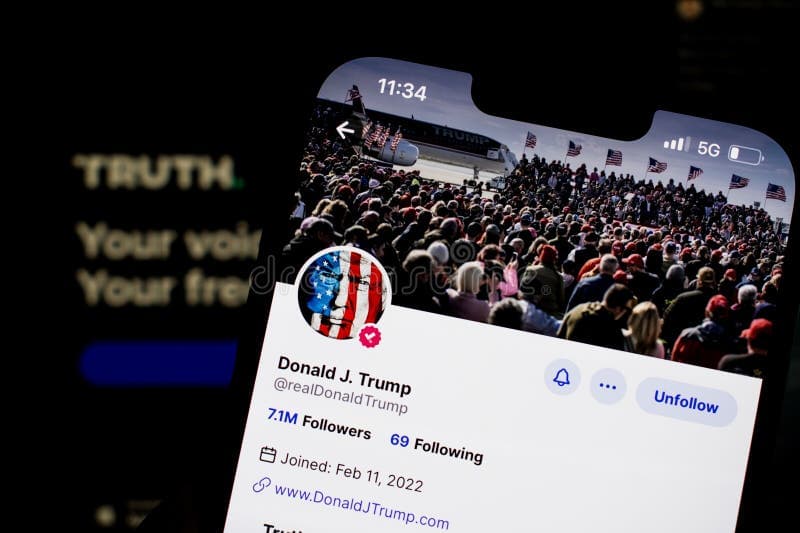
President Trump posted on Truth Social that "Canada wants the benefits of being a State, without being one!!!" a day after Washington put 50% tariffs on roughly $20 billion of Canadian goods, and two days after trade talks between the two countries collapsed.
The message went up at 1 a.m. Sunday, August 23, his first public reaction since Carney suspended the talks on Friday night. In the same Truth Social post, he accused Canada of charging "our great farmers, for many years, massive amounts of Tariffs. No more!!!"
Prime Minister Mark Carney did not wait to answer. Canada will match the U.S. tariffs "dollar for dollar" starting September 8, he told reporters in Ottawa. His list targets American steel, dairy, appliances, agricultural equipment, pulp and paper, and electronics.
"You're at war when you get attacked"
Carney's language was blunt. Asked why it felt like he was heading into a war with the United States, he said, "You're at war when you get attacked. We got attacked." He called the new tariffs a "miscalculation" built to "hurt and divide us."
"They asked too much and they offered too little," Carney said. He told reporters the U.S. had pushed last-minute terms that were "uneconomic, unfair" and that "called into question the reliability of any deal."
He also reminded Washington who fuels its power grid. "Canada fuels American growth," Carney said, according to his Ottawa press conference. "I don't think they want us to stop sending it."
The deal fell apart in a matter of days
Both sides thought they were close. Trump paused the tariffs on Tuesday, August 18, and wrote on social media that the two countries "have a DEAL!" The original deadline had been the following morning, and he pushed it back three days just hours before it hit.
By Friday night the whole thing was dead. It came after a week of talks in Washington, and as late as Thursday, August 20, Canada-U.S. Trade Minister Dominic LeBlanc sat with U.S. Trade Representative Jamieson Greer for more than three hours. Officials on both sides sounded optimistic almost to the final moment.
The 50% duties took effect at 12:01 a.m. Eastern on Saturday, August 22. U.S. Customs and Border Protection sent a bulletin to businesses Friday warning that officers would start checking that importers paid the new rates immediately after the deadline, according to NPR.
Each side blames the other
Canada says American negotiators moved the goalposts at the last minute. One sticking point was a U.S. demand to limit Canada's ability to sign trade deals with other countries. Canadian officials also said American negotiators made unacceptable "threats" to the French language and "Quebec culture."
The American side tells it differently. Greer said Canada "declined to finalize the trade deal under the terms agreed earlier this week," blaming "new demands and walk backs of other commitments." He said there are no plans to restart talks.
Greer also said Washington had been ready to give something up. The U.S. offered to cut tariffs on steel, aluminum, and autos, and to drop a recently added tariff on Canadian lumber, he told the New York Times. Canada wanted relief on autos, steel, and aluminum, the sectors that have hammered its economy and cost jobs.
What the 50% tariffs actually hit
The duties cover more than 500 product categories. The list runs from whisky and beer to goose-down jackets, furniture, cement, clothing, fishing rods, and hockey equipment. Canadian names like Crown Royal whisky and Molson beer fall inside those categories.
Cheese is not on the list, though Trump has pointed to Canada's "discrimination" against American cheese as a reason for the fight. The administration also carved out energy, potash, and critical minerals.
The whole package hits about $20 billion of Canadian goods, or roughly 5.5% of everything Canada ships to the United States. A McGill University trade expert, Julian Karaguesian, said the levies would "effectively price hundreds of Canadian goods out of the US market."
An old law nobody had ever used
The legal tool behind the tariffs is unusual. Trump reached for Section 338 of the Tariff Act of 1930, a provision no president has ever used to impose tariffs since it became law, Axios reported. He first threatened to invoke it last month.
The 51st state line, again
Trump has floated turning Canada into the 51st state since returning to office, using it as both a taunt and a bargaining chip. Canadian leaders have rejected the idea every time it comes up.
In March he called Carney the "future Governor of Canada," an insult he first aimed at former Prime Minister Justin Trudeau. He slipped it into a post about Great Lakes conservation, listing Carney after the governors of Illinois, Wisconsin, Minnesota, Pennsylvania, Ohio, Indiana and New York.
Premiers and governors pile on
Ontario Premier Doug Ford did not soften anything. Trump "can't be trusted, simple as that," he said, adding that the president "is the type of person who would steal your lunch money." Ford backed Carney's response, "tariff for tariff, dollar for dollar."
Other premiers lined up behind Ottawa. British Columbia Premier David Eby said, "We didn't ask for this, but we'll keep fighting for as long as it takes." Manitoba Premier Wab Kinew backed Ottawa's decision to walk away, saying Canada should "never appease" Trump.
The criticism wasn't all Canadian. New York Governor Kathy Hochul posted that Trump was "needlessly picking fights with our allies and raising prices here at home." The Business Roundtable, which speaks for more than 200 U.S. chief executives, warned the tariffs "risk raising costs for American businesses and families," per Al Jazeera. A Leger poll taken August 15 to 17, before the talks collapsed, found 56% of Canadians wanted Ottawa to take a hard line and make no more concessions.
The stakes aren't equal
The two economies do not have the same amount to lose. U.S. exports to Canada equal about 1.4% of American GDP. Canadian exports to the U.S. equal roughly 20% of Canada's GDP. That gap is why one country can shrug and the other cannot.
The trade itself is enormous. About 72% of Canada's merchandise exports went to the United States in 2025, Statistics Canada says, down from 76% the year before. Total trade in goods and services between the two countries topped $870 billion in 2025, and Canada still buys about 59% of its imports from the U.S.
Carney is trying to shrink that dependence. He is selling the fight as a reason to spread Canada's business around, traveling to Asia and Europe to line up new partners. "Canada has what the world wants," he said. "We will not allow any nation to determine our future."
USMCA hangs over all of it
The bigger deal is already shaky. USMCA, the three-country pact Trump once called "the best agreement we've ever made," was not renewed in July over U.S. complaints about trade deficits, though it stays in force while the three governments argue. Washington is already negotiating with Mexico. With Canada, there is nothing on the calendar.
Barry Appleton, a senior fellow at the Center for International Law at New York Law School, laid out the box both leaders built. Canada told Washington in advance it would stop negotiating and retaliate if the tariffs landed, he said, and the U.S. trade representative said publicly he would not tolerate retaliation. "Both sides have now committed themselves in public," Appleton said, "which is how escalation stops being a choice."
For now the two economies stay bolted together while their governments trade insults across the border. Carney says Canada will "not return to our old relationship." And starting September 8, a lot of American goods heading north will cost more.
Most read
This week

Health
Pennsylvania Measles Cases Top 1,000, Largest Outbreak in 30 Years
Crime
Andrew Tanaka Charged With Four Counts of Attempted Murder on I-35
Crime
FBI Arrests 18-Year-Old in ISIS Plot to Attack Mall of America

Crime
Christa Pike Awake and Speaking After Tennessee Execution Fails
Politics
Seven Senate-Confirmed Treasury Officials Exit Amid Bessent Outbursts